THE ADVENTURE COLLECTIVE® · Independent discovery and booking for outdoor travel

Drive west from Cairo into Bahariya Oasis and the White Desert for a two-day loop of wind-sculpted rock, quartz outcrops and a night under the stars. This compact desert tour blends geology, Bedouin hospitality and easy off-road adventure.
Drive west from Cairo into Bahariya Oasis and the White Desert for a two-day loop of wind-sculpted rock, quartz outcrops and a night under the stars. This compact desert tour blends geology, Bedouin hospitality and easy off-road adventure.
A low sun spreads orange dust across the windshield as the road west from Cairo narrows into a ribbon of desert. Soon, rocky mesas and blackened slopes of the Black Desert rise like charcoal sketches against the horizon; later the landscape softens into the sculpted chalk mushrooms of the White Desert, where wind-carved pillars stand like slow-motion sculptures.
Verified experiences and guided adventures in the surrounding area.
Operated by best travels in egypt · Bahariya Oasis, New Valley
A low sun spreads orange dust across the windshield as the road west from Cairo narrows into a ribbon of desert. Soon, rocky mesas and blackened slopes of the Black Desert rise like charcoal sketches against the horizon; later the landscape softens into the sculpted chalk mushrooms of the White Desert, where wind-carved pillars stand like slow-motion sculptures.
This two-day route threads history and geology. Bahariya Oasis has been an agricultural and caravan hub since Pharaonic times — the valley holds Roman remains and, nearby, the remarkable “Golden Mummies” discovered in local necropolises. Geologically, the White Desert’s surreal white limestones were formed by ancient seabeds and then eroded by persistent sand and wind into the mushroom and column shapes visitors see today. Local Bedouin culture still informs camp cuisine and navigation, and Farafra & Bahariya oases offer contrasting pockets of palms and springs amid the arid plain.
Practically, expect a mix of paved driving and off-road 4x4 travel, short walks over uneven rock, and an overnight in a guided desert camp (or simple hotel in Farafra if weather or capacity requires). Bring sun protection, layered clothing for cold desert nights, and sturdy shoes for rocky surfaces. Hydrate proactively — the dry air steals water quickly — and time photography for dawn or sunset when shadows give the formations depth. Follow your guide’s route: they know safe tracks, fragile formations to avoid, and the best vantage points for quartz outcrops and the El Haize hot spring.
This trip is about wide, changing light and tactile landscape: the desert invites movement, and a careful plan makes it feel like yours.
Most departures are from hotels in Cairo with private pickup; the tour returns to Cairo at the end of day two.
Camping is in guided desert camps with basic sleeping arrangements; expect shared facilities and simple meals, or a hotel stay in Farafra if available.
No—drivers and guides handle off-road navigation; passengers should be prepared for bumpy rides and brief walks on uneven ground.
Restroom stops are at oasis towns and at camp; in remote areas, facilities are basic—carry hygiene supplies and use guided-area protocols.
best travels in egypt operates guided outdoor trips and adventures with an emphasis on safety, stewardship, and memorable experiences.
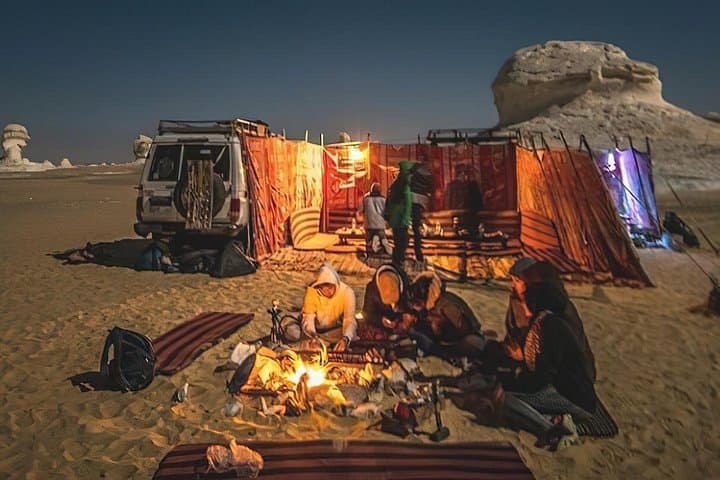
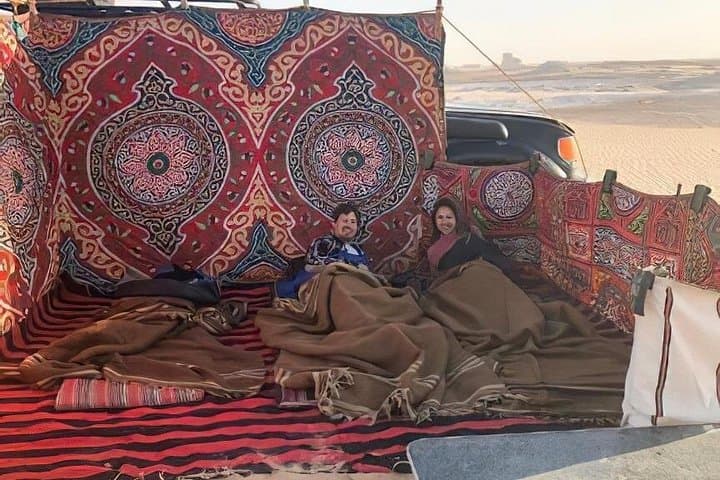
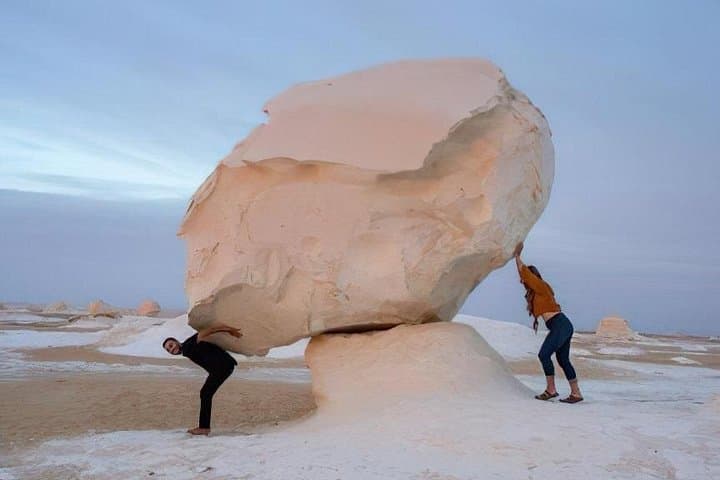
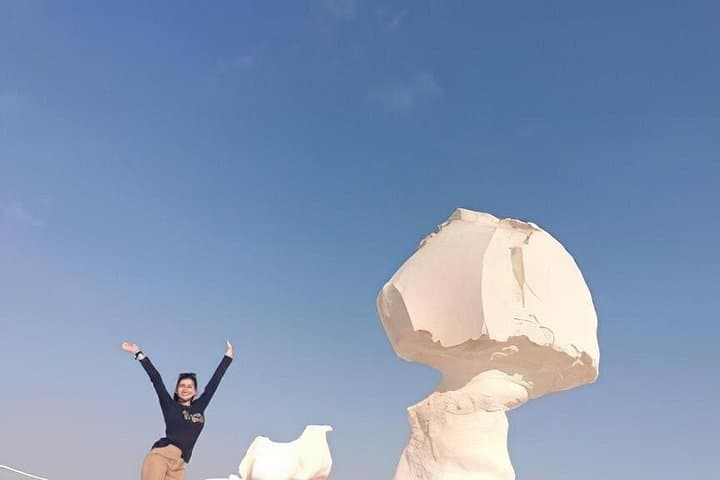
A low sun spreads orange dust across the windshield as the road west from Cairo narrows into a ribbon of desert. Soon, rocky mesas and blackened slopes of the Black Desert rise like charcoal sketches against the horizon; later the landscape softens into the sculpted chalk mushrooms of the White Desert, where wind-carved pillars stand like slow-motion sculptures.
A low sun spreads orange dust across the windshield as the road west from Cairo narrows into a ribbon of desert. Soon, rocky mesas and blackened slopes of the Black Desert rise like charcoal sketches against the horizon; later the landscape softens into the sculpted chalk mushrooms of the White Desert, where wind-carved pillars stand like slow-motion sculptures.
This two-day route threads history and geology. Bahariya Oasis has been an agricultural and caravan hub since Pharaonic times — the valley holds Roman remains and, nearby, the remarkable “Golden Mummies” discovered in local necropolises. Geologically, the White Desert’s surreal white limestones were formed by ancient seabeds and then eroded by persistent sand and wind into the mushroom and column shapes visitors see today. Local Bedouin culture still informs camp cuisine and navigation, and Farafra & Bahariya oases offer contrasting pockets of palms and springs amid the arid plain.
Practically, expect a mix of paved driving and off-road 4x4 travel, short walks over uneven rock, and an overnight in a guided desert camp (or simple hotel in Farafra if weather or capacity requires). Bring sun protection, layered clothing for cold desert nights, and sturdy shoes for rocky surfaces. Hydrate proactively — the dry air steals water quickly — and time photography for dawn or sunset when shadows give the formations depth. Follow your guide’s route: they know safe tracks, fragile formations to avoid, and the best vantage points for quartz outcrops and the El Haize hot spring.
This trip is about wide, changing light and tactile landscape: the desert invites movement, and a careful plan makes it feel like yours.