THE ADVENTURE COLLECTIVE® · Independent discovery and booking for outdoor travel

Spend a full day exploring Ninh Binh’s big-name sites: Bai Dinh Pagoda’s monumental temples, a serene boat trip through Trang An’s cave tunnels, and a steep climb to Mua Cave for panoramic rice‑field views. This practical guide explains what to expect, how to prepare, and local context.
Spend a full day exploring Ninh Binh’s big-name sites: Bai Dinh Pagoda’s monumental temples, a serene boat trip through Trang An’s cave tunnels, and a steep climb to Mua Cave for panoramic rice‑field views. This practical guide explains what to expect, how to prepare, and local context.
A morning drive south from Hanoi deposits travelers into a landscape of steep limestone towers and bright rice flats — the kind of karst that forces you to slow down and look. The tour opens beneath the gilded spans of Bai Dinh Pagoda, where bronze bells and hundreds of arhat statues give scale to Vietnam’s largest temple complex. Light plays off lacquered surfaces and carved stone as the guide explains imperial patronage, recent restoration, and the living role of the site in regional Buddhism.
Verified experiences and guided adventures in the surrounding area.
Operated by Authentic PHU QUOC · Ninh Binh, Ninh Binh Province
A morning drive south from Hanoi deposits travelers into a landscape of steep limestone towers and bright rice flats — the kind of karst that forces you to slow down and look. The tour opens beneath the gilded spans of Bai Dinh Pagoda, where bronze bells and hundreds of arhat statues give scale to Vietnam’s largest temple complex. Light plays off lacquered surfaces and carved stone as the guide explains imperial patronage, recent restoration, and the living role of the site in regional Buddhism.
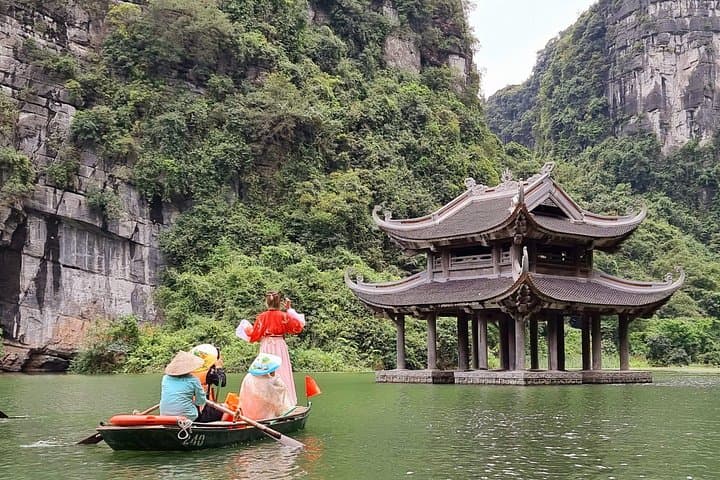
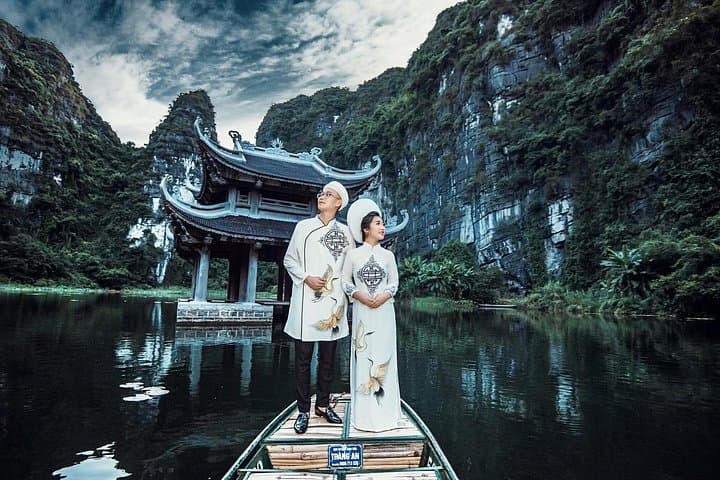
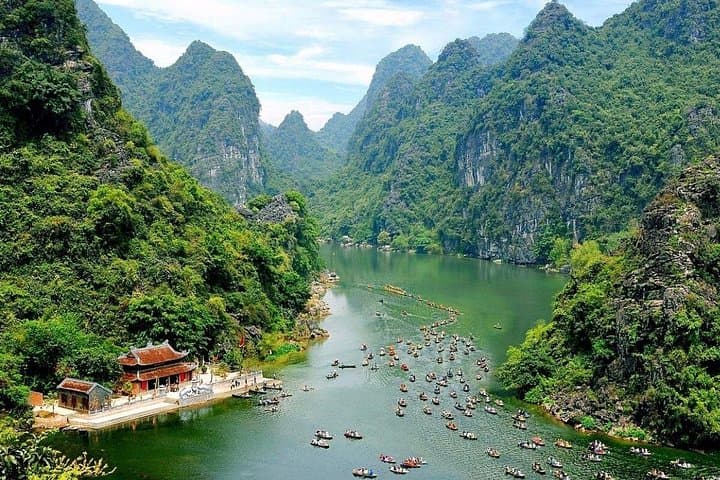
By early afternoon a longboat cuts through a labyrinth of karst caves at Trang An. The river narrows, light slips through cave mouths, and the boatman’s oars punctuate the quiet; this is a landscape carved by water and time, with limestone towers formed from millions of years of marine sediment and uplift. The route passes film locations familiar from recent cinematic productions, but the quieter moments are local: water buffalo in the paddies, stilted houses, and farmers tending the season’s growth.
Later, a short, strenuous climb to Mua Cave rewards climbers with a broad, stepped viewpoint across Tam Coc’s patchwork ricefields — a clear read on how people and karst coexist.
Practically: expect an 11–12 hour day with two hours’ drive each way from Hanoi, boat sections of roughly 2–2.5 hours, and nearly 500 steps at Mua. Wear grippy shoes, carry sun protection and water, and plan for temple-appropriate clothing. The route is accessible to most fit travelers but includes stairs, uneven paths, and small-boat motion.
The shared boat ride usually runs about 2–2.5 hours and visits several cave tunnels and grottoes on a fixed route.
It’s a steep climb of roughly 500 steps; fit travelers can complete it with rests, but it may be challenging for those with mobility issues.
This day tour includes sightseeing fees and round-trip minivan/limousine transfers from Hanoi as described in the itinerary.
Yes—local restaurants on the route can provide vegetarian and most common dietary options when requested in advance.
Authentic PHU QUOC operates guided outdoor trips and adventures with an emphasis on safety, stewardship, and memorable experiences.

A morning drive south from Hanoi deposits travelers into a landscape of steep limestone towers and bright rice flats — the kind of karst that forces you to slow down and look. The tour opens beneath the gilded spans of Bai Dinh Pagoda, where bronze bells and hundreds of arhat statues give scale to Vietnam’s largest temple complex. Light plays off lacquered surfaces and carved stone as the guide explains imperial patronage, recent restoration, and the living role of the site in regional Buddhism.
A morning drive south from Hanoi deposits travelers into a landscape of steep limestone towers and bright rice flats — the kind of karst that forces you to slow down and look. The tour opens beneath the gilded spans of Bai Dinh Pagoda, where bronze bells and hundreds of arhat statues give scale to Vietnam’s largest temple complex. Light plays off lacquered surfaces and carved stone as the guide explains imperial patronage, recent restoration, and the living role of the site in regional Buddhism.
By early afternoon a longboat cuts through a labyrinth of karst caves at Trang An. The river narrows, light slips through cave mouths, and the boatman’s oars punctuate the quiet; this is a landscape carved by water and time, with limestone towers formed from millions of years of marine sediment and uplift. The route passes film locations familiar from recent cinematic productions, but the quieter moments are local: water buffalo in the paddies, stilted houses, and farmers tending the season’s growth.
Later, a short, strenuous climb to Mua Cave rewards climbers with a broad, stepped viewpoint across Tam Coc’s patchwork ricefields — a clear read on how people and karst coexist.
Practically: expect an 11–12 hour day with two hours’ drive each way from Hanoi, boat sections of roughly 2–2.5 hours, and nearly 500 steps at Mua. Wear grippy shoes, carry sun protection and water, and plan for temple-appropriate clothing. The route is accessible to most fit travelers but includes stairs, uneven paths, and small-boat motion.