THE ADVENTURE COLLECTIVE® · Independent discovery and booking for outdoor travel

Spend a day exploring Vietnam’s karst country: an expansive pagoda complex, a slow rowing trip through Trang An’s water caves, and a steep stair ascent to Mua Cave’s panoramic lookout. This full-day circuit pairs cultural sites with immediate, hands-on landscape experiences.
Spend a day exploring Vietnam’s karst country: an expansive pagoda complex, a slow rowing trip through Trang An’s water caves, and a steep stair ascent to Mua Cave’s panoramic lookout. This full-day circuit pairs cultural sites with immediate, hands-on landscape experiences.
You step off the limousine into a panorama of limestone spires and rice paddies; the air smells of river and warm stone. The day moves in distinct acts: a motorized glide through Bai Dinh’s vast courtyards, a slow rowing passage through Trang An’s water caves, and a brisk stair climb up Mua Cave’s ridge for the valley reveal.
Verified experiences and guided adventures in the surrounding area.
Operated by Vietnam Real Tour · Ninh Binh, Ninh Bình
You step off the limousine into a panorama of limestone spires and rice paddies; the air smells of river and warm stone. The day moves in distinct acts: a motorized glide through Bai Dinh’s vast courtyards, a slow rowing passage through Trang An’s water caves, and a brisk stair climb up Mua Cave’s ridge for the valley reveal.
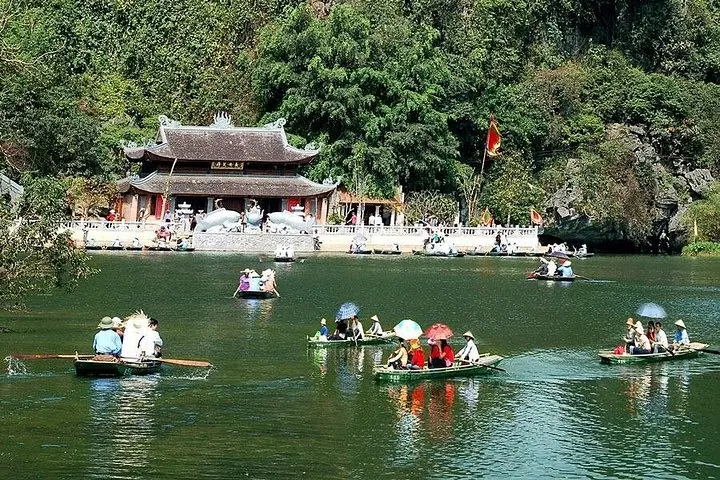
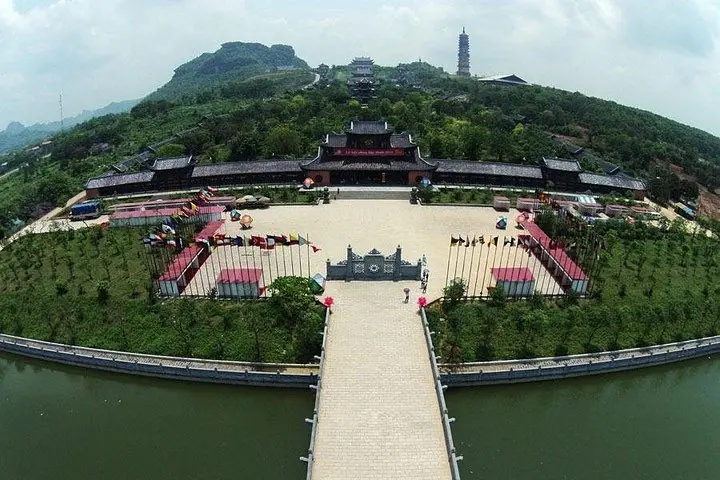
Bai Dinh is Vietnam’s largest pagoda complex, largely rebuilt in the 21st century, where bronze Buddhas and vast tiled plazas reflect modern religious patronage. The surrounding low karst range is part of the same geology that carved Trang An’s tunnels — carbonate rock sculpted by millennia of water, producing narrow grottoes and steep terraces where villagers farm rice. Culture here mixes devotion and daily life: monks in saffron robes, farmers tending dykes, and boatmen who still row the ancestral way.
Practical guide: the Trang An boat section runs roughly 90–120 minutes on calm water; boats are rowed, so expect gentle rocking and close-ups of grotto mouths. Mua Cave involves roughly 400–500 stone steps with about 150–200 m of elevation gain to the Ngoa Long viewpoint; terrain is steady stone steps and some exposed sections. Bai Dinh’s complex is expansive — an electric tram reduces walking but wear good shoes for temple paths.
Timing matters: start early from Hanoi for cooler air, bring hydration, sun protection and modest clothing for temple visits. The route is family-friendly but involves stairs and riverside exposure; move at your own pace and leave room to photograph the light shifting across the karst ridges.
The rowing boat segment typically lasts 90–120 minutes depending on route and weather; boats are rowed by local crew and move at a leisurely pace.
Children can do the climb if comfortable on stairs; expect roughly 400–500 stone steps with some steep stretches—supervise younger kids closely.
Yes—while many inclusions are covered, bring small Vietnamese dong for incidental purchases, tips, or items not included in the tour.
Parts of Bai Dinh are reachable by electric car and have flat plazas, but the full complex includes steps and uneven surfaces; accessibility varies by area.
Vietnam Real Tour operates guided outdoor trips and adventures with an emphasis on safety, stewardship, and memorable experiences.


You step off the limousine into a panorama of limestone spires and rice paddies; the air smells of river and warm stone. The day moves in distinct acts: a motorized glide through Bai Dinh’s vast courtyards, a slow rowing passage through Trang An’s water caves, and a brisk stair climb up Mua Cave’s ridge for the valley reveal.
You step off the limousine into a panorama of limestone spires and rice paddies; the air smells of river and warm stone. The day moves in distinct acts: a motorized glide through Bai Dinh’s vast courtyards, a slow rowing passage through Trang An’s water caves, and a brisk stair climb up Mua Cave’s ridge for the valley reveal.
Bai Dinh is Vietnam’s largest pagoda complex, largely rebuilt in the 21st century, where bronze Buddhas and vast tiled plazas reflect modern religious patronage. The surrounding low karst range is part of the same geology that carved Trang An’s tunnels — carbonate rock sculpted by millennia of water, producing narrow grottoes and steep terraces where villagers farm rice. Culture here mixes devotion and daily life: monks in saffron robes, farmers tending dykes, and boatmen who still row the ancestral way.
Practical guide: the Trang An boat section runs roughly 90–120 minutes on calm water; boats are rowed, so expect gentle rocking and close-ups of grotto mouths. Mua Cave involves roughly 400–500 stone steps with about 150–200 m of elevation gain to the Ngoa Long viewpoint; terrain is steady stone steps and some exposed sections. Bai Dinh’s complex is expansive — an electric tram reduces walking but wear good shoes for temple paths.
Timing matters: start early from Hanoi for cooler air, bring hydration, sun protection and modest clothing for temple visits. The route is family-friendly but involves stairs and riverside exposure; move at your own pace and leave room to photograph the light shifting across the karst ridges.