THE ADVENTURE COLLECTIVE® · Independent discovery and booking for outdoor travel

A compact, soul-soothing two-day loop from Hanoi that pairs Bai Dinh’s monumental pagoda with boat trips through Trang An and Tam Coc’s cave-cut waterways. Expect cultural temples, karst cliffs, quiet villages, and easy cycling between sights.
A compact, soul-soothing two-day loop from Hanoi that pairs Bai Dinh’s monumental pagoda with boat trips through Trang An and Tam Coc’s cave-cut waterways. Expect cultural temples, karst cliffs, quiet villages, and easy cycling between sights.
You step off the bus into a wide valley where limestone towers rise like broken columns and the river nudges the sampan slips awake.
Verified experiences and guided adventures in the surrounding area.
Operated by Asian Discovery Travel · Tam Coc, Ninh Binh Province
You step off the bus into a wide valley where limestone towers rise like broken columns and the river nudges the sampan slips awake.
Daylight slides over the bronze Buddha at Bai Dinh, where rows of La Hán statues stand patient and the largest bronze Buddha in Vietnam surveys the plain. Downstream, the Trang An waterways pull you under shadowed cave mouths and through corridors of limestone that felt the sea’s pressure millions of years ago; the current seems to dare you to keep watching.
This region was the seat of the 10th-century Hoa Lu kingdom — visit Dinh and Le King temples to trace conflicts with Song China and early Vietnamese statecraft. Geologically, the karst was carved by ancient marine deposits and millennia of river action; caves inside Tam Coc and Trang An show layered stalactites and narrow, low passages that were once underwater.
Locally, life hums around rice paddies and small homestays; biking between villages shows wooden houses, water buffalo, and farmers working the fields. The cultural rhythm is quiet, practical, and welcoming.
Practical guidance: expect gentle walking, short boat rides on narrow sampans, and light cycling on flat country roads. Bring sun protection and a light rain layer; wear shoes that can handle damp surfaces. Plan pickups from Hanoi early (the drive is about 2–2.5 hours), and leave room in your schedule for slow boat sections and photographs. Respect temple dress codes, support local guides and homestays, and carry reusable water — the area rewards slow attention.
The transfer is about 2–2.5 hours by A/C bus depending on traffic; departures usually start early morning.
Yes—boats are operated by seated rowers; minimal physical exertion is required, but those with mobility issues should check for boat boarding assistance.
Yes—the tour includes one night in a homestay, bungalow, or 3-star hotel in Tam Coc with meals as listed.
Bring local currency for incidental purchases, optional tips, and small vendor purchases; major sites and the tour typically cover entrance fees listed in inclusions.
Asian Discovery Travel operates guided outdoor trips and adventures with an emphasis on safety, stewardship, and memorable experiences.


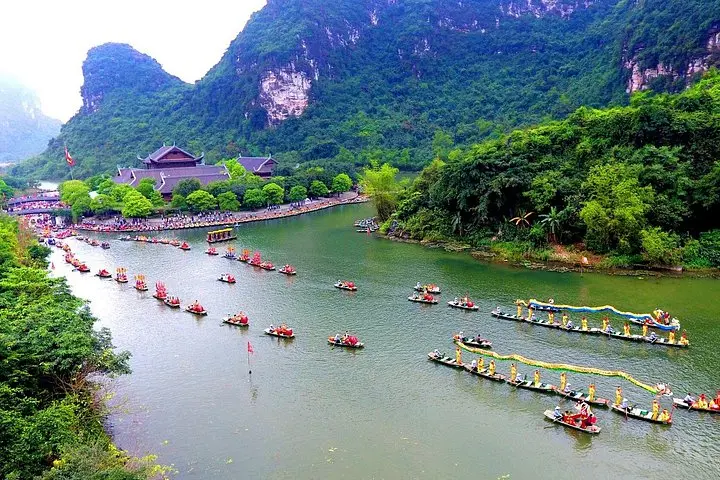

You step off the bus into a wide valley where limestone towers rise like broken columns and the river nudges the sampan slips awake.
You step off the bus into a wide valley where limestone towers rise like broken columns and the river nudges the sampan slips awake.
Daylight slides over the bronze Buddha at Bai Dinh, where rows of La Hán statues stand patient and the largest bronze Buddha in Vietnam surveys the plain. Downstream, the Trang An waterways pull you under shadowed cave mouths and through corridors of limestone that felt the sea’s pressure millions of years ago; the current seems to dare you to keep watching.
This region was the seat of the 10th-century Hoa Lu kingdom — visit Dinh and Le King temples to trace conflicts with Song China and early Vietnamese statecraft. Geologically, the karst was carved by ancient marine deposits and millennia of river action; caves inside Tam Coc and Trang An show layered stalactites and narrow, low passages that were once underwater.
Locally, life hums around rice paddies and small homestays; biking between villages shows wooden houses, water buffalo, and farmers working the fields. The cultural rhythm is quiet, practical, and welcoming.
Practical guidance: expect gentle walking, short boat rides on narrow sampans, and light cycling on flat country roads. Bring sun protection and a light rain layer; wear shoes that can handle damp surfaces. Plan pickups from Hanoi early (the drive is about 2–2.5 hours), and leave room in your schedule for slow boat sections and photographs. Respect temple dress codes, support local guides and homestays, and carry reusable water — the area rewards slow attention.