THE ADVENTURE COLLECTIVE® · Independent discovery and booking for outdoor travel

Move through a short, scenic canyon on the Witte River beneath Bain’s Kloof Pass. This five-hour microadventure combines short hikes, rock-hopping, swims and a few voluntary jumps—accessible for moderately fit outdoor travelers.
Move through a short, scenic canyon on the Witte River beneath Bain’s Kloof Pass. This five-hour microadventure combines short hikes, rock-hopping, swims and a few voluntary jumps—accessible for moderately fit outdoor travelers.
You step off the pass and the road noise thins; rock walls pinch the light and the Witte River hums ahead, daring you downstream. The day begins with a short hike to the river’s upper reaches, then becomes a sequence of rock-hopped pools, waist-deep swims and a handful of voluntary jumps that punctuate the canyon’s rhythm.
Verified experiences and guided adventures in the surrounding area.
Operated by Gravity Micro Adventures · Wellington, Western Cape
You step off the pass and the road noise thins; rock walls pinch the light and the Witte River hums ahead, daring you downstream. The day begins with a short hike to the river’s upper reaches, then becomes a sequence of rock-hopped pools, waist-deep swims and a handful of voluntary jumps that punctuate the canyon’s rhythm.
Bain’s Kloof Pass itself dates to 1853, cut through Cape Fold sandstone by Andrew Geddes Bain to link the Breede River valley with Cape Town’s hinterland. The geology is straightforward and old—sandstone ribs tilted and eroded into tight gorges that funnel clear, cold mountain water. Culturally the pass sits in the Wellington winelands and farming country; local CapeNature oversight means permits and small-group limits help protect the corridor.
Expect variable terrain: slippery slabs, shallow cascades, and narrow pools rather than vertical rappels. The full excursion runs about five hours and follows a roughly downhill line that ends near Eerste Tol where cars are parked. Fitness needs are moderate — steady footing, short swims and basic scrambling are required, but no technical rope skills are necessary.
Practical tips: arrive with sturdy neoprene or quick-dry footwear, a small dry bag for phones, and a layered set of clothes for brisk mountain air. Start mid-morning for warmer pools and better light; avoid high river flows after heavy rain. The outing is an accessible slice of Cape nature—energetic, wet and immediate—ideal for hikers who want canyon rhythm without technical rigging.
No technical canyoning background is required; the route is aimed at those comfortable with swimming, scrambling and uneven terrain under guide supervision.
Mountain-fed pools are brisk year-round; wear quick-dry clothing and consider a neoprene top in cooler months or if you get cold easily.
Operators commonly request age and weight details during booking; guides will assess participants’ ability to safely navigate jumps and swims before the trip begins.
Trips can be canceled for safety when river flows rise; the operator typically offers refunds if you cancel at least 24 hours in advance or if weather forces cancellation.
Gravity Micro Adventures operates guided outdoor trips and adventures with an emphasis on safety, stewardship, and memorable experiences.
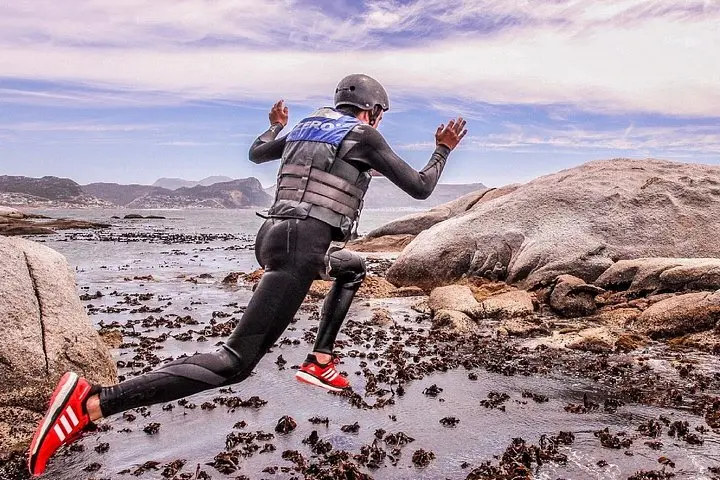
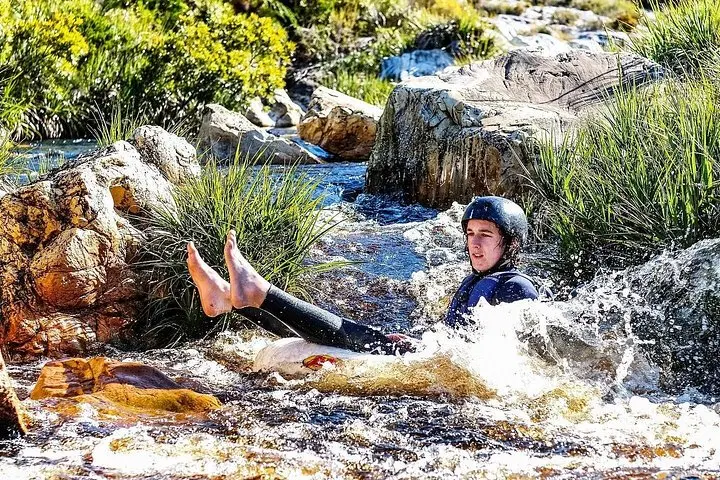
You step off the pass and the road noise thins; rock walls pinch the light and the Witte River hums ahead, daring you downstream. The day begins with a short hike to the river’s upper reaches, then becomes a sequence of rock-hopped pools, waist-deep swims and a handful of voluntary jumps that punctuate the canyon’s rhythm.
You step off the pass and the road noise thins; rock walls pinch the light and the Witte River hums ahead, daring you downstream. The day begins with a short hike to the river’s upper reaches, then becomes a sequence of rock-hopped pools, waist-deep swims and a handful of voluntary jumps that punctuate the canyon’s rhythm.
Bain’s Kloof Pass itself dates to 1853, cut through Cape Fold sandstone by Andrew Geddes Bain to link the Breede River valley with Cape Town’s hinterland. The geology is straightforward and old—sandstone ribs tilted and eroded into tight gorges that funnel clear, cold mountain water. Culturally the pass sits in the Wellington winelands and farming country; local CapeNature oversight means permits and small-group limits help protect the corridor.
Expect variable terrain: slippery slabs, shallow cascades, and narrow pools rather than vertical rappels. The full excursion runs about five hours and follows a roughly downhill line that ends near Eerste Tol where cars are parked. Fitness needs are moderate — steady footing, short swims and basic scrambling are required, but no technical rope skills are necessary.
Practical tips: arrive with sturdy neoprene or quick-dry footwear, a small dry bag for phones, and a layered set of clothes for brisk mountain air. Start mid-morning for warmer pools and better light; avoid high river flows after heavy rain. The outing is an accessible slice of Cape nature—energetic, wet and immediate—ideal for hikers who want canyon rhythm without technical rigging.