THE ADVENTURE COLLECTIVE® · Independent discovery and booking for outdoor travel

A day trip from Kuching that delivers improbable coastal rockforms, mangrove channels and close encounters with proboscis monkeys. This accessible tour pairs a scenic longboat transfer with short, well-marked jungle trails and secluded beaches.
A day trip from Kuching that delivers improbable coastal rockforms, mangrove channels and close encounters with proboscis monkeys. This accessible tour pairs a scenic longboat transfer with short, well-marked jungle trails and secluded beaches.
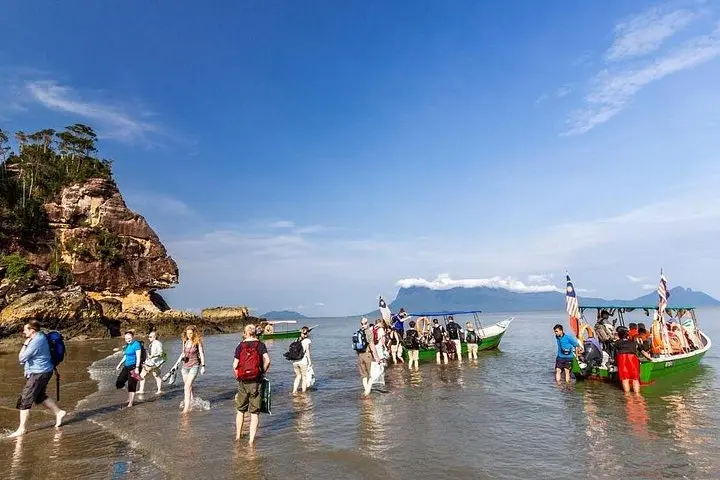
You step off the longboat onto a stubbled stretch of mangrove roots, the estuary breathing salt and leaf-mold. A long-tailed macaque watches from a low branch; across a sweep of scrubby forest a proboscis monkey disappears with the liquid motion of an animal built for braided tidal channels. That first hour in Bako registers as both sudden and intimate — coastal cliffs carved into odd sandstone shapes, forest floors lacquered with fallen figs, and a shoreline that seems to dare you to keep walking.
Verified experiences and guided adventures in the surrounding area.
Operated by Asia Advisor by Asni · Kuching, Sarawak
You step off the longboat onto a stubbled stretch of mangrove roots, the estuary breathing salt and leaf-mold. A long-tailed macaque watches from a low branch; across a sweep of scrubby forest a proboscis monkey disappears with the liquid motion of an animal built for braided tidal channels. That first hour in Bako registers as both sudden and intimate — coastal cliffs carved into odd sandstone shapes, forest floors lacquered with fallen figs, and a shoreline that seems to dare you to keep walking.
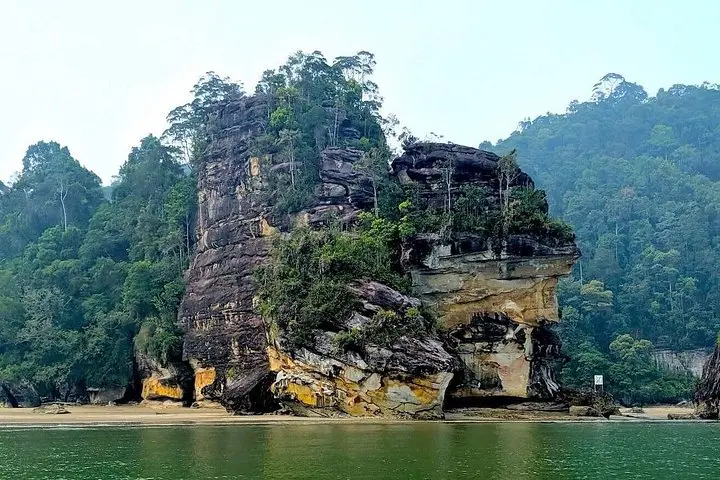
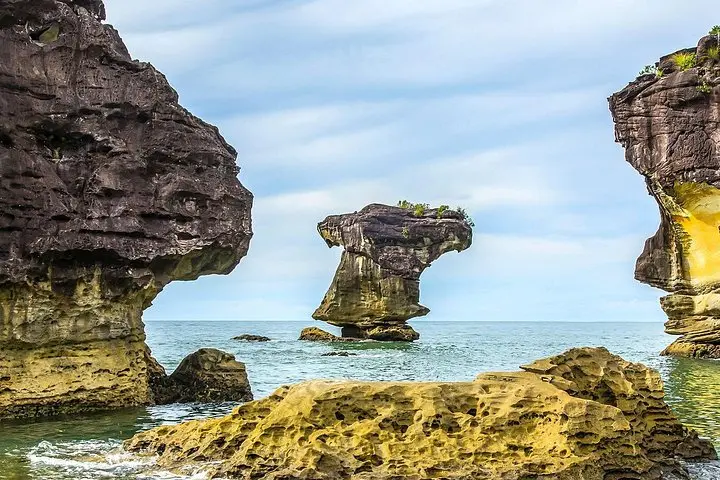
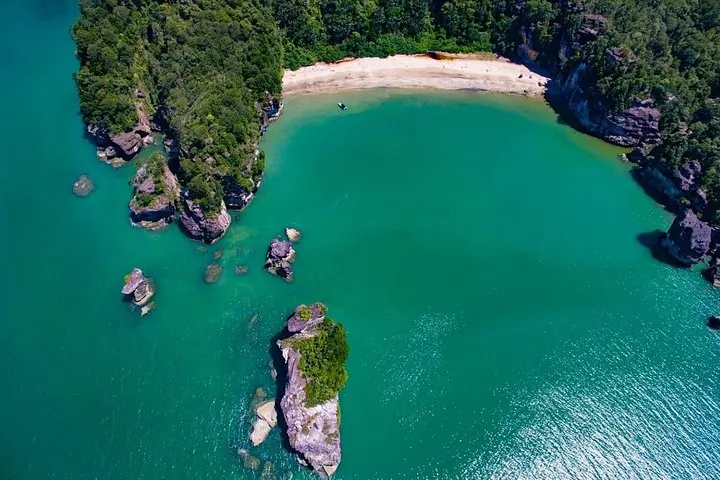
Bako is Sarawak’s oldest protected area, set aside in the late 1950s to preserve the island’s unique coastal habitats. Geologically the park is a study in erosion: hard sandstone and softer shale have been sculpted into sea stacks, natural arches, and narrow headlands. Those same forces produce the patchwork of habitats — mangrove fringes, kerangas (heath forest), dipterocarp jungle and tiny sandy coves — that support pitcher plants, strangler figs and more bird species than most visitors expect to find in a single morning.
Culturally the park sits at the edge of Kuching’s reach. The longboat that ferries you in is part of the experience; it’s the same rivercraft used by local fishers and guides who read tides and weather as easily as a map. Back in Kuching you’ll find that food and culture are as much a part of the visit as flora and fauna — kolo mee and kopitiam tea make for a satisfying bookend to an active day.
Practical guide: this is an eight-hour excursion from Kuching that includes hotel pickup within the city center and a 90-minute combined drive-and-longboat transfer. Trails are well marked but uneven — expect rocky steps, sudden climbs up to ridge viewpoints and muddy stretches after rain. Popular routes include the short Telok Paku beach loop and the more strenuous Paku Hill approach; many visitors stitch two or three trails together for 4–6 km and up to ~200 m cumulative elevation gain.
Timing matters: start early to catch wildlife activity and avoid the midday heat and sudden tropical showers. Bring at least 2 liters of water, a light rain shell, sturdy hiking shoes with good grip, and insect repellent. Leave food in sealed containers and never feed wildlife; even habituated proboscis monkeys can become aggressive.
Conservation in Bako is active and visible — park rangers patrol trails and signage highlights fragile habitats. Staying on paths, carrying out all trash, and following guide instructions helps protect the plants and animals that make this coastline so startlingly alive. For travelers who want an intense, accessible slice of Borneo in a single day, Bako delivers: raw coastline, close-up wildlife, and a set of trails that reward curiosity at every turn.
The operator lists a 90-minute combined drive and longboat transfer from Kuching, including hotel pickup within a 3 km radius of the city center.
Many trails are short but uneven; the tour notes it’s suitable for all fitness levels, but those with limited mobility should check specific trail choices with the operator.
The tour includes access and guided logistics; confirm permit or park fees with the supplier at booking if you plan to extend independently.
Bako has a high likelihood of sightings, but wildlife sightings cannot be guaranteed — early starts increase your chances.
The itinerary mentions hotel pickup and transport; bring snacks and water as trail-side facilities are limited.
Basic restroom facilities exist at the park base and some trailheads, but expect minimal amenities on remote beaches and ridge viewpoints.
Asia Advisor by Asni operates guided outdoor trips and adventures with an emphasis on safety, stewardship, and memorable experiences.
You step off the longboat onto a stubbled stretch of mangrove roots, the estuary breathing salt and leaf-mold. A long-tailed macaque watches from a low branch; across a sweep of scrubby forest a proboscis monkey disappears with the liquid motion of an animal built for braided tidal channels. That first hour in Bako registers as both sudden and intimate — coastal cliffs carved into odd sandstone shapes, forest floors lacquered with fallen figs, and a shoreline that seems to dare you to keep walking.
You step off the longboat onto a stubbled stretch of mangrove roots, the estuary breathing salt and leaf-mold. A long-tailed macaque watches from a low branch; across a sweep of scrubby forest a proboscis monkey disappears with the liquid motion of an animal built for braided tidal channels. That first hour in Bako registers as both sudden and intimate — coastal cliffs carved into odd sandstone shapes, forest floors lacquered with fallen figs, and a shoreline that seems to dare you to keep walking.
Bako is Sarawak’s oldest protected area, set aside in the late 1950s to preserve the island’s unique coastal habitats. Geologically the park is a study in erosion: hard sandstone and softer shale have been sculpted into sea stacks, natural arches, and narrow headlands. Those same forces produce the patchwork of habitats — mangrove fringes, kerangas (heath forest), dipterocarp jungle and tiny sandy coves — that support pitcher plants, strangler figs and more bird species than most visitors expect to find in a single morning.
Culturally the park sits at the edge of Kuching’s reach. The longboat that ferries you in is part of the experience; it’s the same rivercraft used by local fishers and guides who read tides and weather as easily as a map. Back in Kuching you’ll find that food and culture are as much a part of the visit as flora and fauna — kolo mee and kopitiam tea make for a satisfying bookend to an active day.
Practical guide: this is an eight-hour excursion from Kuching that includes hotel pickup within the city center and a 90-minute combined drive-and-longboat transfer. Trails are well marked but uneven — expect rocky steps, sudden climbs up to ridge viewpoints and muddy stretches after rain. Popular routes include the short Telok Paku beach loop and the more strenuous Paku Hill approach; many visitors stitch two or three trails together for 4–6 km and up to ~200 m cumulative elevation gain.
Timing matters: start early to catch wildlife activity and avoid the midday heat and sudden tropical showers. Bring at least 2 liters of water, a light rain shell, sturdy hiking shoes with good grip, and insect repellent. Leave food in sealed containers and never feed wildlife; even habituated proboscis monkeys can become aggressive.
Conservation in Bako is active and visible — park rangers patrol trails and signage highlights fragile habitats. Staying on paths, carrying out all trash, and following guide instructions helps protect the plants and animals that make this coastline so startlingly alive. For travelers who want an intense, accessible slice of Borneo in a single day, Bako delivers: raw coastline, close-up wildlife, and a set of trails that reward curiosity at every turn.