THE ADVENTURE COLLECTIVE® · Independent discovery and booking for outdoor travel

Trace fire and stone on a private day tour from Baku that pairs UNESCO-listed Gobustan petroglyphs with mud‑volcano safari and two legendary flame sites: Ateshgah and Yanar Dag. This full‑day experience blends archaeology, geology and local flavor with hotel pickup and entrance fees included.
Trace fire and stone on a private day tour from Baku that pairs UNESCO-listed Gobustan petroglyphs with mud‑volcano safari and two legendary flame sites: Ateshgah and Yanar Dag. This full‑day experience blends archaeology, geology and local flavor with hotel pickup and entrance fees included.
The minibus slides out of Baku at 09:00 with the sea shrinking behind the low buildings and the Caspian haze lifting like a curtain. Within an hour the city has given way to scrub and salt flats, and the driver steers toward Gobustan — the wind here has a personality of its own, pushing at your jacket and tossing grit into the seams of the road.
Verified experiences and guided adventures in the surrounding area.
Operated by Azerbaijanguide.az · Baku, Baku
The minibus slides out of Baku at 09:00 with the sea shrinking behind the low buildings and the Caspian haze lifting like a curtain. Within an hour the city has given way to scrub and salt flats, and the driver steers toward Gobustan — the wind here has a personality of its own, pushing at your jacket and tossing grit into the seams of the road.
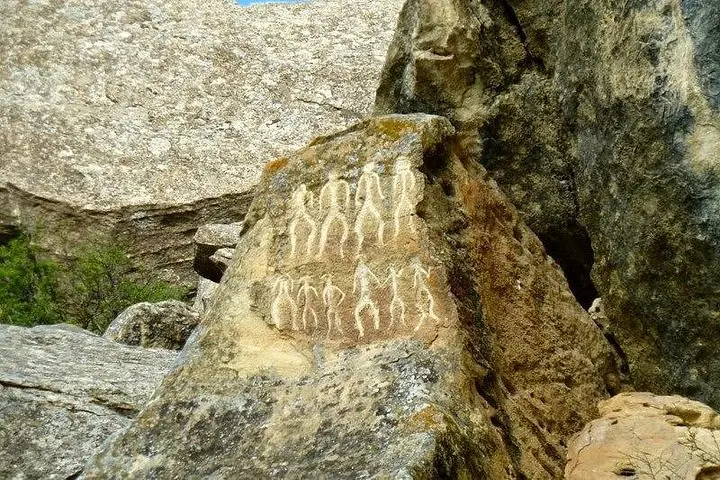
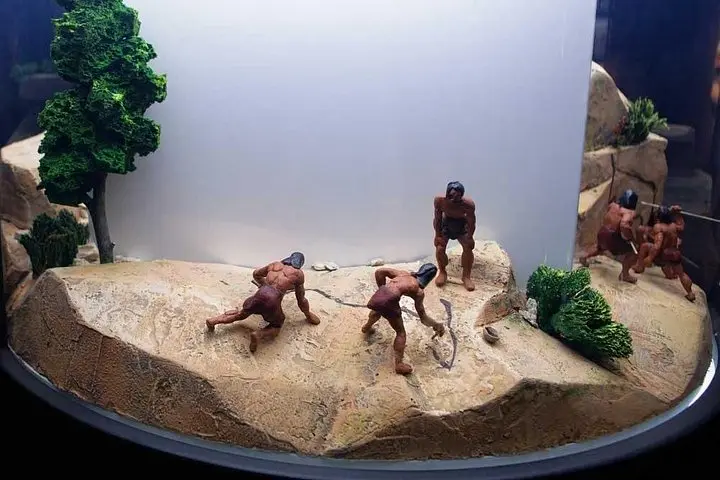
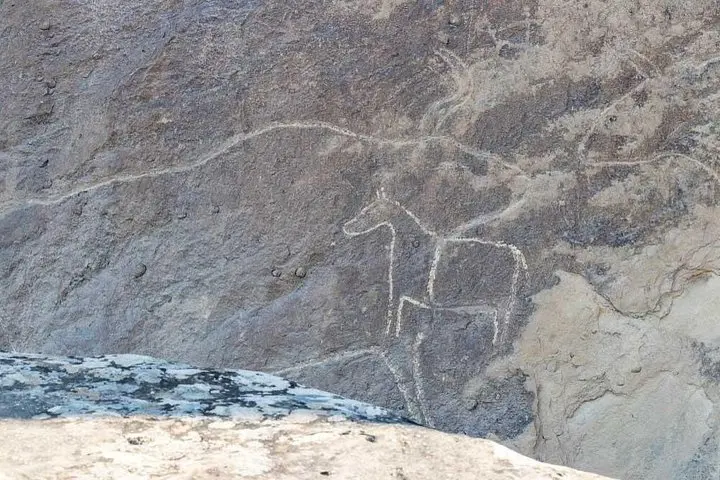
At Gobustan National Reserve the land feels older than nations. Rock faces bear petroglyphs from 5,000–40,000 years ago: hunters, boats, and spirals scratched into stone by people who read the coast and herds rather than maps. The on-site museum frames those carvings with context — bone tools, pottery shards and the slow story of human movement across the Absheron Peninsula.
A short, bumpy transfer takes you to the mud volcanoes. The road deteriorates, and the group switches into Lada vehicles for a brief, rough-hewn safari. Mud bubbles and small eruptions dot the plain, indifferent to spectators. These volcanoes are geological shorthand for Azerbaijan’s abundance of hydrocarbons: subterranean gases lift clay and saline water until it folds and releases in wet, slow plumes.
Lunch returns visitors to city rhythms — a local meal in central Baku lets you compare flavours to landscapes: smoky kebabs, tangy pickles and hearty platters that anchor the day.
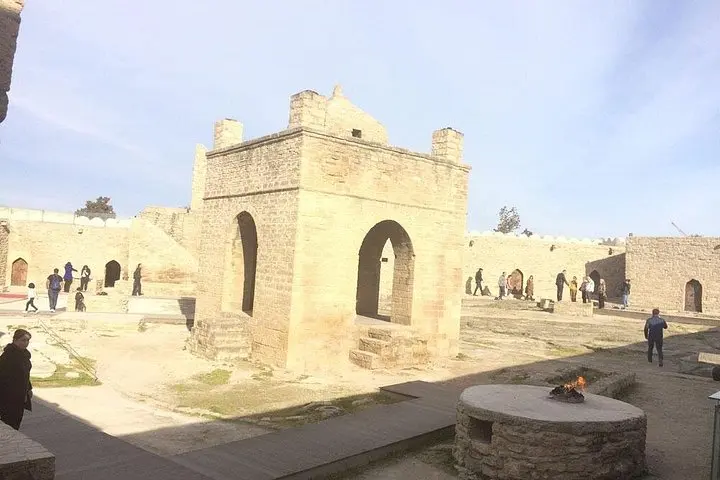
Afternoon visits map a different kind of flame. Ateshgah, the Fire Temple at Surakhani, is a compact compound of altars and inscriptions where Zoroastrian and Hindu pilgrims once came to honor a natural gas seep that burned at the surface. A few kilometers away, Yanar Dag performs the same trick on a larger, modern scale: a natural gas seep that flames continuously from porous sandstone, a low fire that has defined Azerbaijan’s identity as the “Land of Fire.”
Practical guide: the tour runs about nine hours and includes entrance fees, bottled water, hotel pickup and drop-off, and a professional guide. Dress code requested by the operator is smart—avoid ripped jeans, activewear or trainers; choose neat, comfortable layers and sturdy, closed-toe shoes that can handle dusty paths. The mud-volcano leg can be rocky and greasy — a slick-soled shoe is a liability.
Expect a full day of easy walking, short climbs and photo stops; temperatures vary widely between the coast and inland. Bring sunscreen, a hat and a lightweight wind layer. If you want fewer crowds at Gobustan, ask the guide to adjust timing early in the season. The trip is accessible and family-friendly, but the Lada segment is bouncy — travel sickness precautions help.
Overall, this private 3‑person tour threads together archaeology, geology and ritual fire into a single day — efficient, cinematic and grounded in the landscape that made Azerbaijan famous for flame and stone.
Pickup starts at 09:00 and hotel pickup and drop-off are included; confirm your exact pickup time when you book.
Yes — entrance to Gobustan, the mud-volcano area and Ateshgah/Yanar Dag are covered in the tour price.
Yes — the itinerary is low-intensity with short walks, but the mud-volcano transfer is bumpy and may be uncomfortable for some.
The company provides a professional guide; verify language options when booking to ensure your preferred language is available.
Generally yes; flash is discouraged in museums and be mindful of rules at religious or protected areas.
The operator requests smart casual attire — avoid ripped jeans, sportswear, joggers or sneakers; choose neat, comfortable clothing suitable for walking.
Azerbaijanguide.az operates guided outdoor trips and adventures with an emphasis on safety, stewardship, and memorable experiences.
The minibus slides out of Baku at 09:00 with the sea shrinking behind the low buildings and the Caspian haze lifting like a curtain. Within an hour the city has given way to scrub and salt flats, and the driver steers toward Gobustan — the wind here has a personality of its own, pushing at your jacket and tossing grit into the seams of the road.
The minibus slides out of Baku at 09:00 with the sea shrinking behind the low buildings and the Caspian haze lifting like a curtain. Within an hour the city has given way to scrub and salt flats, and the driver steers toward Gobustan — the wind here has a personality of its own, pushing at your jacket and tossing grit into the seams of the road.
At Gobustan National Reserve the land feels older than nations. Rock faces bear petroglyphs from 5,000–40,000 years ago: hunters, boats, and spirals scratched into stone by people who read the coast and herds rather than maps. The on-site museum frames those carvings with context — bone tools, pottery shards and the slow story of human movement across the Absheron Peninsula.
A short, bumpy transfer takes you to the mud volcanoes. The road deteriorates, and the group switches into Lada vehicles for a brief, rough-hewn safari. Mud bubbles and small eruptions dot the plain, indifferent to spectators. These volcanoes are geological shorthand for Azerbaijan’s abundance of hydrocarbons: subterranean gases lift clay and saline water until it folds and releases in wet, slow plumes.
Lunch returns visitors to city rhythms — a local meal in central Baku lets you compare flavours to landscapes: smoky kebabs, tangy pickles and hearty platters that anchor the day.
Afternoon visits map a different kind of flame. Ateshgah, the Fire Temple at Surakhani, is a compact compound of altars and inscriptions where Zoroastrian and Hindu pilgrims once came to honor a natural gas seep that burned at the surface. A few kilometers away, Yanar Dag performs the same trick on a larger, modern scale: a natural gas seep that flames continuously from porous sandstone, a low fire that has defined Azerbaijan’s identity as the “Land of Fire.”
Practical guide: the tour runs about nine hours and includes entrance fees, bottled water, hotel pickup and drop-off, and a professional guide. Dress code requested by the operator is smart—avoid ripped jeans, activewear or trainers; choose neat, comfortable layers and sturdy, closed-toe shoes that can handle dusty paths. The mud-volcano leg can be rocky and greasy — a slick-soled shoe is a liability.
Expect a full day of easy walking, short climbs and photo stops; temperatures vary widely between the coast and inland. Bring sunscreen, a hat and a lightweight wind layer. If you want fewer crowds at Gobustan, ask the guide to adjust timing early in the season. The trip is accessible and family-friendly, but the Lada segment is bouncy — travel sickness precautions help.
Overall, this private 3‑person tour threads together archaeology, geology and ritual fire into a single day — efficient, cinematic and grounded in the landscape that made Azerbaijan famous for flame and stone.