THE ADVENTURE COLLECTIVE® · Independent discovery and booking for outdoor travel

In a compact half-day from Baku you can move from the blue-tiled calm of Bibi-Heybat Mosque to the wind-scoured ridges of Gobustan, where millennia-old petroglyphs and sputtering mud volcanoes tell the country’s geological and cultural story.
In a compact half-day from Baku you can move from the blue-tiled calm of Bibi-Heybat Mosque to the wind-scoured ridges of Gobustan, where millennia-old petroglyphs and sputtering mud volcanoes tell the country’s geological and cultural story.
You step off an air-conditioned minibus and the coast pulls the city into a different rhythm: the Caspian Sea pushes a cool breeze across the Absheron plain while the scrubby steppe smells faintly of tar and thyme. The first stop, the reconstructed Bibi-Heybat Mosque, rises from the low hills—white stone and blue tile catching sunlight—and for a moment the modern city recedes behind a history that stretches back to medieval Shirvan.
Verified experiences and guided adventures in the surrounding area.
Operated by El Art Tour · Baku, Absheron District
You step off an air-conditioned minibus and the coast pulls the city into a different rhythm: the Caspian Sea pushes a cool breeze across the Absheron plain while the scrubby steppe smells faintly of tar and thyme. The first stop, the reconstructed Bibi-Heybat Mosque, rises from the low hills—white stone and blue tile catching sunlight—and for a moment the modern city recedes behind a history that stretches back to medieval Shirvan.
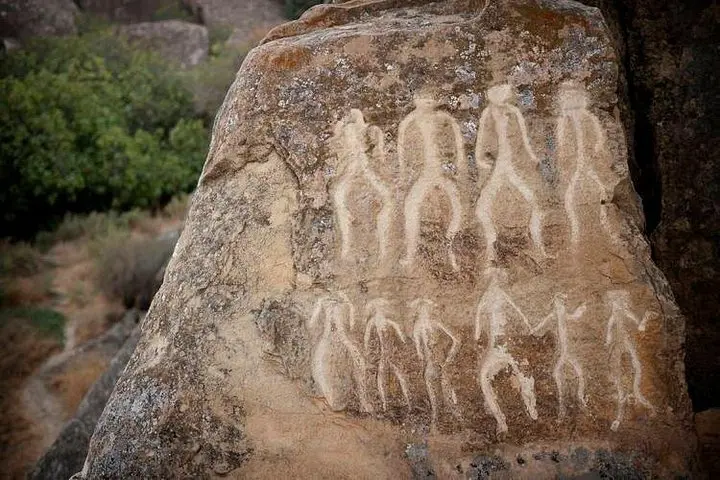
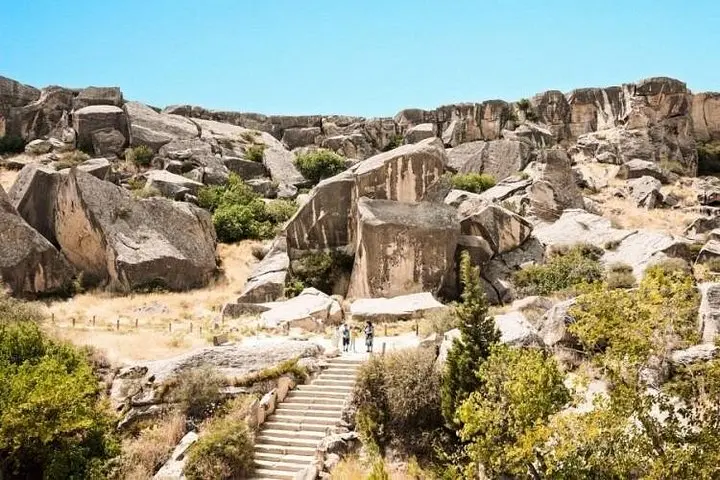
The route south and west of Baku is a compact lesson in Azerbaijan’s layered story: oil and gas seep through the earth, ancient people left detailed rock art, and landscapes alternately resist and give way to human hands. Gobustan State Reserve, roughly an hour from the city center, delivers this in physical form. Heavy boulders and low ridges are canvases for petroglyphs that record hunting scenes and boats; scientists place some carvings among the oldest in the region. Nearby, mud volcanoes bulge and sigh—small eruptions of cool, mineral-rich mud rather than lava—reminding visitors that geology here is active and literal.
On a practical half-day trip, visitors get a concise cross-section of Absheron: spiritual architecture at Bibi-Heybat, then out to Gobustan’s archaeological plates and mud cones. The tour is ideal for travelers who want cultural context without committing to an overnight. Guides typically translate inscriptions, explain stratified archaeological layers and point out how petroleum seepage shaped both the economy and landscape—Baku’s emergence as an oil boom city is never far from the conversation.
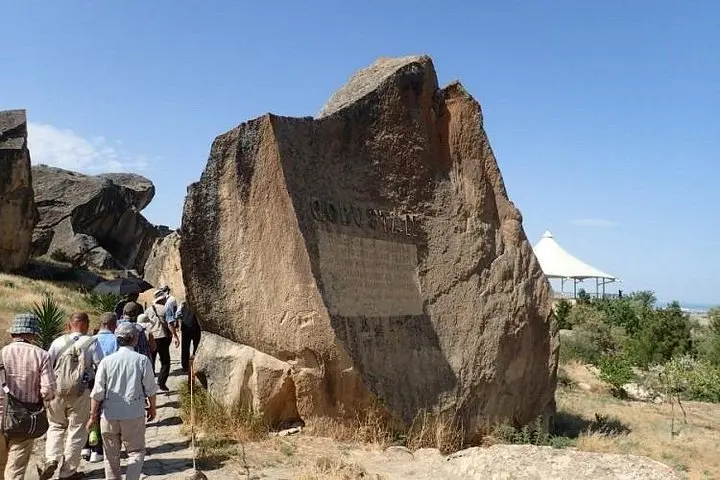
Expect uneven footing at Gobustan: short walks on packed dirt, loose gravel and rock ledges lead between carving panels and viewpoints. The site is exposed—sun, wind and reflective rock make sunscreen and a hat non-negotiable. Seasonal swings are pronounced: spring wildflowers color the scrub, summer heats the stone, fall cools the winds, and winter can bring raw coastal gusts.
Plan to arrive early in the day to avoid strong sun and mid-afternoon crowds. Bring a small daypack with water, sun protection and comfortable shoes with grip. Cameras love the low-angle light at dawn and late afternoon—bring extra batteries and a protective bag for dusty conditions at the mud volcanoes. Respect the site: do not touch petroglyphs or climb on fragile formations.
This is a short, layered trip—religion, archaeology and active geology delivered within a few hours of Baku—which makes it perfect for a first-time visitor wanting a fast, tangible sense of Azerbaijan beyond the city boulevard.
The tour runs approximately 3–4 hours from the meeting point in Baku and includes transport, a guide and stops at Bibi-Heybat and Gobustan.
The vehicle is accessible for travel to the sites, but Gobustan’s uneven paths and rock panels are not fully wheelchair-friendly.
Admission to the listed sites is typically included on this tour—confirm on booking details or with the operator for any seasonal changes.
Expect short walks of up to 1–2 miles total on uneven terrain; the tour is suitable for most fitness levels but requires steady footing.
Yes, photography is allowed—use care not to touch or lean on petroglyphs and avoid flash on delicate surfaces if requested by guides.
Light refreshments are not usually provided on a half-day tour; bring snacks if you have specific dietary needs.
El Art Tour operates guided outdoor trips and adventures with an emphasis on safety, stewardship, and memorable experiences.
You step off an air-conditioned minibus and the coast pulls the city into a different rhythm: the Caspian Sea pushes a cool breeze across the Absheron plain while the scrubby steppe smells faintly of tar and thyme. The first stop, the reconstructed Bibi-Heybat Mosque, rises from the low hills—white stone and blue tile catching sunlight—and for a moment the modern city recedes behind a history that stretches back to medieval Shirvan.
You step off an air-conditioned minibus and the coast pulls the city into a different rhythm: the Caspian Sea pushes a cool breeze across the Absheron plain while the scrubby steppe smells faintly of tar and thyme. The first stop, the reconstructed Bibi-Heybat Mosque, rises from the low hills—white stone and blue tile catching sunlight—and for a moment the modern city recedes behind a history that stretches back to medieval Shirvan.
The route south and west of Baku is a compact lesson in Azerbaijan’s layered story: oil and gas seep through the earth, ancient people left detailed rock art, and landscapes alternately resist and give way to human hands. Gobustan State Reserve, roughly an hour from the city center, delivers this in physical form. Heavy boulders and low ridges are canvases for petroglyphs that record hunting scenes and boats; scientists place some carvings among the oldest in the region. Nearby, mud volcanoes bulge and sigh—small eruptions of cool, mineral-rich mud rather than lava—reminding visitors that geology here is active and literal.
On a practical half-day trip, visitors get a concise cross-section of Absheron: spiritual architecture at Bibi-Heybat, then out to Gobustan’s archaeological plates and mud cones. The tour is ideal for travelers who want cultural context without committing to an overnight. Guides typically translate inscriptions, explain stratified archaeological layers and point out how petroleum seepage shaped both the economy and landscape—Baku’s emergence as an oil boom city is never far from the conversation.
Expect uneven footing at Gobustan: short walks on packed dirt, loose gravel and rock ledges lead between carving panels and viewpoints. The site is exposed—sun, wind and reflective rock make sunscreen and a hat non-negotiable. Seasonal swings are pronounced: spring wildflowers color the scrub, summer heats the stone, fall cools the winds, and winter can bring raw coastal gusts.
Plan to arrive early in the day to avoid strong sun and mid-afternoon crowds. Bring a small daypack with water, sun protection and comfortable shoes with grip. Cameras love the low-angle light at dawn and late afternoon—bring extra batteries and a protective bag for dusty conditions at the mud volcanoes. Respect the site: do not touch petroglyphs or climb on fragile formations.
This is a short, layered trip—religion, archaeology and active geology delivered within a few hours of Baku—which makes it perfect for a first-time visitor wanting a fast, tangible sense of Azerbaijan beyond the city boulevard.