THE ADVENTURE COLLECTIVE® · Independent discovery and booking for outdoor travel

From Baku’s modern skyline to the high passes of Khinalug, this eight-day route traces Azerbaijan’s living history and dramatic geology. Expect long driving days, intimate cultural encounters, and varied terrain from Caspian coastline to alpine lakes.
From Baku’s modern skyline to the high passes of Khinalug, this eight-day route traces Azerbaijan’s living history and dramatic geology. Expect long driving days, intimate cultural encounters, and varied terrain from Caspian coastline to alpine lakes.
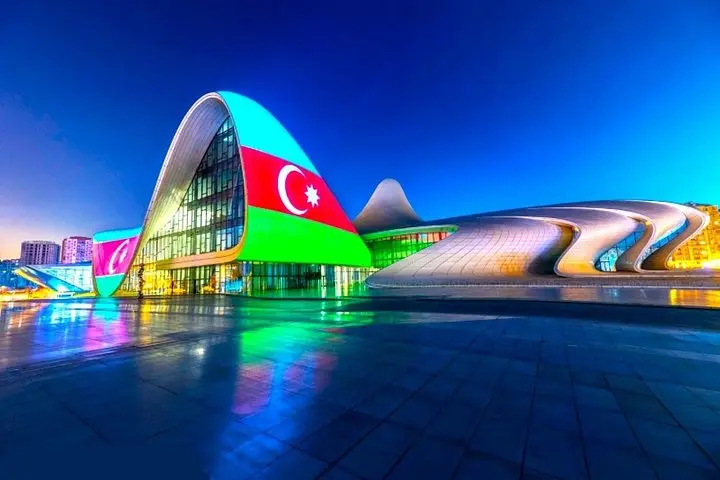
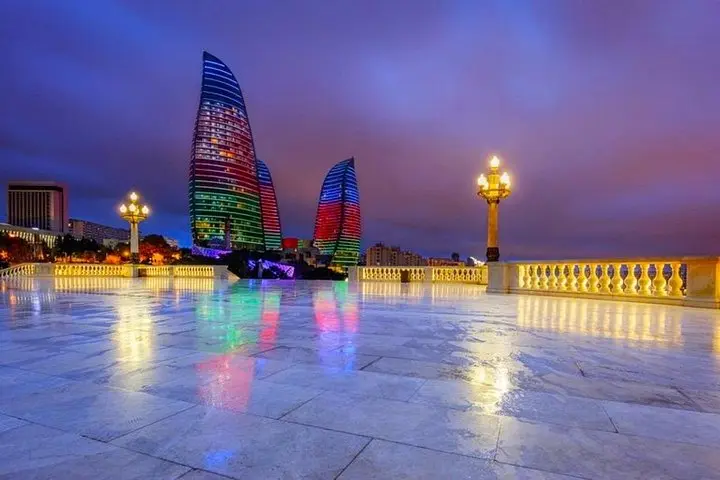
The first time you step out on Highland Park at dusk the city declares itself: glassy Flame Towers reflecting the Caspian, a ribbon of modern promenade, and behind it, the ragged silhouette of the Greater Caucasus. That contrast — polished metropolis to remote mountain village — is the organizing principle of this eight-day arc through Azerbaijan. Over mornings and long drives you move from Baku’s Old City lanes, through fire temples and mud volcano fields, up mountain roads to Khinalug, and into Silk Road towns where wood and glass keep histories alive.
Verified experiences and guided adventures in the surrounding area.
Operated by VLA_tourism · Baku, Baku
The first time you step out on Highland Park at dusk the city declares itself: glassy Flame Towers reflecting the Caspian, a ribbon of modern promenade, and behind it, the ragged silhouette of the Greater Caucasus. That contrast — polished metropolis to remote mountain village — is the organizing principle of this eight-day arc through Azerbaijan. Over mornings and long drives you move from Baku’s Old City lanes, through fire temples and mud volcano fields, up mountain roads to Khinalug, and into Silk Road towns where wood and glass keep histories alive.
This itinerary stitches together layers of culture and geology. Gobustan’s petroglyphs are among the world’s most complete records of Stone Age coastal life; the mud volcanoes nearby are an unusual reminder that this is a restless, gas-rich landscape. In the north, Khinalug sits above 2,300 m on a rocky shoulder of the Caucasus; its stone houses and high pasture routes preserve language and ways older than modern borders. To the west, Sheki’s Khan’s Palace is a timber-and-glass jewel of shebeke windows, a living example of late-medieval craftsmanship that once serviced Silk Road caravans.
Culturally, the trip is an intentional survey of coexistence: Krasnaya Sloboda’s Jewish quarter, the synagogues in Oguz and Gabala, German-influenced Helenendorf, and the Republic’s Islamic and pre-Christian sites all speak to layered communities and trade routes that shaped the region. Expect long days in transit — many legs run 4–6 hours by private vehicle, and full touring days commonly stretch 10–12 hours — but each leg ends with memorable human-scale encounters: a carpet-weaver showing knot-work in Quba, a copper smith in Lahij, or street vendors at Yashil Bazaar.
Practicalities matter. The Khinalug approach requires high-clearance 4x4s or UAZ/Niva vehicles and some off-road stamina; altitude reaches roughly 2,350 m, so pace your climb and pack warm layers. Carry local currency for markets and small museums; English is common with guides but not universal in villages. Accommodations are a mix of 4-star hotels in Baku and regional inns — book the All-Inclusive option if you prefer entry fees and meals pre-paid.
For photographers and planners: early mornings yield the clearest mountain air, while Baku’s skyline performs best after sunset. Wear sturdy shoes for cobbles and short hikes, pack sunscreen for the Absheron winds, and keep a compact rain shell — weather can switch fast in alpine pockets. Follow local guidance at archaeological sites: petroglyphs are fragile and paths are regulated.
This is a trip for travelers who want context with beauty: long drives that reward patience, encounters with craftspeople who still practice centuries-old trades, and landscapes that can be abrupt and dramatic — a grounded, sensory route through a country where history and geology keep pushing one another upward.
Many nationalities require a visa or e-visa; check Azerbaijan’s official visa portal and arrange entry before travel.
The village itself involves short uphill walking at altitude; the off-road drive can be rough but walking distances are modest.
There are three pricing options—guide/driver only, guide with entrance fees, or All-Inclusive—confirm which option you selected at booking.
Guides are English-speaking; English is common in tourist hubs but limited in some villages—your guide will translate.
Azerbaijani manat (AZN) is preferred for markets and small shops; credit cards work in Baku and larger towns but carry cash for rural stops.
Yes — the itinerary is paced for general travelers, but consider mobility and tolerance for long drives and off-road stretches when booking.
VLA_tourism operates guided outdoor trips and adventures with an emphasis on safety, stewardship, and memorable experiences.
The first time you step out on Highland Park at dusk the city declares itself: glassy Flame Towers reflecting the Caspian, a ribbon of modern promenade, and behind it, the ragged silhouette of the Greater Caucasus. That contrast — polished metropolis to remote mountain village — is the organizing principle of this eight-day arc through Azerbaijan. Over mornings and long drives you move from Baku’s Old City lanes, through fire temples and mud volcano fields, up mountain roads to Khinalug, and into Silk Road towns where wood and glass keep histories alive.
The first time you step out on Highland Park at dusk the city declares itself: glassy Flame Towers reflecting the Caspian, a ribbon of modern promenade, and behind it, the ragged silhouette of the Greater Caucasus. That contrast — polished metropolis to remote mountain village — is the organizing principle of this eight-day arc through Azerbaijan. Over mornings and long drives you move from Baku’s Old City lanes, through fire temples and mud volcano fields, up mountain roads to Khinalug, and into Silk Road towns where wood and glass keep histories alive.
This itinerary stitches together layers of culture and geology. Gobustan’s petroglyphs are among the world’s most complete records of Stone Age coastal life; the mud volcanoes nearby are an unusual reminder that this is a restless, gas-rich landscape. In the north, Khinalug sits above 2,300 m on a rocky shoulder of the Caucasus; its stone houses and high pasture routes preserve language and ways older than modern borders. To the west, Sheki’s Khan’s Palace is a timber-and-glass jewel of shebeke windows, a living example of late-medieval craftsmanship that once serviced Silk Road caravans.
Culturally, the trip is an intentional survey of coexistence: Krasnaya Sloboda’s Jewish quarter, the synagogues in Oguz and Gabala, German-influenced Helenendorf, and the Republic’s Islamic and pre-Christian sites all speak to layered communities and trade routes that shaped the region. Expect long days in transit — many legs run 4–6 hours by private vehicle, and full touring days commonly stretch 10–12 hours — but each leg ends with memorable human-scale encounters: a carpet-weaver showing knot-work in Quba, a copper smith in Lahij, or street vendors at Yashil Bazaar.
Practicalities matter. The Khinalug approach requires high-clearance 4x4s or UAZ/Niva vehicles and some off-road stamina; altitude reaches roughly 2,350 m, so pace your climb and pack warm layers. Carry local currency for markets and small museums; English is common with guides but not universal in villages. Accommodations are a mix of 4-star hotels in Baku and regional inns — book the All-Inclusive option if you prefer entry fees and meals pre-paid.
For photographers and planners: early mornings yield the clearest mountain air, while Baku’s skyline performs best after sunset. Wear sturdy shoes for cobbles and short hikes, pack sunscreen for the Absheron winds, and keep a compact rain shell — weather can switch fast in alpine pockets. Follow local guidance at archaeological sites: petroglyphs are fragile and paths are regulated.
This is a trip for travelers who want context with beauty: long drives that reward patience, encounters with craftspeople who still practice centuries-old trades, and landscapes that can be abrupt and dramatic — a grounded, sensory route through a country where history and geology keep pushing one another upward.