THE ADVENTURE COLLECTIVE® · Independent discovery and booking for outdoor travel

Experience the Balcony Walk at Jebel Shams on a private full-day guided hike from Muscat. This moderate out-and-back traces the canyon rim, visits an abandoned village and offers sweeping Grand Canyon views—plan for 4–5 hours of rugged, exposed trail.
Experience the Balcony Walk at Jebel Shams on a private full-day guided hike from Muscat. This moderate out-and-back traces the canyon rim, visits an abandoned village and offers sweeping Grand Canyon views—plan for 4–5 hours of rugged, exposed trail.
You step out of the 4x4 into thin, dry air and the canyon drops away like a page ripped from the earth—sheer cliffs, terraces of sunbaked rock and a narrow trail that threads the rim. Early light slices across the gorge; the guide checks boots and water, then points to the narrow ledge that becomes the Balcony Walk.
Verified experiences and guided adventures in the surrounding area.
Operated by Star Tours · Al Hamra, Ad Dakhiliyah Governorate
You step out of the 4x4 into thin, dry air and the canyon drops away like a page ripped from the earth—sheer cliffs, terraces of sunbaked rock and a narrow trail that threads the rim. Early light slices across the gorge; the guide checks boots and water, then points to the narrow ledge that becomes the Balcony Walk.
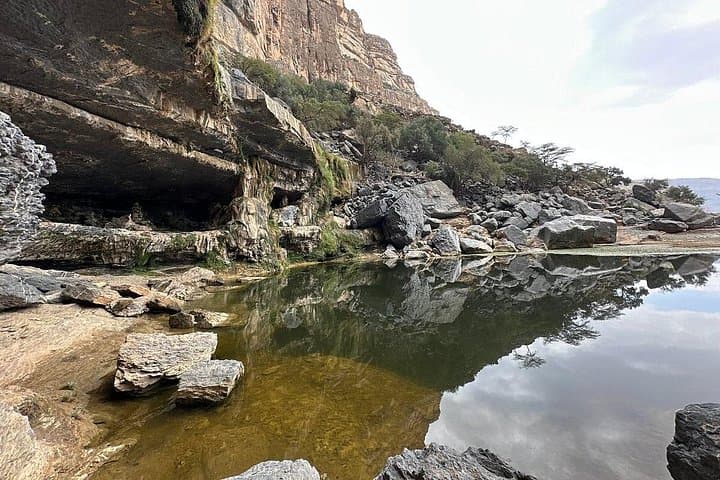
This route follows the rim of Oman’s Grand Canyon in the Hajar Mountains. Jebel Shams—literally “Mountain of the Sun”—is Oman’s highest peak and the first place on the peninsula to see sunrise. The cliffs are folded limestone and weathered sandstone; small abandoned villages and terraced fields mark centuries of mountain life where water was harvested and homes were built from local mudbrick.
Culturally, Al Hamra and nearby mountain settlements preserve traditional Omani architecture and hospitality—expect terse stone lanes and shepherds’ tracks rather than tourist infrastructure. Geologically, the canyon exposes layers of uplifted sea floor and fossil-bearing strata.
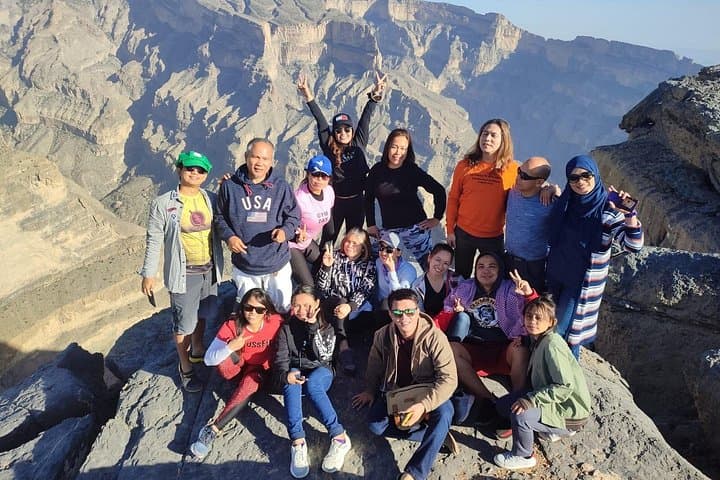
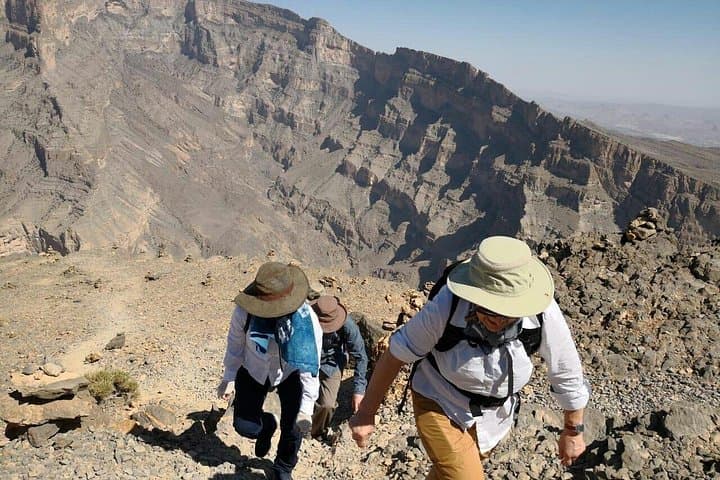
Practical guide: the full out-and-back is about 5.2 miles (8.4 km) and typically takes 4–5 hours on mixed rock and compact dirt with some narrow exposed sections. Start early to avoid midday heat, wear sturdy boots with good traction, and carry at least 2–3 liters of water. The route is led on this private tour, so navigation and transport are handled, but the footing can be loose and the altitude cooler than the plains—bring windproof layers and sun protection. Phones get patchy signal; pack snacks, a small first-aid kit, and leave no trace. Photographic stops at the canyon rim and the abandoned village make the effort worthwhile.
The out-and-back is about 5.2 miles (8.4 km) and typically takes 4–5 hours; it’s rated moderate due to distance, some elevation change and narrow exposed sections.
No technical experience is required, but you should be comfortable on uneven terrain and able to hike several hours at a steady pace.
Yes—the tour includes pickup and drop-off anywhere in the Muscat area and transport in a 4WD vehicle to the trailhead.
There are no facilities on the trail; bring snacks and use facilities in Al Hamra or at the visitor parking before you start.
Star Tours operates guided outdoor trips and adventures with an emphasis on safety, stewardship, and memorable experiences.
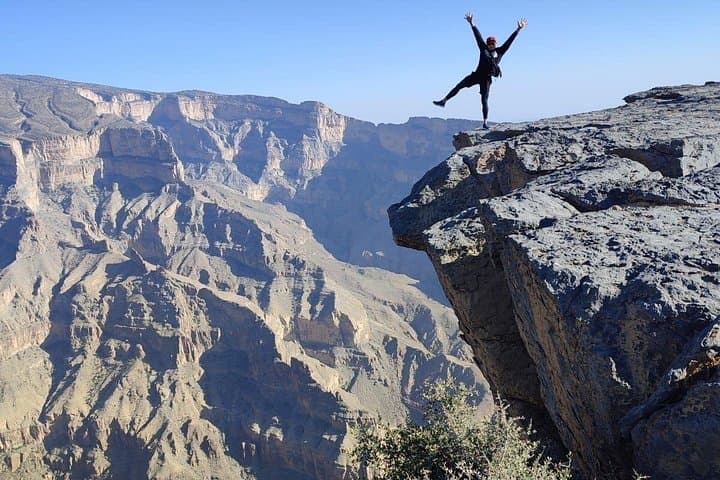
You step out of the 4x4 into thin, dry air and the canyon drops away like a page ripped from the earth—sheer cliffs, terraces of sunbaked rock and a narrow trail that threads the rim. Early light slices across the gorge; the guide checks boots and water, then points to the narrow ledge that becomes the Balcony Walk.
You step out of the 4x4 into thin, dry air and the canyon drops away like a page ripped from the earth—sheer cliffs, terraces of sunbaked rock and a narrow trail that threads the rim. Early light slices across the gorge; the guide checks boots and water, then points to the narrow ledge that becomes the Balcony Walk.
This route follows the rim of Oman’s Grand Canyon in the Hajar Mountains. Jebel Shams—literally “Mountain of the Sun”—is Oman’s highest peak and the first place on the peninsula to see sunrise. The cliffs are folded limestone and weathered sandstone; small abandoned villages and terraced fields mark centuries of mountain life where water was harvested and homes were built from local mudbrick.
Culturally, Al Hamra and nearby mountain settlements preserve traditional Omani architecture and hospitality—expect terse stone lanes and shepherds’ tracks rather than tourist infrastructure. Geologically, the canyon exposes layers of uplifted sea floor and fossil-bearing strata.
Practical guide: the full out-and-back is about 5.2 miles (8.4 km) and typically takes 4–5 hours on mixed rock and compact dirt with some narrow exposed sections. Start early to avoid midday heat, wear sturdy boots with good traction, and carry at least 2–3 liters of water. The route is led on this private tour, so navigation and transport are handled, but the footing can be loose and the altitude cooler than the plains—bring windproof layers and sun protection. Phones get patchy signal; pack snacks, a small first-aid kit, and leave no trace. Photographic stops at the canyon rim and the abandoned village make the effort worthwhile.