THE ADVENTURE COLLECTIVE® · Independent discovery and booking for outdoor travel

Start your day high above Mount Batur and coast down through plantations, rice terraces, and village temples on this guided Kintamani to Ubud cycling tour. Ideal for travelers who want a scenic, guided descent with cultural stops and transport included.
Start your day high above Mount Batur and coast down through plantations, rice terraces, and village temples on this guided Kintamani to Ubud cycling tour. Ideal for travelers who want a scenic, guided descent with cultural stops and transport included.
Dawn breaks over the caldera and you stand at a high ridge where Mount Batur’s profile cuts the sky. The air is cool and sharp; guides load bikes and fit helmets while coffee steams on a restaurant terrace. When you push off, the road leans into a long, runnable descent—plantation rows sliding by, temple gates punctuating village turns, and the caldera watching as you coast.
Verified experiences and guided adventures in the surrounding area.
Operated by Wandernesia · Kintamani, Bali
Dawn breaks over the caldera and you stand at a high ridge where Mount Batur’s profile cuts the sky. The air is cool and sharp; guides load bikes and fit helmets while coffee steams on a restaurant terrace. When you push off, the road leans into a long, runnable descent—plantation rows sliding by, temple gates punctuating village turns, and the caldera watching as you coast.
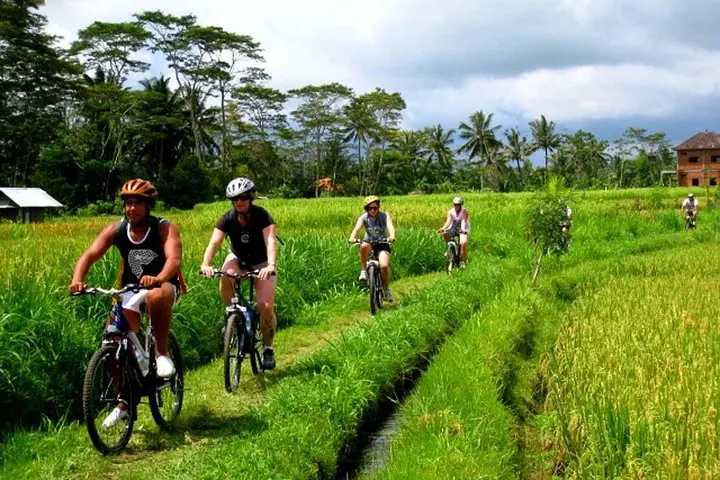
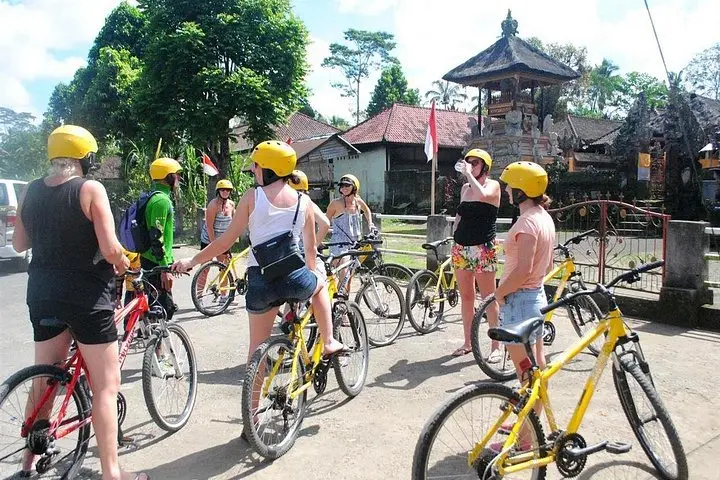
This route threads the Kintamani plateau and drops toward central Bali. Geologically the ride skirts young volcanic landscape—lava flows and pumice beds from Batur’s eruptions—and gives sweeping views of terraced fields irrigated by the traditional subak water system. Culturally, villages like Keliki are small centers of craft: wood carving, miniature painting and temple rituals are part of daily life you’ll pass.
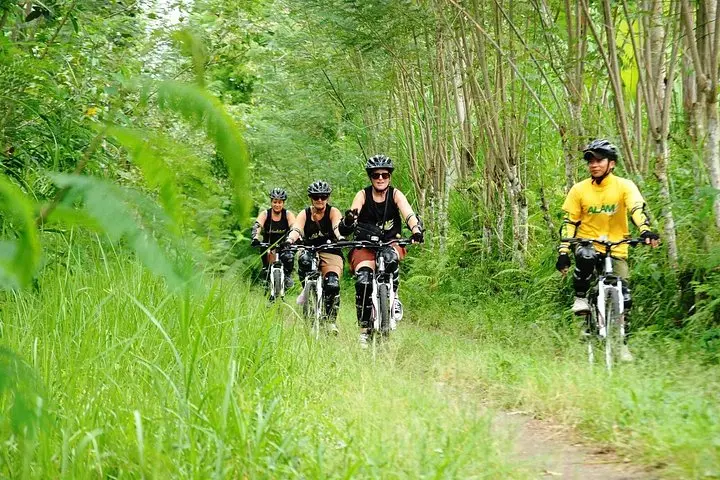
Expect roughly 15–25 km of mixed asphalt and village lanes with several hundred meters of net descent (many operators list a short guided ride of 60–180 minutes depending on stops). Roads vary from smooth downhill stretches to narrow, potholed turns used by scooters and trucks, so controlled braking and attention to traffic are essential.
Practical tips: start early to avoid mid-day heat, carry sunscreen and a refillable bottle, wear sturdy shoes and ready a light jacket for the cool morning. Guides supply safety gear and include a light breakfast and lunch in Ubud; bring small cash for temples and local snacks. The ride is scenic, social, and practical—an accessible way to feel Bali’s landscape, culture, and geology under your wheels.
Most itineraries include about 60–180 minutes of guided cycling, covering roughly 15–25 km of mixed downhill and village roads.
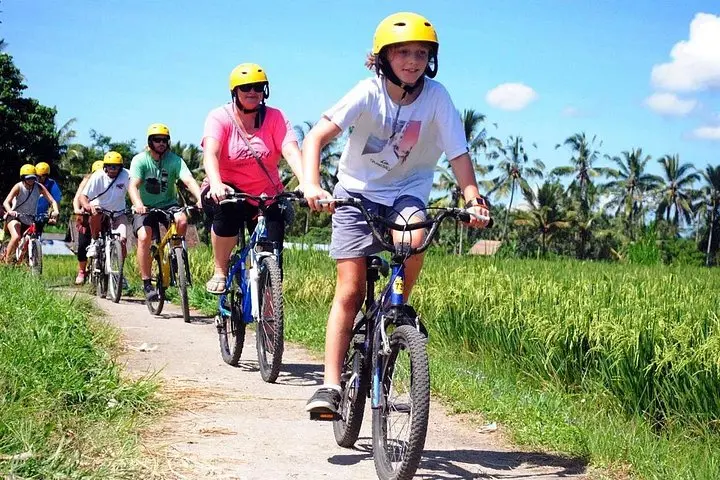
Operators supply safety-approved bikes and helmets; you can bring your own helmet or gloves if preferred.
Yes — pickups and drop-offs from common areas in Sanur, Kuta, Seminyak, Nusa Dua, Jimbaran and central Ubud are typically included.
Yes; the route is guided and generally gentle, but riders should be comfortable braking and changing gears on downhill sections.
Wandernesia operates guided outdoor trips and adventures with an emphasis on safety, stewardship, and memorable experiences.
Dawn breaks over the caldera and you stand at a high ridge where Mount Batur’s profile cuts the sky. The air is cool and sharp; guides load bikes and fit helmets while coffee steams on a restaurant terrace. When you push off, the road leans into a long, runnable descent—plantation rows sliding by, temple gates punctuating village turns, and the caldera watching as you coast.
Dawn breaks over the caldera and you stand at a high ridge where Mount Batur’s profile cuts the sky. The air is cool and sharp; guides load bikes and fit helmets while coffee steams on a restaurant terrace. When you push off, the road leans into a long, runnable descent—plantation rows sliding by, temple gates punctuating village turns, and the caldera watching as you coast.
This route threads the Kintamani plateau and drops toward central Bali. Geologically the ride skirts young volcanic landscape—lava flows and pumice beds from Batur’s eruptions—and gives sweeping views of terraced fields irrigated by the traditional subak water system. Culturally, villages like Keliki are small centers of craft: wood carving, miniature painting and temple rituals are part of daily life you’ll pass.
Expect roughly 15–25 km of mixed asphalt and village lanes with several hundred meters of net descent (many operators list a short guided ride of 60–180 minutes depending on stops). Roads vary from smooth downhill stretches to narrow, potholed turns used by scooters and trucks, so controlled braking and attention to traffic are essential.
Practical tips: start early to avoid mid-day heat, carry sunscreen and a refillable bottle, wear sturdy shoes and ready a light jacket for the cool morning. Guides supply safety gear and include a light breakfast and lunch in Ubud; bring small cash for temples and local snacks. The ride is scenic, social, and practical—an accessible way to feel Bali’s landscape, culture, and geology under your wheels.