THE ADVENTURE COLLECTIVE® · Independent discovery and booking for outdoor travel

A demanding 9-day Himalayan crossing from Taluka to Janki Chatti, the Bali Pass trek climbs from 2,080 m to about 4,900 m across meadows, lakes and glacial terrain. Expect summit-like exposure, camping support, and panoramic views of Kalanag and Bandarpunch.
A demanding 9-day Himalayan crossing from Taluka to Janki Chatti, the Bali Pass trek climbs from 2,080 m to about 4,900 m across meadows, lakes and glacial terrain. Expect summit-like exposure, camping support, and panoramic views of Kalanag and Bandarpunch.
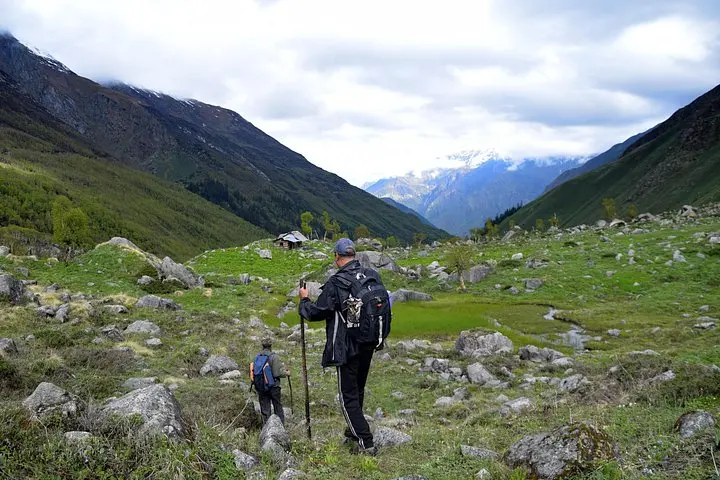
The trail opens with a dawn that smells of pine and damp earth, the village of Taluka shrinking behind you as a string of tents and pack animals step out into the high valley. Over nine days trekkers move from 2,080 m at Taluka toward a summit-like pass at roughly 4,900 m, trading forested benches and meadows for wind-swept moraines and glacial bowls.
Verified experiences and guided adventures in the surrounding area.
Operated by Himalaya Shelter · Uttarkashi, Uttarakhand
The trail opens with a dawn that smells of pine and damp earth, the village of Taluka shrinking behind you as a string of tents and pack animals step out into the high valley. Over nine days trekkers move from 2,080 m at Taluka toward a summit-like pass at roughly 4,900 m, trading forested benches and meadows for wind-swept moraines and glacial bowls.
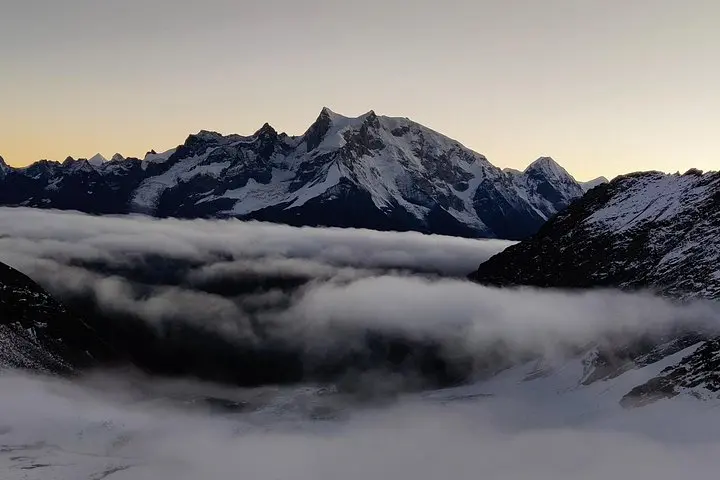
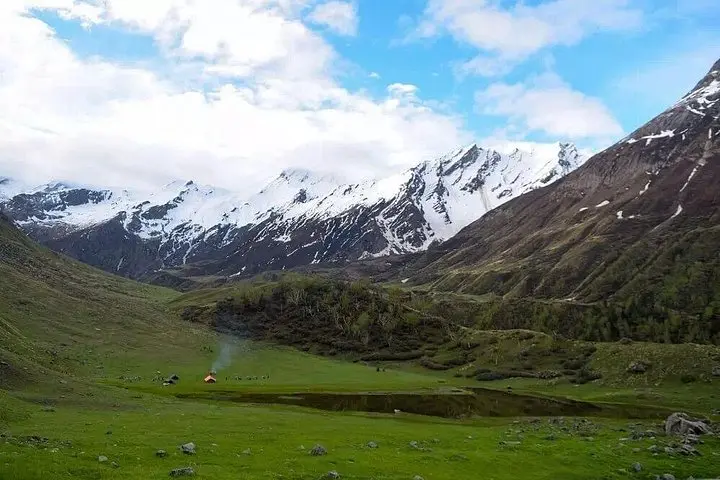
Geology here is dramatic: the Bandarpunch and Swargarohini ranges carve sharp ridgelines of granite and schist, with Kalanag (Black Peak, ~6,387 m) looming near the route. The trek crosses two large meadows—Devsu Thatch and Thanga—and skirts Ruinsara Lake before the steep, exposed ascent to Bali Pass, which behaves more like a short summit than a saddle. The route finishes near Janki Chatti with views of the Bandarpunch Glacier and Saptrishi Kund and an optional visit to the Yamunotri temple for those continuing into the Yamuna valley.
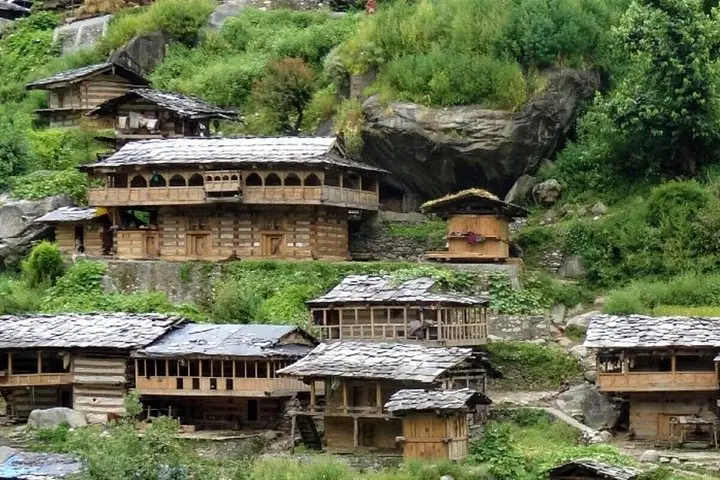
Culturally the region is small-village Garhwali: expect simple guesting, shepherding life in summer, and ritual stops at small shrines. Historically the passes connected pastoral circuits and seasonal trade; the landscape still carries those old footpaths.
Practical guidance: this is a difficult, high-altitude trek—plan for 66 km total, average 10 km per day, and around 2,820 m cumulative gain over several days. Acclimatize, carry waterproof shells, and use trekking poles. Guides, mule/porter support, tents and meals are usually included; microspikes and gaiters help on icy sections. Start a month of cardiovascular conditioning and hill repeats, and schedule the crossing in stable weather windows (late spring to early autumn).
It is rated difficult due to sustained altitude gain (to ~4,900 m), technical sections near the pass and daily distances—prepare with at least a month of focused fitness work.
Acute mountain sickness can occur; managed by gradual ascent, hydration, rest, and descent if symptoms worsen—operators include guides trained to recognize AMS.
Camping accommodation on double/triple share, dining and kitchen tents, and meals (breakfast, lunch, dinner, tea/snacks) are typically included in organized trips.
Late spring through early autumn (May–October) offers the most stable weather; shoulder seasons bring more snow and uncertain conditions.
Himalaya Shelter operates guided outdoor trips and adventures with an emphasis on safety, stewardship, and memorable experiences.
The trail opens with a dawn that smells of pine and damp earth, the village of Taluka shrinking behind you as a string of tents and pack animals step out into the high valley. Over nine days trekkers move from 2,080 m at Taluka toward a summit-like pass at roughly 4,900 m, trading forested benches and meadows for wind-swept moraines and glacial bowls.
The trail opens with a dawn that smells of pine and damp earth, the village of Taluka shrinking behind you as a string of tents and pack animals step out into the high valley. Over nine days trekkers move from 2,080 m at Taluka toward a summit-like pass at roughly 4,900 m, trading forested benches and meadows for wind-swept moraines and glacial bowls.
Geology here is dramatic: the Bandarpunch and Swargarohini ranges carve sharp ridgelines of granite and schist, with Kalanag (Black Peak, ~6,387 m) looming near the route. The trek crosses two large meadows—Devsu Thatch and Thanga—and skirts Ruinsara Lake before the steep, exposed ascent to Bali Pass, which behaves more like a short summit than a saddle. The route finishes near Janki Chatti with views of the Bandarpunch Glacier and Saptrishi Kund and an optional visit to the Yamunotri temple for those continuing into the Yamuna valley.
Culturally the region is small-village Garhwali: expect simple guesting, shepherding life in summer, and ritual stops at small shrines. Historically the passes connected pastoral circuits and seasonal trade; the landscape still carries those old footpaths.
Practical guidance: this is a difficult, high-altitude trek—plan for 66 km total, average 10 km per day, and around 2,820 m cumulative gain over several days. Acclimatize, carry waterproof shells, and use trekking poles. Guides, mule/porter support, tents and meals are usually included; microspikes and gaiters help on icy sections. Start a month of cardiovascular conditioning and hill repeats, and schedule the crossing in stable weather windows (late spring to early autumn).