THE ADVENTURE COLLECTIVE® · Independent discovery and booking for outdoor travel

Walk the seabed of Tanjung Benoa without swimming or a dive certificate—helmet-diving at 5–7 meters offers close encounters with tropical fish and coral. Learn what to expect, safety notes, and practical tips for planning this 30-minute underwater experience.
Walk the seabed of Tanjung Benoa without swimming or a dive certificate—helmet-diving at 5–7 meters offers close encounters with tropical fish and coral. Learn what to expect, safety notes, and practical tips for planning this 30-minute underwater experience.
You step off the boat, the shoreline of Tanjung Benoa thinning behind you, and the ocean takes on a different voice—soft, held-breath quiet beneath a clear helmet. In minutes you're guided down 5–7 meters to the sandy bottom, the helmet sealing a pocket of air so you can breathe normally while fish thread around your knees.
Verified experiences and guided adventures in the surrounding area.
Operated by Aryava Bali · Tanjung Benoa, Bali
You step off the boat, the shoreline of Tanjung Benoa thinning behind you, and the ocean takes on a different voice—soft, held-breath quiet beneath a clear helmet. In minutes you're guided down 5–7 meters to the sandy bottom, the helmet sealing a pocket of air so you can breathe normally while fish thread around your knees.
This stretch of the Bali peninsula has long been a working coastline—fishing villages, then tourism infrastructure—and the shallow coral gardens here formed on a limestone shelf that frames Benoa Bay. The reef is living rock: bommies, finger coral and plate formations that host wrasse, butterflyfish and the occasional green sea turtle. Local operators earned a reputation over the last two decades for making marine life accessible to non-divers while relying on standard surface-supplied helmet systems and trained guides.
Cultural notes: vendors and small temples line the nearby beach road; traditional boat builders still work in hidden coves. Respect the reef—feed fish only if the operator permits and follow guides’ instructions.
Practical guidance: sessions run about 30 minutes underwater but allow an hour for briefing, gearing and showering. No swimming or dive certification needed, but the activity is not recommended for pregnant guests or those with serious heart or spinal conditions. Expect warm tropical water temperatures year-round; visibility is best in Bali’s dry season. Bring reef-safe sunscreen, water shoes, and a waterproof camera if you want to capture the close-up colors.
No; the helmet supplies air from the surface and you walk on the seabed under guide supervision—swimming skills are not required.
Typically 5–7 meters beneath the surface, deep enough to experience reef life while remaining comfortable with normal breathing in the helmet.
Yes—the helmet creates an air pocket so your face and hair remain dry while you breathe normally through the supplied air.
Many operators allow children, but age and height minimums vary—confirm with the provider and disclose any health concerns when booking.
Aryava Bali operates guided outdoor trips and adventures with an emphasis on safety, stewardship, and memorable experiences.
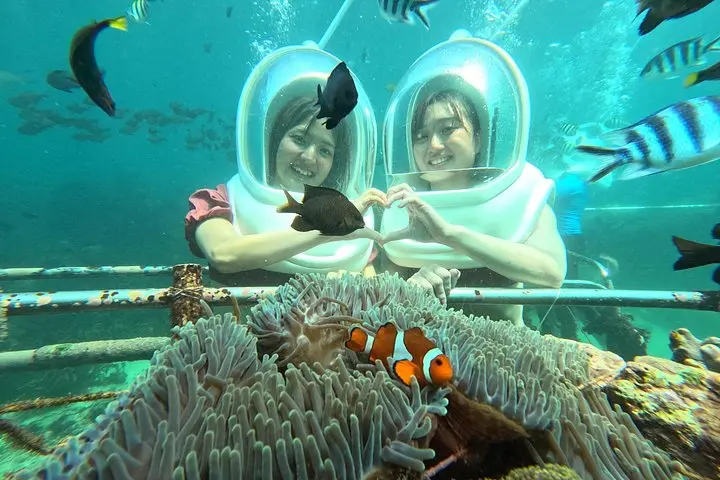
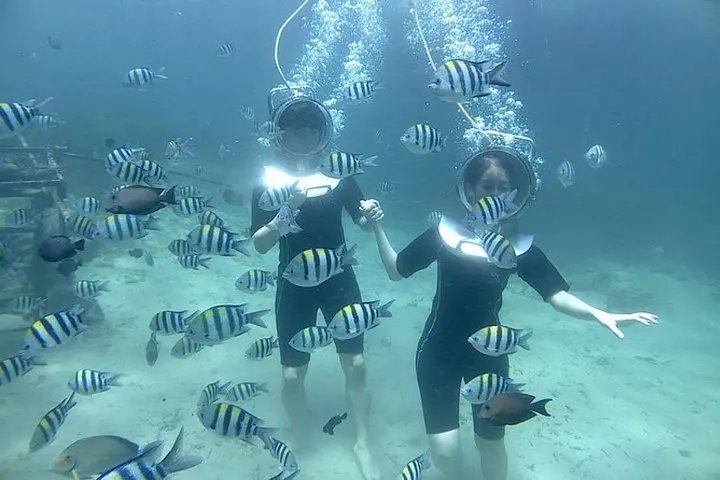
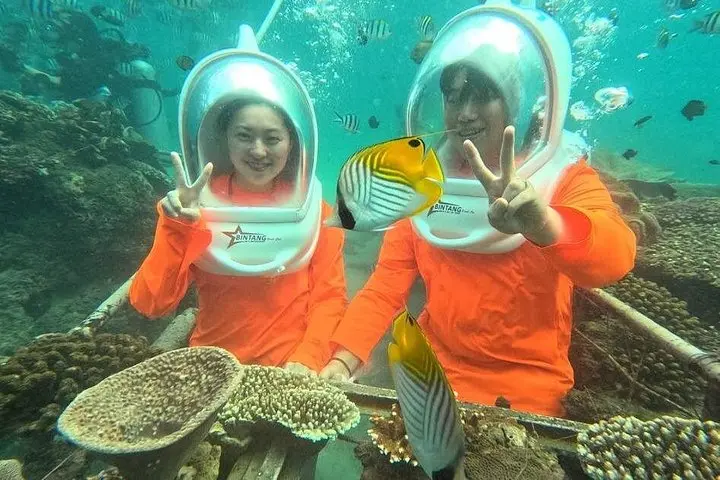
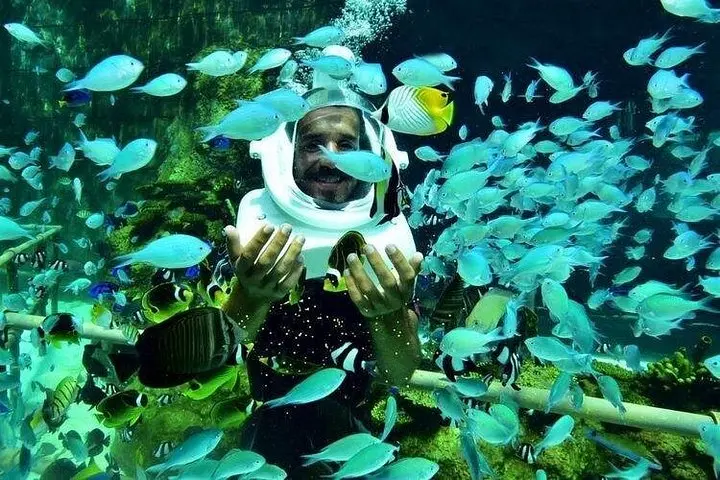
You step off the boat, the shoreline of Tanjung Benoa thinning behind you, and the ocean takes on a different voice—soft, held-breath quiet beneath a clear helmet. In minutes you're guided down 5–7 meters to the sandy bottom, the helmet sealing a pocket of air so you can breathe normally while fish thread around your knees.
You step off the boat, the shoreline of Tanjung Benoa thinning behind you, and the ocean takes on a different voice—soft, held-breath quiet beneath a clear helmet. In minutes you're guided down 5–7 meters to the sandy bottom, the helmet sealing a pocket of air so you can breathe normally while fish thread around your knees.
This stretch of the Bali peninsula has long been a working coastline—fishing villages, then tourism infrastructure—and the shallow coral gardens here formed on a limestone shelf that frames Benoa Bay. The reef is living rock: bommies, finger coral and plate formations that host wrasse, butterflyfish and the occasional green sea turtle. Local operators earned a reputation over the last two decades for making marine life accessible to non-divers while relying on standard surface-supplied helmet systems and trained guides.
Cultural notes: vendors and small temples line the nearby beach road; traditional boat builders still work in hidden coves. Respect the reef—feed fish only if the operator permits and follow guides’ instructions.
Practical guidance: sessions run about 30 minutes underwater but allow an hour for briefing, gearing and showering. No swimming or dive certification needed, but the activity is not recommended for pregnant guests or those with serious heart or spinal conditions. Expect warm tropical water temperatures year-round; visibility is best in Bali’s dry season. Bring reef-safe sunscreen, water shoes, and a waterproof camera if you want to capture the close-up colors.