THE ADVENTURE COLLECTIVE® · Independent discovery and booking for outdoor travel

Soar above Tegalalang, swim beneath Kanto Lampo, and explore classical Balinese temple art in a single full-day loop from Ubud. This practical guide tells you what to expect, when to go, and how to pack for the day.
Soar above Tegalalang, swim beneath Kanto Lampo, and explore classical Balinese temple art in a single full-day loop from Ubud. This practical guide tells you what to expect, when to go, and how to pack for the day.
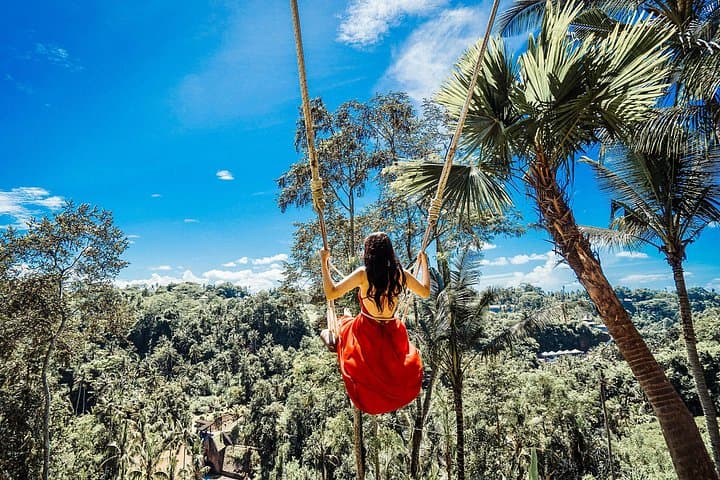
The rope creaks, the jungle exhales, and for a heartbeat you hang above a green stairway that seems to keep going. On the Bali Swing the air pushes at your back and the valley opens—rice terraces folding away like careful steps, a river threading the gorge, and a small warung far below steaming with coffee. That early-morning swing is the trip’s signature frame, but the day around it is an old-fashioned immersion: temple carvings, a plunge pool beneath a waterfall, and the slow geometry of Balinese paddies.
Verified experiences and guided adventures in the surrounding area.
Operated by TripGuru · Ubud, Bali
The rope creaks, the jungle exhales, and for a heartbeat you hang above a green stairway that seems to keep going. On the Bali Swing the air pushes at your back and the valley opens—rice terraces folding away like careful steps, a river threading the gorge, and a small warung far below steaming with coffee. That early-morning swing is the trip’s signature frame, but the day around it is an old-fashioned immersion: temple carvings, a plunge pool beneath a waterfall, and the slow geometry of Balinese paddies.
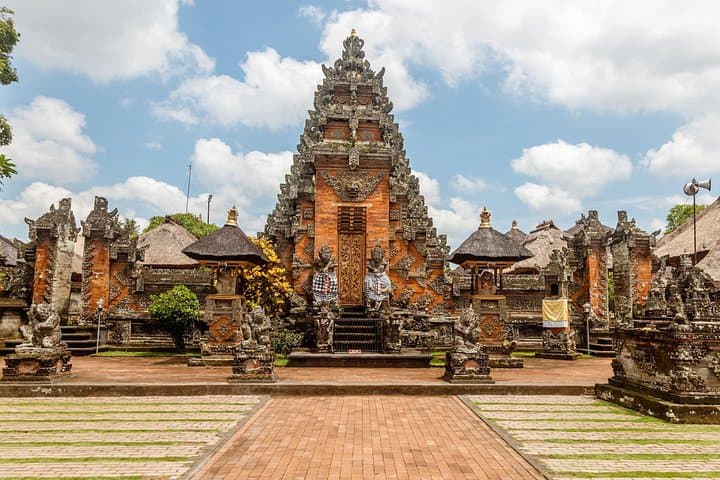
Start at Pura Batuan, a village temple whose stone gateways and guardian statues reflect centuries of island craft. The temple’s reliefs and split gates are expressions of Balinese Hindu practice and of the subak system—the cooperative irrigation network that has shaped the landscape and social calendars around Ubud for generations. The terraces at Tegalalang are the most photographed stretch of that system: narrow bench-like fields cut into steep hills, living arrangements engineered to channel volcanic water from the island’s central highlands.
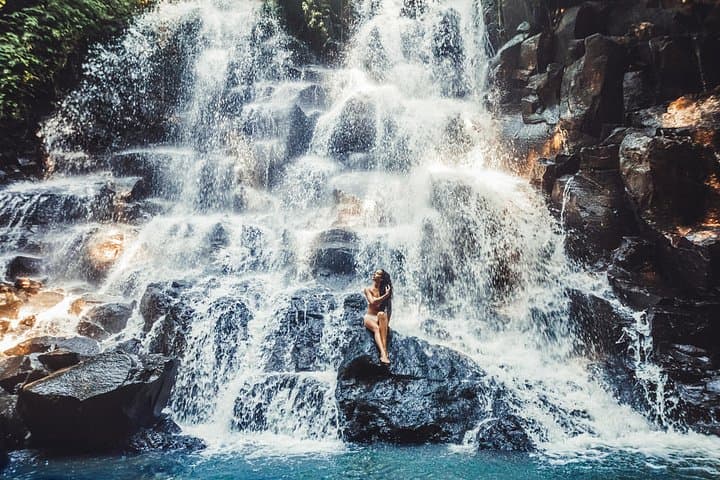
Geology matters here. Bali’s soils are the result of repeated volcanic eruptions; the rich, friable earth supports wet-rice agriculture and the dense native forest that drops away beneath the swing. Kanto Lampo waterfall, carved into basalt and older lava flows, offers a cool counterpoint to sunlit terraces: a short hike and a scramble bring you to a column of water that dares you to step in and let currents push at your legs.
Culture and commerce meet on this route. The Bali Swing attraction grew from small local platforms to a curated visitor circuit—expect staged photo spots, mandatory safety harnesses, and a café or two that frame the view. Guides here balance hospitality with the practical: dress modestly at temples, remove shoes where indicated, and accept that photo queues are part of the day.
Practical guidance: plan for 8–9 hours door-to-door. Wear grippy shoes for wet stone at Kanto Lampo and bring a lightweight rain jacket during the wet season. Carry cash—small local fees and vendor purchases are common—and a waterproof pouch for your phone. Hydrate; the valley can heat up quickly once the morning sun clears the canopy.
Timing makes the difference: an early pickup avoids mid-morning crowds at Tegalalang and gives you cleaner light for photos. Bring sunscreen, insect repellent, and a modest tip for your local guide if they arrange shots or help with transportation. Respect signs at temples: cover shoulders and knees, and follow the guide’s directions around sacred sites.
This day-size route offers a compact survey of central Bali: ritual architecture, engineered landscapes, jungle water, and the adrenaline of a swing. It’s accessible, visual, and easily slotted into a Ubud-centered itinerary—just be ready to step back into both nature and the practiced rhythms of Balinese village life.
Operators use harnesses and staffed platforms; children are allowed but must meet height/weight rules—check with the operator before booking.
Some temple stops may have small local donations not covered by the tour; bring a bit of cash for offerings and sashes if required.
Yes—the itinerary includes a short hike and a swim window, but water flow varies seasonally so ask your guide before entering the pool.
Tipping is customary but discretionary; small tips for helpful guides or drivers are appreciated and go a long way locally.
This activity is not recommended for pregnant travelers due to swings and slippery terrain at the waterfall.
Pickup is typically 60 minutes before the meeting time and the driver will confirm the exact time the evening before; be at the lobby 10 minutes early.
TripGuru operates guided outdoor trips and adventures with an emphasis on safety, stewardship, and memorable experiences.

The rope creaks, the jungle exhales, and for a heartbeat you hang above a green stairway that seems to keep going. On the Bali Swing the air pushes at your back and the valley opens—rice terraces folding away like careful steps, a river threading the gorge, and a small warung far below steaming with coffee. That early-morning swing is the trip’s signature frame, but the day around it is an old-fashioned immersion: temple carvings, a plunge pool beneath a waterfall, and the slow geometry of Balinese paddies.
The rope creaks, the jungle exhales, and for a heartbeat you hang above a green stairway that seems to keep going. On the Bali Swing the air pushes at your back and the valley opens—rice terraces folding away like careful steps, a river threading the gorge, and a small warung far below steaming with coffee. That early-morning swing is the trip’s signature frame, but the day around it is an old-fashioned immersion: temple carvings, a plunge pool beneath a waterfall, and the slow geometry of Balinese paddies.
Start at Pura Batuan, a village temple whose stone gateways and guardian statues reflect centuries of island craft. The temple’s reliefs and split gates are expressions of Balinese Hindu practice and of the subak system—the cooperative irrigation network that has shaped the landscape and social calendars around Ubud for generations. The terraces at Tegalalang are the most photographed stretch of that system: narrow bench-like fields cut into steep hills, living arrangements engineered to channel volcanic water from the island’s central highlands.
Geology matters here. Bali’s soils are the result of repeated volcanic eruptions; the rich, friable earth supports wet-rice agriculture and the dense native forest that drops away beneath the swing. Kanto Lampo waterfall, carved into basalt and older lava flows, offers a cool counterpoint to sunlit terraces: a short hike and a scramble bring you to a column of water that dares you to step in and let currents push at your legs.
Culture and commerce meet on this route. The Bali Swing attraction grew from small local platforms to a curated visitor circuit—expect staged photo spots, mandatory safety harnesses, and a café or two that frame the view. Guides here balance hospitality with the practical: dress modestly at temples, remove shoes where indicated, and accept that photo queues are part of the day.
Practical guidance: plan for 8–9 hours door-to-door. Wear grippy shoes for wet stone at Kanto Lampo and bring a lightweight rain jacket during the wet season. Carry cash—small local fees and vendor purchases are common—and a waterproof pouch for your phone. Hydrate; the valley can heat up quickly once the morning sun clears the canopy.
Timing makes the difference: an early pickup avoids mid-morning crowds at Tegalalang and gives you cleaner light for photos. Bring sunscreen, insect repellent, and a modest tip for your local guide if they arrange shots or help with transportation. Respect signs at temples: cover shoulders and knees, and follow the guide’s directions around sacred sites.
This day-size route offers a compact survey of central Bali: ritual architecture, engineered landscapes, jungle water, and the adrenaline of a swing. It’s accessible, visual, and easily slotted into a Ubud-centered itinerary—just be ready to step back into both nature and the practiced rhythms of Balinese village life.