THE ADVENTURE COLLECTIVE® · Independent discovery and booking for outdoor travel

Spend a day in Pacung Sangeh learning temple etiquette, crafting Canang Sari offerings, and taking part in a holy-water cleansing. This small-group visit pairs hands-on cultural exchanges with a gentle canyon ritual.
Spend a day in Pacung Sangeh learning temple etiquette, crafting Canang Sari offerings, and taking part in a holy-water cleansing. This small-group visit pairs hands-on cultural exchanges with a gentle canyon ritual.
A cool morning mist clings to the rice terraces as a small village compound opens its gates. Guests arrive by air-conditioned transfer, led into a family courtyard where children dart between bale (open pavilions) and women prepare sticky cakes and fresh Bali kopi. The day moves at a human pace—tea, conversation, hands learning to fold palm-leaf offerings—until the sacred gorge of the Holy Water site waits like a quiet final act.
Verified experiences and guided adventures in the surrounding area.
Operated by Bali Buddies · Sangeh Village, Bali
A cool morning mist clings to the rice terraces as a small village compound opens its gates. Guests arrive by air-conditioned transfer, led into a family courtyard where children dart between bale (open pavilions) and women prepare sticky cakes and fresh Bali kopi. The day moves at a human pace—tea, conversation, hands learning to fold palm-leaf offerings—until the sacred gorge of the Holy Water site waits like a quiet final act.
Sangeh and nearby Pacung are part of central Bali’s landscape of volcanic soils, terraced paddies and centuries-old temples. The area’s geology—old lava flows and river-cut canyons—shaped water rituals that became central to Balinese Hindu practice; the island’s irrigation and temple systems are woven into village life. Visitors witness living culture: family temple etiquette, ritual dress (sarong and sash), and the making of Canang Sari, the daily offering.
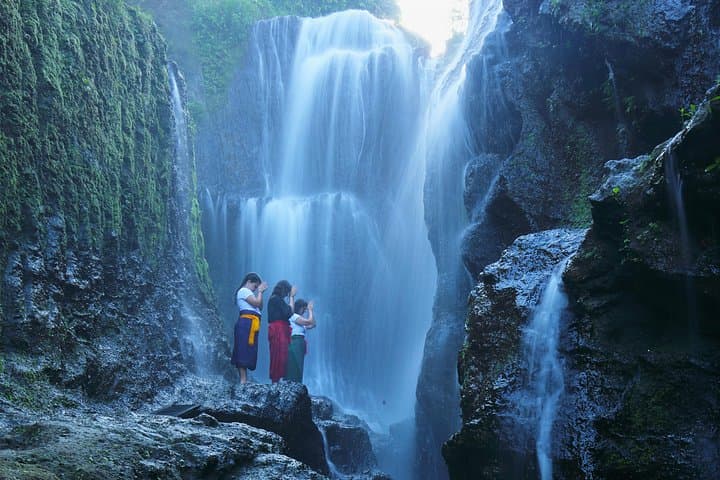
Expect a mix of short walks across compacted farm tracks, time inside a lived-in family compound, a warung lunch beside wide rice-field views, and a guided blessing at a holy-water cascade where willing guests can participate in a cleansing ritual. Guides are village members who explain protocols and lead safe entry to the canyon’s pools.
Practical notes: dress modestly (shoulders and knees covered), bring quick-dry swimwear if you plan to enter the water, and carry small cash for souvenirs or extra refreshments. Mornings offer cooler temperatures and softer light for photos; midday can be hot and humid. The experience is low-impact but culturally specific—observe, ask permission before photographing people, and follow guides’ instructions in sacred spaces.
The experience runs about 7 hours and commonly starts with morning pickup around 8:30 AM; exact pickup is confirmed at booking.
Participation is optional; guides explain the process and you can observe or receive a blessing without entering the water.
Morning tea and a village warung lunch are included; notify the operator of allergies or preferences so they can arrange milder options.
Yes—tour notes indicate it’s accessible for infants and small children, though canyon immersion may not be appropriate for very young kids.
Bali Buddies operates guided outdoor trips and adventures with an emphasis on safety, stewardship, and memorable experiences.



A cool morning mist clings to the rice terraces as a small village compound opens its gates. Guests arrive by air-conditioned transfer, led into a family courtyard where children dart between bale (open pavilions) and women prepare sticky cakes and fresh Bali kopi. The day moves at a human pace—tea, conversation, hands learning to fold palm-leaf offerings—until the sacred gorge of the Holy Water site waits like a quiet final act.
A cool morning mist clings to the rice terraces as a small village compound opens its gates. Guests arrive by air-conditioned transfer, led into a family courtyard where children dart between bale (open pavilions) and women prepare sticky cakes and fresh Bali kopi. The day moves at a human pace—tea, conversation, hands learning to fold palm-leaf offerings—until the sacred gorge of the Holy Water site waits like a quiet final act.
Sangeh and nearby Pacung are part of central Bali’s landscape of volcanic soils, terraced paddies and centuries-old temples. The area’s geology—old lava flows and river-cut canyons—shaped water rituals that became central to Balinese Hindu practice; the island’s irrigation and temple systems are woven into village life. Visitors witness living culture: family temple etiquette, ritual dress (sarong and sash), and the making of Canang Sari, the daily offering.
Expect a mix of short walks across compacted farm tracks, time inside a lived-in family compound, a warung lunch beside wide rice-field views, and a guided blessing at a holy-water cascade where willing guests can participate in a cleansing ritual. Guides are village members who explain protocols and lead safe entry to the canyon’s pools.
Practical notes: dress modestly (shoulders and knees covered), bring quick-dry swimwear if you plan to enter the water, and carry small cash for souvenirs or extra refreshments. Mornings offer cooler temperatures and softer light for photos; midday can be hot and humid. The experience is low-impact but culturally specific—observe, ask permission before photographing people, and follow guides’ instructions in sacred spaces.