THE ADVENTURE COLLECTIVE® · Independent discovery and booking for outdoor travel

A brisk two-hour boat tour from Paracas delivers close views of sea lions, seabird colonies, Humboldt penguins and the mysterious Candelabro geoglyph. Ideal for cruise passengers seeking high-value wildlife viewing with minimal walking.
A brisk two-hour boat tour from Paracas delivers close views of sea lions, seabird colonies, Humboldt penguins and the mysterious Candelabro geoglyph. Ideal for cruise passengers seeking high-value wildlife viewing with minimal walking.
A wind-driven swell rocks the bow as the Paracas coast recedes and the first dark shapes of the Ballestas Islands appear on the horizon. Sea lions haul out on wind-polished rocks, and a column of guano-smudged cliffs vibrates with the calls of booby and cormorant. The boat threads a narrow channel past weathered pinnacles to reveal the Candelabro geoglyph etched on a low coastal bluff — an enigmatic marker visible from the ocean that dares you to guess its origin.
Verified experiences and guided adventures in the surrounding area.
Operated by JD ADVENTURE TRAVEL · Paracas, Ica
A wind-driven swell rocks the bow as the Paracas coast recedes and the first dark shapes of the Ballestas Islands appear on the horizon. Sea lions haul out on wind-polished rocks, and a column of guano-smudged cliffs vibrates with the calls of booby and cormorant. The boat threads a narrow channel past weathered pinnacles to reveal the Candelabro geoglyph etched on a low coastal bluff — an enigmatic marker visible from the ocean that dares you to guess its origin.
The islands are volcanic outcrops shaped by wave erosion and the cold Humboldt Current, which feeds nutrient-rich waters and supports a concentrated marine food web. Humans have visited this stretch of coastline for millennia, from pre-Columbian fishermen to 19th-century guano collectors; today the islands are a protected wildlife refuge and a prime place to see Humboldt penguins, Peruvian pelicans, and playful sea lions.
Practicalities matter: the standard boat loop is about two hours from Paracas harbor, often on a shared 30-seat vessel. Expect open-deck exposure, short distances between viewing points, and steady but gentle boat motion. Bring layered windproof gear, sunscreen, and a camera with a zoom for distant wildlife. Time your trip for morning light when birds are most active and the sea is usually calmer.
This excursion suits cruise passengers on a tight schedule — you’ll use the ship shuttle to Paracas and should arrive 30 minutes early. Entrance fees are paid locally in cash; guides speak English and Spanish. For those after compact, high-density wildlife viewing with minimal hiking, the Ballestas Islands deliver an efficient, sensory-rich Pacific outing.
Yes — entrance fees for the Paracas National Reserve are typically paid in cash on arrival; bring small Peruvian soles.
Yes — itineraries are designed for cruise passengers who use the ship shuttle; arrive 30 minutes before the scheduled time.
Common sightings include Peruvian pelicans, guanay cormorants, Humboldt penguins in season, and colonies of South American sea lions.
The operator lists wheelchair-accessible services for transport and some boarding assistance, but boarding a small boat may require steps or assistance from staff.
JD ADVENTURE TRAVEL operates guided outdoor trips and adventures with an emphasis on safety, stewardship, and memorable experiences.

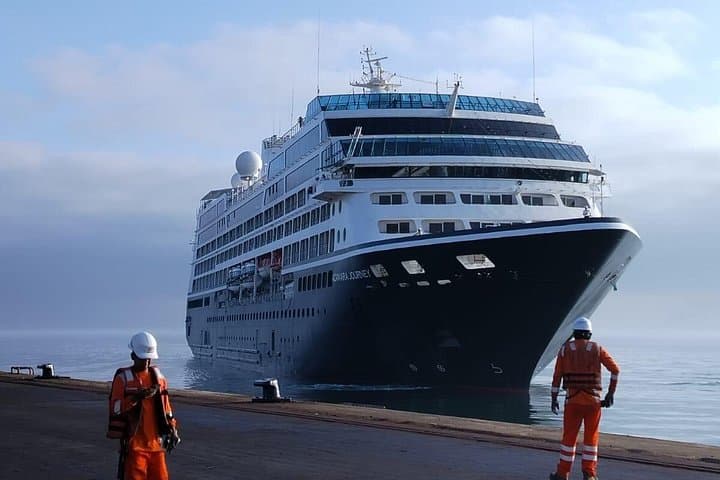

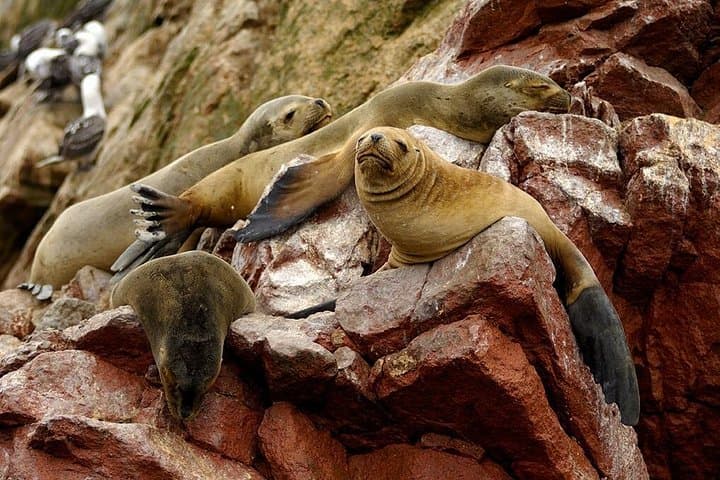
A wind-driven swell rocks the bow as the Paracas coast recedes and the first dark shapes of the Ballestas Islands appear on the horizon. Sea lions haul out on wind-polished rocks, and a column of guano-smudged cliffs vibrates with the calls of booby and cormorant. The boat threads a narrow channel past weathered pinnacles to reveal the Candelabro geoglyph etched on a low coastal bluff — an enigmatic marker visible from the ocean that dares you to guess its origin.
A wind-driven swell rocks the bow as the Paracas coast recedes and the first dark shapes of the Ballestas Islands appear on the horizon. Sea lions haul out on wind-polished rocks, and a column of guano-smudged cliffs vibrates with the calls of booby and cormorant. The boat threads a narrow channel past weathered pinnacles to reveal the Candelabro geoglyph etched on a low coastal bluff — an enigmatic marker visible from the ocean that dares you to guess its origin.
The islands are volcanic outcrops shaped by wave erosion and the cold Humboldt Current, which feeds nutrient-rich waters and supports a concentrated marine food web. Humans have visited this stretch of coastline for millennia, from pre-Columbian fishermen to 19th-century guano collectors; today the islands are a protected wildlife refuge and a prime place to see Humboldt penguins, Peruvian pelicans, and playful sea lions.
Practicalities matter: the standard boat loop is about two hours from Paracas harbor, often on a shared 30-seat vessel. Expect open-deck exposure, short distances between viewing points, and steady but gentle boat motion. Bring layered windproof gear, sunscreen, and a camera with a zoom for distant wildlife. Time your trip for morning light when birds are most active and the sea is usually calmer.
This excursion suits cruise passengers on a tight schedule — you’ll use the ship shuttle to Paracas and should arrive 30 minutes early. Entrance fees are paid locally in cash; guides speak English and Spanish. For those after compact, high-density wildlife viewing with minimal hiking, the Ballestas Islands deliver an efficient, sensory-rich Pacific outing.