THE ADVENTURE COLLECTIVE® · Independent discovery and booking for outdoor travel

Combine a wildlife-rich boat trip to the Ballestas Islands with high-speed dune buggies and sandboarding at Huacachina. This full-day loop pairs coastal wildlife viewing with desert adrenaline and practical local culture.
Combine a wildlife-rich boat trip to the Ballestas Islands with high-speed dune buggies and sandboarding at Huacachina. This full-day loop pairs coastal wildlife viewing with desert adrenaline and practical local culture.
The morning light off Paracas cuts across glassy water as a compact tour boat eases away from the port, engines low and binoculars up. Sea lions bark from rocky perches; long-bodied Humboldt penguins patrol kelp patches; the Candelabra geoglyph looms on a distant sand slope as if pointing the way inland.
Verified experiences and guided adventures in the surrounding area.
Operated by Peruvian Worldview · Paracas, Ica Region
The morning light off Paracas cuts across glassy water as a compact tour boat eases away from the port, engines low and binoculars up. Sea lions bark from rocky perches; long-bodied Humboldt penguins patrol kelp patches; the Candelabra geoglyph looms on a distant sand slope as if pointing the way inland.
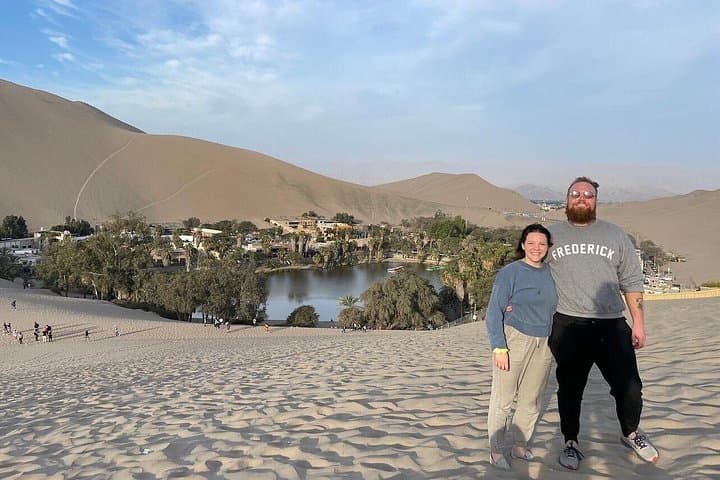
This paired itinerary moves from marine ecology to desert dynamics. The Ballestas Islands sit on upwelling-fed waters that support rich food chains—anchovy schools feed guano-producing birds that drew ancient guano harvests and modern conservation attention. The Candelabra is a mysterious marker etched into Pisco-sized dunes above Paracas Bay, visible only from sea or certain cliff viewpoints. Later, Huacachina’s oasis and the surrounding dune field record wind-sculpted sand and the geologic uplift of coastal terraces; buggies zip over leeward faces while sandboards slide the wind-polished slopes.
Culturally, the Ica Valley blends pisco vineyards, Paracas-era archaeology, and desert-reliant communities; guide commentary typically ties wildlife sightings to regional conservation work.
Practical guidance: bring layered sun protection, a light wind layer for the boat, and secure shoes for dune runs. Expect an early start and a long day—most operators include transfers from Lima or Paracas, boat visits limited by sea state, and timed dune runs to avoid strongest midday sun. Listen to guides about wildlife distancing and stable footing in shifting sand: the ocean and desert both demand respect and reward attention with close-up wildlife and sudden, sweeping views.
Typical departures run very early with returns late afternoon or evening; the full excursion lasts roughly 14–16 hours depending on pickup location.
Humboldt penguins are common around the Ballestas but sightings can vary with season and sea conditions; guides visit known colonies to maximize chances.
Yes—operators provide brief instruction and gear; start on gentler slopes with a guide until you’re comfortable.
Many operators include round-trip transfers from Lima or Paracas—confirm your pickup point and time when booking.
Peruvian Worldview operates guided outdoor trips and adventures with an emphasis on safety, stewardship, and memorable experiences.



The morning light off Paracas cuts across glassy water as a compact tour boat eases away from the port, engines low and binoculars up. Sea lions bark from rocky perches; long-bodied Humboldt penguins patrol kelp patches; the Candelabra geoglyph looms on a distant sand slope as if pointing the way inland.
The morning light off Paracas cuts across glassy water as a compact tour boat eases away from the port, engines low and binoculars up. Sea lions bark from rocky perches; long-bodied Humboldt penguins patrol kelp patches; the Candelabra geoglyph looms on a distant sand slope as if pointing the way inland.
This paired itinerary moves from marine ecology to desert dynamics. The Ballestas Islands sit on upwelling-fed waters that support rich food chains—anchovy schools feed guano-producing birds that drew ancient guano harvests and modern conservation attention. The Candelabra is a mysterious marker etched into Pisco-sized dunes above Paracas Bay, visible only from sea or certain cliff viewpoints. Later, Huacachina’s oasis and the surrounding dune field record wind-sculpted sand and the geologic uplift of coastal terraces; buggies zip over leeward faces while sandboards slide the wind-polished slopes.
Culturally, the Ica Valley blends pisco vineyards, Paracas-era archaeology, and desert-reliant communities; guide commentary typically ties wildlife sightings to regional conservation work.
Practical guidance: bring layered sun protection, a light wind layer for the boat, and secure shoes for dune runs. Expect an early start and a long day—most operators include transfers from Lima or Paracas, boat visits limited by sea state, and timed dune runs to avoid strongest midday sun. Listen to guides about wildlife distancing and stable footing in shifting sand: the ocean and desert both demand respect and reward attention with close-up wildlife and sudden, sweeping views.