THE ADVENTURE COLLECTIVE® · Independent discovery and booking for outdoor travel

Explore eight of Balmoral’s historic cairns on a 10km circular walk through Caledonian pine and granite ridges with castle grounds access. Expect royal history, native wildlife, and variable forest tracks over 4–7 hours.
Explore eight of Balmoral’s historic cairns on a 10km circular walk through Caledonian pine and granite ridges with castle grounds access. Expect royal history, native wildlife, and variable forest tracks over 4–7 hours.
A cool wind threads through Caledonian pines as the group sets off from the castle gates, the grey stone of Balmoral receding behind them while forest paths climb and level in equal measure. The walk moves in a circle around estate land where cairns—pyramids of stone and memory—rise on ridgelines, each placed to mark a moment in royal history. The air smells of pine resin and wet earth; the rhythm of boots on track becomes the day’s metronome.
Verified experiences and guided adventures in the surrounding area.
Operated by Hillgoers · Ballater, Aberdeenshire
A cool wind threads through Caledonian pines as the group sets off from the castle gates, the grey stone of Balmoral receding behind them while forest paths climb and level in equal measure. The walk moves in a circle around estate land where cairns—pyramids of stone and memory—rise on ridgelines, each placed to mark a moment in royal history. The air smells of pine resin and wet earth; the rhythm of boots on track becomes the day’s metronome.
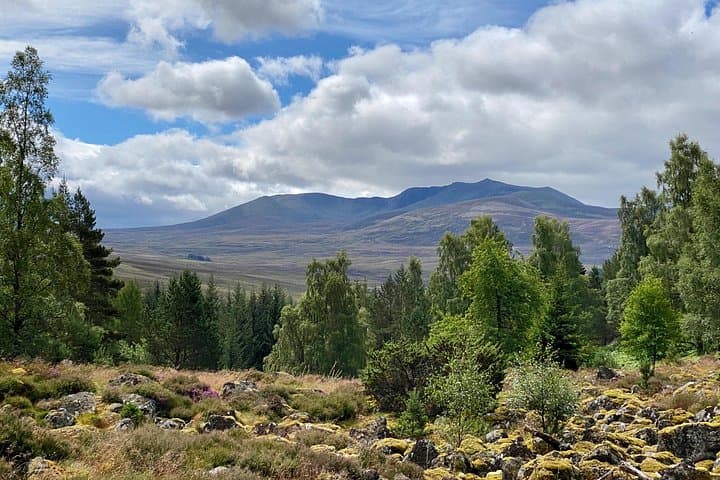
This guided route covers roughly 10km over forest tracks with several uphill stretches, and includes entry to the castle grounds and, time permitting, the ballroom and café. The cairns date from the 19th century, many commissioned by Queen Victoria and Prince Albert; the route threads natural history with human story, passing over ancient glacial deposits and granite outcrops typical of the Cairngorm foothills.
Guides explain the estate’s royal connections while pointing out native flora—juniper, Scots pine, bilberry—and the birdlife drawn to the pines. Local culture still orbits seasonal estate work: deer stalks, estate forestry, and longstanding conservation practices.
Practicalities: expect 4–7 hours on variable terrain, waterproof layers, and sturdy boots. Bring water, snacks, and binoculars for red grouse or red deer views. The group size is small; the guide-led sections focus on cairns and ecology, while castle access includes a self-guided audio component. Start mid-morning for softer light on the cairns, and check weather—conditions can change fast at this latitude. Respect signage and keep to tracks to protect ground-nesting birds and fragile peat soils.
Yes—entry to the castle grounds is included and the itinerary may allow time in the ballroom, café and shop, though parts of the castle visit are self-guided with audio.
The guided walk covers approximately 10km and lasts between 4 and 7 hours depending on pace and time spent at the cairns and castle.
A moderate level of fitness is recommended—participants should be comfortable with uneven terrain and some steady uphill sections on forest tracks.
Balmoral Estate has specific rules; dogs may be restricted in certain areas and during stalking seasons—check with the operator in advance and keep pets under control.
Hillgoers operates guided outdoor trips and adventures with an emphasis on safety, stewardship, and memorable experiences.
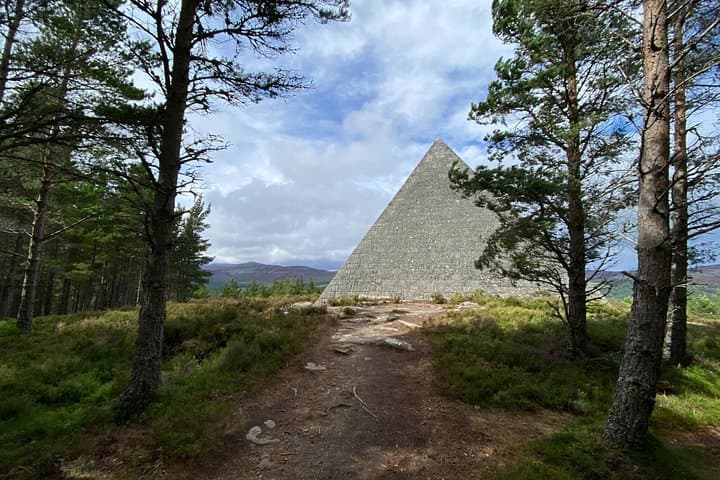
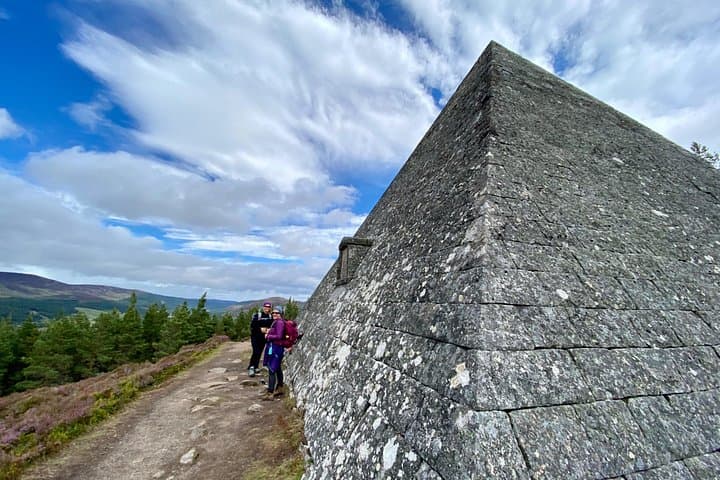
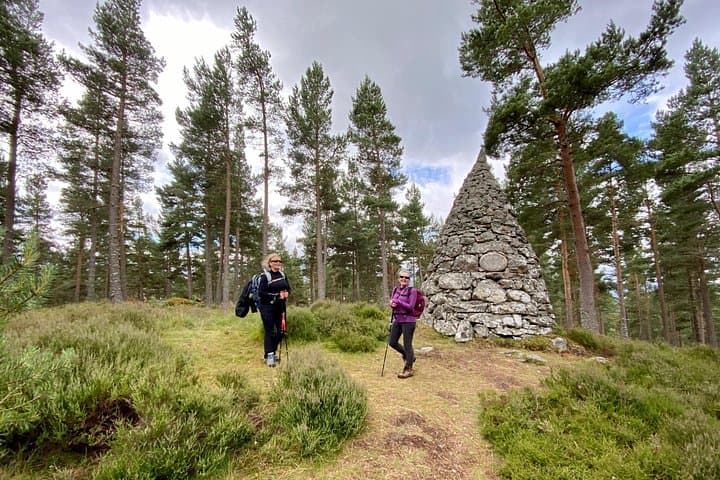
A cool wind threads through Caledonian pines as the group sets off from the castle gates, the grey stone of Balmoral receding behind them while forest paths climb and level in equal measure. The walk moves in a circle around estate land where cairns—pyramids of stone and memory—rise on ridgelines, each placed to mark a moment in royal history. The air smells of pine resin and wet earth; the rhythm of boots on track becomes the day’s metronome.
A cool wind threads through Caledonian pines as the group sets off from the castle gates, the grey stone of Balmoral receding behind them while forest paths climb and level in equal measure. The walk moves in a circle around estate land where cairns—pyramids of stone and memory—rise on ridgelines, each placed to mark a moment in royal history. The air smells of pine resin and wet earth; the rhythm of boots on track becomes the day’s metronome.
This guided route covers roughly 10km over forest tracks with several uphill stretches, and includes entry to the castle grounds and, time permitting, the ballroom and café. The cairns date from the 19th century, many commissioned by Queen Victoria and Prince Albert; the route threads natural history with human story, passing over ancient glacial deposits and granite outcrops typical of the Cairngorm foothills.
Guides explain the estate’s royal connections while pointing out native flora—juniper, Scots pine, bilberry—and the birdlife drawn to the pines. Local culture still orbits seasonal estate work: deer stalks, estate forestry, and longstanding conservation practices.
Practicalities: expect 4–7 hours on variable terrain, waterproof layers, and sturdy boots. Bring water, snacks, and binoculars for red grouse or red deer views. The group size is small; the guide-led sections focus on cairns and ecology, while castle access includes a self-guided audio component. Start mid-morning for softer light on the cairns, and check weather—conditions can change fast at this latitude. Respect signage and keep to tracks to protect ground-nesting birds and fragile peat soils.