THE ADVENTURE COLLECTIVE® · Independent discovery and booking for outdoor travel

A full-day hike from Kalupahana to Bambarakanda and Lanka Ella weaves steep tea slopes, narrow hairpin sections called Devil’s Staircase, and two dramatic waterfalls — including Sri Lanka’s tallest cascade. Expect muddy tracks, shaded gorges, and a packed lunch at the top.
A full-day hike from Kalupahana to Bambarakanda and Lanka Ella weaves steep tea slopes, narrow hairpin sections called Devil’s Staircase, and two dramatic waterfalls — including Sri Lanka’s tallest cascade. Expect muddy tracks, shaded gorges, and a packed lunch at the top.
Mist hangs in the tea rows as the group walks from Kalupahana, the trail narrowing between abandoned estate buildings and green terraces. Leaves slap the trail; distant water calls. The route climbs through a place locals call Devil’s Staircase — a steep, hairpin-strewn ribbon that tests the legs and rewards them with a clearing where the tallest cascade in Sri Lanka, Bambarakanda, announced itself in a silver drop.
Verified experiences and guided adventures in the surrounding area.
Operated by Train Journeys in Sri Lanka · Kalupahana, Uva Province
Mist hangs in the tea rows as the group walks from Kalupahana, the trail narrowing between abandoned estate buildings and green terraces. Leaves slap the trail; distant water calls. The route climbs through a place locals call Devil’s Staircase — a steep, hairpin-strewn ribbon that tests the legs and rewards them with a clearing where the tallest cascade in Sri Lanka, Bambarakanda, announced itself in a silver drop.
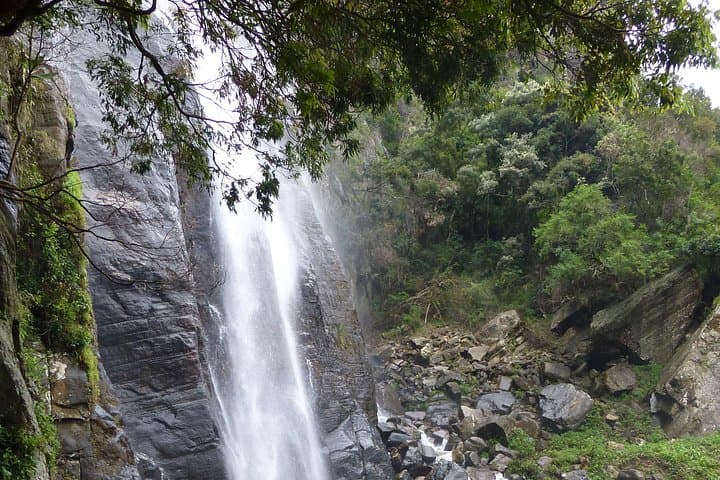
This part of Uva Province is geologically young highlands carved from uplifted plateaus and ancient rivers. Tea, planted during the colonial period, shapes the hillsides and frames the view; village homesteads keep a quieter, agrarian rhythm. Lanka Ella, lower down in a shaded gorge, gets its name from a pool shaped like the island below the falls — a local detail that hints at the area’s close relationship between landform and lore.
Expect dirt tracks, muddy steps, short stretches of loose scree and occasional stone stairways cut by estate workers. The hike typically takes about 4–5 hours round trip with breaks; guides include a packed lunch and a cold beer at the top. Cultural moments are part of the day — passing through small settlements, greeting families and navigating narrow lanes where tea pluckers move with practiced ease.
Practical advice: start early to avoid afternoon cloud build-up, wear grippy footwear for wet rock, carry at least 1L of water beyond what’s provided, and be prepared for sudden showers. Respect private estate land and local customs; follow your guide’s route to minimize impact and keep the experience safe and straightforward.
Moderate: several sustained uphill sections and some narrow hairpin bends (Devil’s Staircase); suitable for hikers with reasonable fitness.
Yes — hotel pickup to Kalupahana, a guided hike, packed lunch and one 500ml water bottle plus one canned beer at the top are included in the standard tour package.
Grip-soled hiking shoes, light rain jacket, sun protection, extra water and any personal medications; avoid open-toed shoes on the trail.
Dry-season months (December–March) and mornings year-round offer the clearest views; afternoons grow misty during monsoon periods.
Train Journeys in Sri Lanka operates guided outdoor trips and adventures with an emphasis on safety, stewardship, and memorable experiences.
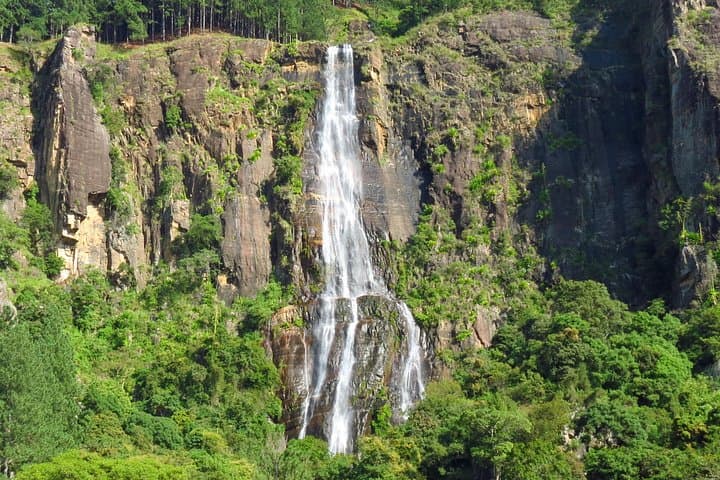
Mist hangs in the tea rows as the group walks from Kalupahana, the trail narrowing between abandoned estate buildings and green terraces. Leaves slap the trail; distant water calls. The route climbs through a place locals call Devil’s Staircase — a steep, hairpin-strewn ribbon that tests the legs and rewards them with a clearing where the tallest cascade in Sri Lanka, Bambarakanda, announced itself in a silver drop.
Mist hangs in the tea rows as the group walks from Kalupahana, the trail narrowing between abandoned estate buildings and green terraces. Leaves slap the trail; distant water calls. The route climbs through a place locals call Devil’s Staircase — a steep, hairpin-strewn ribbon that tests the legs and rewards them with a clearing where the tallest cascade in Sri Lanka, Bambarakanda, announced itself in a silver drop.
This part of Uva Province is geologically young highlands carved from uplifted plateaus and ancient rivers. Tea, planted during the colonial period, shapes the hillsides and frames the view; village homesteads keep a quieter, agrarian rhythm. Lanka Ella, lower down in a shaded gorge, gets its name from a pool shaped like the island below the falls — a local detail that hints at the area’s close relationship between landform and lore.
Expect dirt tracks, muddy steps, short stretches of loose scree and occasional stone stairways cut by estate workers. The hike typically takes about 4–5 hours round trip with breaks; guides include a packed lunch and a cold beer at the top. Cultural moments are part of the day — passing through small settlements, greeting families and navigating narrow lanes where tea pluckers move with practiced ease.
Practical advice: start early to avoid afternoon cloud build-up, wear grippy footwear for wet rock, carry at least 1L of water beyond what’s provided, and be prepared for sudden showers. Respect private estate land and local customs; follow your guide’s route to minimize impact and keep the experience safe and straightforward.