THE ADVENTURE COLLECTIVE® · Independent discovery and booking for outdoor travel

Trade Hanoi’s hum for thundering cascades and glassy lake crossings on this three-day loop to Ban Gioc and Ba Be. Expect long drives, village homestays, cave passages and boat time framed by karst peaks.
Trade Hanoi’s hum for thundering cascades and glassy lake crossings on this three-day loop to Ban Gioc and Ba Be. Expect long drives, village homestays, cave passages and boat time framed by karst peaks.
The road drops away from Hanoi and, after a long ribbon of rice terraces and karst ridgelines, the roar of Ban Gioc arrives like a living thing — water throwing itself over limestone ledges that mark the Vietnam–China border. On day one you travel through the Chi Lang Pass, a narrow gorge that has shaped local history; by day two you stand on river flats beneath the falls, and by day three you cross Ba Be Lake by boat and hike into a jungle of limestone islands.
Verified experiences and guided adventures in the surrounding area.
Operated by Authentic Travel Ho Chi Minh · Ba Be, Bắc Kạn
The road drops away from Hanoi and, after a long ribbon of rice terraces and karst ridgelines, the roar of Ban Gioc arrives like a living thing — water throwing itself over limestone ledges that mark the Vietnam–China border. On day one you travel through the Chi Lang Pass, a narrow gorge that has shaped local history; by day two you stand on river flats beneath the falls, and by day three you cross Ba Be Lake by boat and hike into a jungle of limestone islands.
Geology here is blunt and visible: uplifted karst towers, caves formed in carboniferous limestone and river-cut gorges. The region’s human story is intertwined with those rocks — Tay and Nung villages make terraces and blacksmith tools from what's available, and sites like Dong Khe recall 20th-century conflict. Nguom Ngao Cave, with its stalactites and long passages, offers a glimpse into millions of years of subterranean change.
Expect homestays run by local families, long drives on mountain roads, short hikes through humid forest and a slow boat across emerald water. Bring quick-dry layers for boat spray, sturdy shoes for cave scrambles, and cash for village markets. Mornings are best for photos at Ban Gioc before tourist boats arrive; afternoons on Ba Be favor boating and birdwatching. Hydrate at every stop — rural services are basic — and allow time to enjoy slow, local meals that reflect Tay and Nung culinary traditions. This three-day loop is equal parts geology, culture and manageable adventure: a practical, sensory introduction to Vietnam’s northern highlands.
Expect several hours on mountain roads: Hanoi to Cao Bang/Chi Lang ~3–4 hours, Cao Bang to Ban Gioc ~2 hours, and Ba Be to Hanoi ~4–5 hours with stops.
Homestays are basic and family-run with simple bedding and shared facilities; they offer authentic meals and local hospitality rather than hotel amenities.
Yes, swimming is common in designated spots; always follow your guide’s advice about currents, water depth and safe entry points.
Yes — guides can arrange vegetarian, vegan or gluten-free meals if requested at booking, but remote villages have limited options.
Authentic Travel Ho Chi Minh operates guided outdoor trips and adventures with an emphasis on safety, stewardship, and memorable experiences.
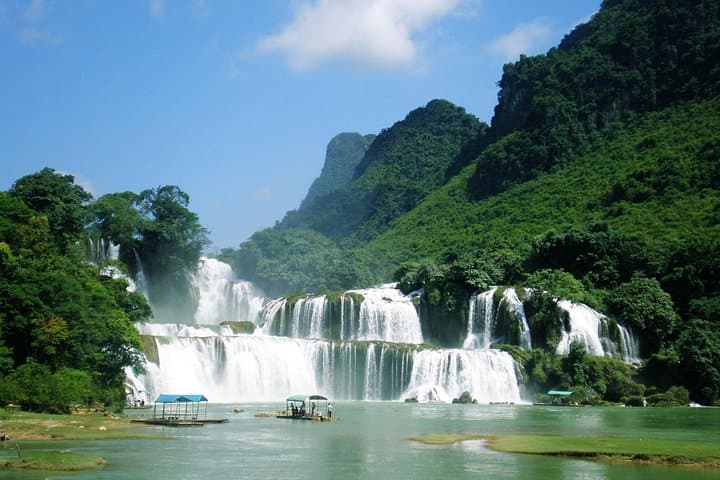


The road drops away from Hanoi and, after a long ribbon of rice terraces and karst ridgelines, the roar of Ban Gioc arrives like a living thing — water throwing itself over limestone ledges that mark the Vietnam–China border. On day one you travel through the Chi Lang Pass, a narrow gorge that has shaped local history; by day two you stand on river flats beneath the falls, and by day three you cross Ba Be Lake by boat and hike into a jungle of limestone islands.
The road drops away from Hanoi and, after a long ribbon of rice terraces and karst ridgelines, the roar of Ban Gioc arrives like a living thing — water throwing itself over limestone ledges that mark the Vietnam–China border. On day one you travel through the Chi Lang Pass, a narrow gorge that has shaped local history; by day two you stand on river flats beneath the falls, and by day three you cross Ba Be Lake by boat and hike into a jungle of limestone islands.
Geology here is blunt and visible: uplifted karst towers, caves formed in carboniferous limestone and river-cut gorges. The region’s human story is intertwined with those rocks — Tay and Nung villages make terraces and blacksmith tools from what's available, and sites like Dong Khe recall 20th-century conflict. Nguom Ngao Cave, with its stalactites and long passages, offers a glimpse into millions of years of subterranean change.
Expect homestays run by local families, long drives on mountain roads, short hikes through humid forest and a slow boat across emerald water. Bring quick-dry layers for boat spray, sturdy shoes for cave scrambles, and cash for village markets. Mornings are best for photos at Ban Gioc before tourist boats arrive; afternoons on Ba Be favor boating and birdwatching. Hydrate at every stop — rural services are basic — and allow time to enjoy slow, local meals that reflect Tay and Nung culinary traditions. This three-day loop is equal parts geology, culture and manageable adventure: a practical, sensory introduction to Vietnam’s northern highlands.