THE ADVENTURE COLLECTIVE® · Independent discovery and booking for outdoor travel

Two days from Hanoi delivers one of Vietnam’s most dramatic waterfall scenes: Ban Gioc’s broad jade falls, the echoing passages of Nguom Ngao Cave and the karst lakes around Phja Piot. This guided overnight trip balances scenic hikes, cultural stops and easy logistics.
Two days from Hanoi delivers one of Vietnam’s most dramatic waterfall scenes: Ban Gioc’s broad jade falls, the echoing passages of Nguom Ngao Cave and the karst lakes around Phja Piot. This guided overnight trip balances scenic hikes, cultural stops and easy logistics.
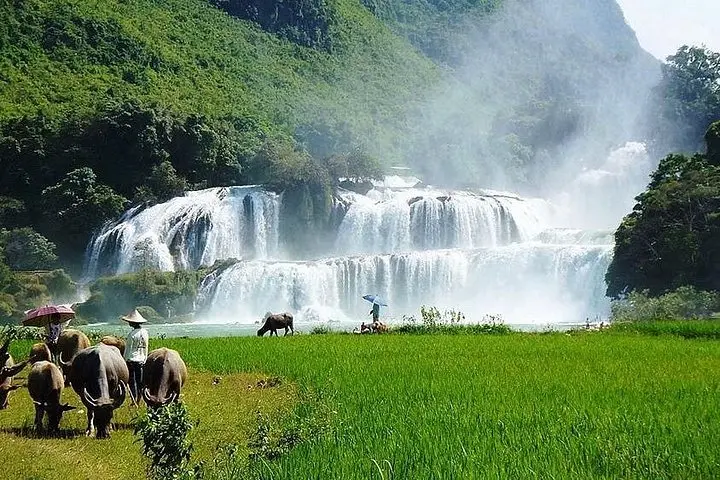
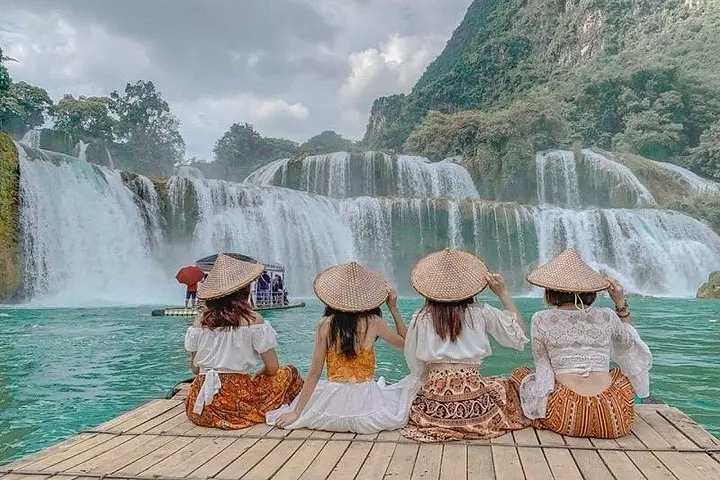
You arrive before dawn on a coach that threads rice paddies and limestone towers; mist lifts off the Quay Son River and the falls reveal themselves in sheets of jade and white. Ban Gioc’s curtains drop 30 meters and spread roughly 300 meters across, a broad, cascading face that demands slow attention—the water dares you to close the distance.
Verified experiences and guided adventures in the surrounding area.
Operated by Vietnam Mountain Tours · Trung Khanh, Cao Bang
You arrive before dawn on a coach that threads rice paddies and limestone towers; mist lifts off the Quay Son River and the falls reveal themselves in sheets of jade and white. Ban Gioc’s curtains drop 30 meters and spread roughly 300 meters across, a broad, cascading face that demands slow attention—the water dares you to close the distance.
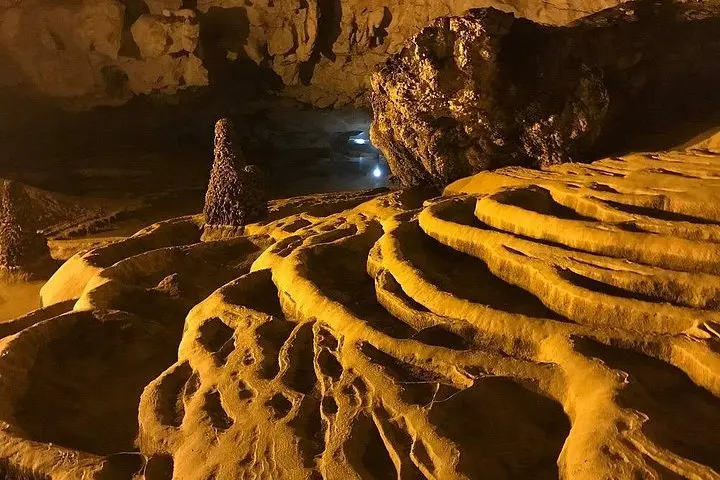
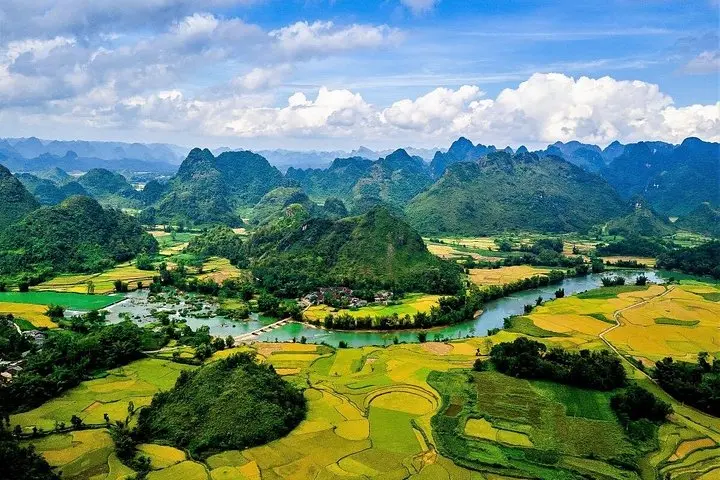
The region sits on Vietnam’s northeastern frontier, where Tay and Nung communities farm stepped paddies along karst towers shaped by uplift and dissolved limestone. Ban Gioc is part of a transboundary river system; its geology—tower karst, sinkholes and subterranean streams—fed the creation of Nguom Ngao (“Tiger Cave”), first recorded in 1921 and opened to visitors in 1996. Nearby, the Mountain “Angel Eye” (Phja Piot) frames a 50m-diameter natural arch above seasonal lakes of the Thang Hen system. Phat Tich Truc Lam Ban Gioc pagoda adds a quiet cultural counterpoint, its wooden roofs and incense offering insight into frontier spiritual life.
Practical guidance: the trip runs two days with an overnight in Cao Bang–region accommodation and hotel pickup from Hanoi Old Quarter. Expect short, uneven walks at viewpoints and inside caves; carry local currency for small purchases and border-side vendors. Mornings are best for photos when low-angle light turns the water to green glass; afternoons bring more visitors. Hydrate, wear steady shoes with grip for wet rock and boardwalks, and keep a wind- and rain-layer handy—the weather can flip quickly in the karst. Guides will handle permits and local logistics; your role is to arrive curious and ready to walk.
The coach trip is roughly 6–8 hours one way depending on traffic and road conditions; the tour includes hotel pickup from Hanoi Old Quarter.
No special border permit is required for the usual tourist route, but always carry your passport—the area is near the China border and officials may request ID.
Yes—this tour typically includes 1 breakfast, 2 lunches and 1 dinner, plus entrance fees listed in the itinerary.
Generally yes—paths are short though uneven; travelers with serious mobility, spinal or cardiovascular issues should consult the operator first.
Vietnam Mountain Tours operates guided outdoor trips and adventures with an emphasis on safety, stewardship, and memorable experiences.
You arrive before dawn on a coach that threads rice paddies and limestone towers; mist lifts off the Quay Son River and the falls reveal themselves in sheets of jade and white. Ban Gioc’s curtains drop 30 meters and spread roughly 300 meters across, a broad, cascading face that demands slow attention—the water dares you to close the distance.
You arrive before dawn on a coach that threads rice paddies and limestone towers; mist lifts off the Quay Son River and the falls reveal themselves in sheets of jade and white. Ban Gioc’s curtains drop 30 meters and spread roughly 300 meters across, a broad, cascading face that demands slow attention—the water dares you to close the distance.
The region sits on Vietnam’s northeastern frontier, where Tay and Nung communities farm stepped paddies along karst towers shaped by uplift and dissolved limestone. Ban Gioc is part of a transboundary river system; its geology—tower karst, sinkholes and subterranean streams—fed the creation of Nguom Ngao (“Tiger Cave”), first recorded in 1921 and opened to visitors in 1996. Nearby, the Mountain “Angel Eye” (Phja Piot) frames a 50m-diameter natural arch above seasonal lakes of the Thang Hen system. Phat Tich Truc Lam Ban Gioc pagoda adds a quiet cultural counterpoint, its wooden roofs and incense offering insight into frontier spiritual life.
Practical guidance: the trip runs two days with an overnight in Cao Bang–region accommodation and hotel pickup from Hanoi Old Quarter. Expect short, uneven walks at viewpoints and inside caves; carry local currency for small purchases and border-side vendors. Mornings are best for photos when low-angle light turns the water to green glass; afternoons bring more visitors. Hydrate, wear steady shoes with grip for wet rock and boardwalks, and keep a wind- and rain-layer handy—the weather can flip quickly in the karst. Guides will handle permits and local logistics; your role is to arrive curious and ready to walk.