THE ADVENTURE COLLECTIVE® · Independent discovery and booking for outdoor travel

Walk from Bandipur into Magar villages where terraced fields, beekeeping and silk farms form the daily rhythm. This guided 6–7 hour cultural hike blends easy trails with intimate village visits and local hospitality.
Walk from Bandipur into Magar villages where terraced fields, beekeeping and silk farms form the daily rhythm. This guided 6–7 hour cultural hike blends easy trails with intimate village visits and local hospitality.
A low cloud lifts off the hill slopes and the first light slides across terraced fields as you step from Bandipur’s stone-paved street toward the village trail. The path narrows into earth and bamboo fences; children wave from courtyards, and distant bells mark grazing buffalo. The walk moves at a human pace—sober, curious, patient.
Verified experiences and guided adventures in the surrounding area.
Operated by Alpine Asian Treks and Expedition P. Ltd. · Bandipur, Gandaki Province
A low cloud lifts off the hill slopes and the first light slides across terraced fields as you step from Bandipur’s stone-paved street toward the village trail. The path narrows into earth and bamboo fences; children wave from courtyards, and distant bells mark grazing buffalo. The walk moves at a human pace—sober, curious, patient.
Bandipur sits on an old trade corridor between the Kathmandu Valley and Pokhara, and the surrounding villages are predominantly Magar and Newar communities whose livelihoods have long been tied to small-scale farming, beekeeping and silk production. Geologically the ridge offers weathered schist and sandstone outcrops, soil-rich valleys and spurs that drain toward the Marsyangdi basin. Cultural touchpoints—traditional mud-brick houses, community schools and roadside shrines—appear without fanfare.
Your local guide threads introductions: a farmer planting seasonal crops, a weaver tending silkworm trays, children practicing for school. Ramkot and Seratar are the day’s anchors—simple daily life, hands dirty from work, tea offered with quiet hospitality.
Practical notes: the full loop is 6–7 hours at an easy-to-moderate pace with some uneven, sometimes muddy sections. Bring layered clothing for rapid temperature shifts, at least 1.5–2 liters of water, small bills for tea or purchases, and respect local customs—ask before photographing people or entering homes. Start after breakfast to avoid midafternoon heat or sudden storms, and wear sturdy shoes with good grip for the local soil and stone. With imaginative eyes and basic preparation, this walk becomes both a cultural exchange and an intimate nature outing—hands-on, human, and quietly revealing.
Guides usually pick up from Bandipur hotels; the walk starts within a short distance of the town center, so self-starting travelers can follow village paths toward Ramkot.
Yes—pace is gentle and the tour notes say it’s suitable for all fitness levels, though some sections are uneven; bring assistance for infants or mobility issues.
Tea and coffee are included; purchasing lunch from a local household is optional and paid in cash—vegetarian options are typically available if requested at booking.
Smart casual dress is requested—avoid overly revealing clothing and cover shoulders when visiting homes or schools to show respect.
Alpine Asian Treks and Expedition P. Ltd. operates guided outdoor trips and adventures with an emphasis on safety, stewardship, and memorable experiences.


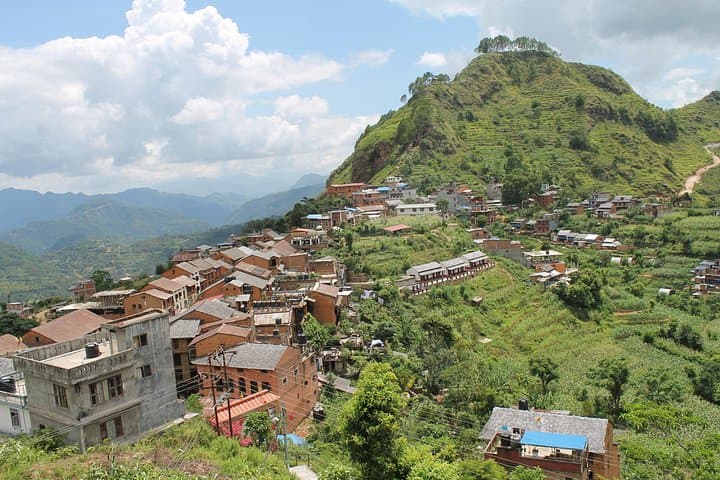

A low cloud lifts off the hill slopes and the first light slides across terraced fields as you step from Bandipur’s stone-paved street toward the village trail. The path narrows into earth and bamboo fences; children wave from courtyards, and distant bells mark grazing buffalo. The walk moves at a human pace—sober, curious, patient.
A low cloud lifts off the hill slopes and the first light slides across terraced fields as you step from Bandipur’s stone-paved street toward the village trail. The path narrows into earth and bamboo fences; children wave from courtyards, and distant bells mark grazing buffalo. The walk moves at a human pace—sober, curious, patient.
Bandipur sits on an old trade corridor between the Kathmandu Valley and Pokhara, and the surrounding villages are predominantly Magar and Newar communities whose livelihoods have long been tied to small-scale farming, beekeeping and silk production. Geologically the ridge offers weathered schist and sandstone outcrops, soil-rich valleys and spurs that drain toward the Marsyangdi basin. Cultural touchpoints—traditional mud-brick houses, community schools and roadside shrines—appear without fanfare.
Your local guide threads introductions: a farmer planting seasonal crops, a weaver tending silkworm trays, children practicing for school. Ramkot and Seratar are the day’s anchors—simple daily life, hands dirty from work, tea offered with quiet hospitality.
Practical notes: the full loop is 6–7 hours at an easy-to-moderate pace with some uneven, sometimes muddy sections. Bring layered clothing for rapid temperature shifts, at least 1.5–2 liters of water, small bills for tea or purchases, and respect local customs—ask before photographing people or entering homes. Start after breakfast to avoid midafternoon heat or sudden storms, and wear sturdy shoes with good grip for the local soil and stone. With imaginative eyes and basic preparation, this walk becomes both a cultural exchange and an intimate nature outing—hands-on, human, and quietly revealing.