THE ADVENTURE COLLECTIVE® · Independent discovery and booking for outdoor travel

Spend a day sampling Banff’s most iconic scenes — the turquoise bowl of Lake Louise, the cliff-walled corridors of Johnston Canyon, and the broad stillness of Lake Minnewanka. This shared tour packs big views into an accessible 7–8 hour loop ideal for first-time visitors.
Spend a day sampling Banff’s most iconic scenes — the turquoise bowl of Lake Louise, the cliff-walled corridors of Johnston Canyon, and the broad stillness of Lake Minnewanka. This shared tour packs big views into an accessible 7–8 hour loop ideal for first-time visitors.
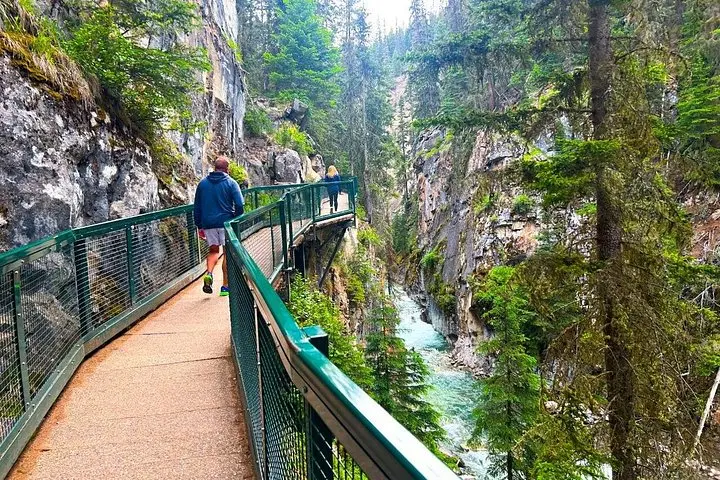
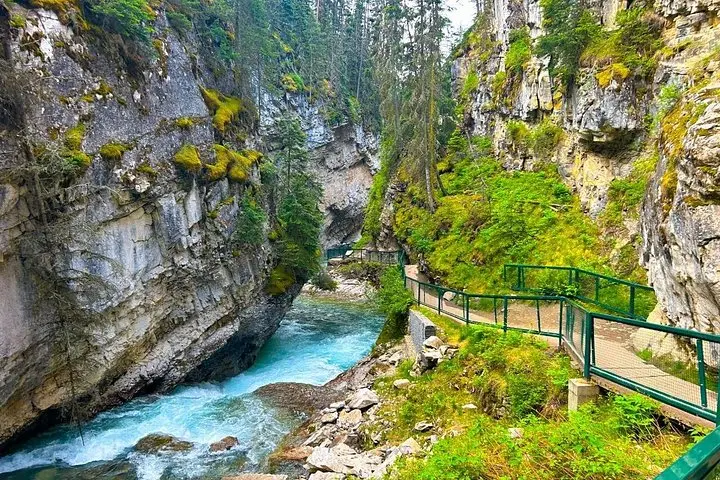
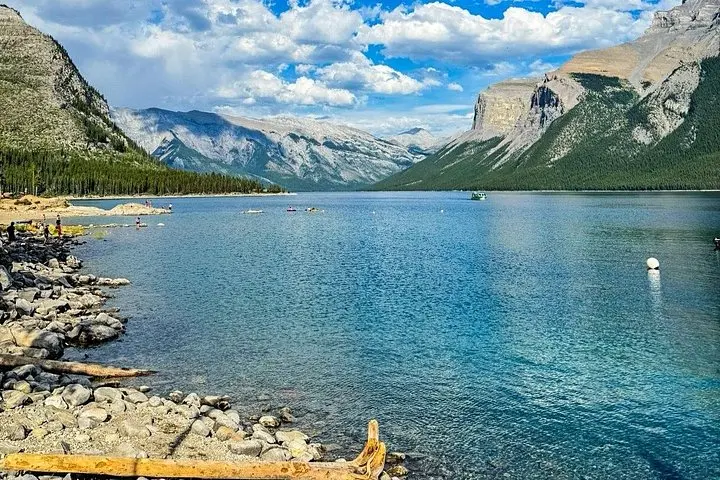
A cool Alberta morning opens as the shuttle eases out of Banff and the peaks step forward — Lake Louise’s turquoise bowl flashes between ridgelines, Johnston Canyon’s limestone walls breathe thunder from falling water, and Minnewanka stretches dark and deep beneath wind-scoured pines. The day moves in clear beats: shoreline walks, short canyon hikes on suspended catwalks, and a lakeside pause that lets the mountains do the talking.
Verified experiences and guided adventures in the surrounding area.
Operated by ABestX | Canada · Banff, Alberta
A cool Alberta morning opens as the shuttle eases out of Banff and the peaks step forward — Lake Louise’s turquoise bowl flashes between ridgelines, Johnston Canyon’s limestone walls breathe thunder from falling water, and Minnewanka stretches dark and deep beneath wind-scoured pines. The day moves in clear beats: shoreline walks, short canyon hikes on suspended catwalks, and a lakeside pause that lets the mountains do the talking.
This route traces the sculpting power of ice and water. The Canadian Rockies here are largely composed of ancient sedimentary rock folded and cleaved by Pleistocene glaciers; Victoria Glacier feeds the melt that gives Lake Louise its color. The valley has supported Indigenous peoples for millennia, and Banff town grew with the arrival of the railway and early park protection in the late 19th century, giving this landscape both cultural layers and conservation history.
Expect accessible but popular trails: Lake Louise’s lakeshore is flat and crowded in summer; Johnston Canyon is a maintained 1–3 km series of boardwalks with stair sections; Minnewanka offers longer shoreline paths and boat options. Wildlife sightings are possible—keep distance and store food properly. Practical notes: the tour runs about 7–8 hours with multiple short walks, moderate altitude (≈1,400 m), and variable mountain weather. Wear sturdy shoes, layer for wind and sun, carry water and a compact rain shell, and plan for photo stops rather than long backcountry treks. For travelers who want high-impact scenery without a heavy pack, this loop is a perfect single-day primer to Banff National Park.
The tour runs about 7–8 hours with multiple short stops and 15–60 minute walks at each major site—designed for easy pacing and frequent photo opportunities.
The listing notes admission fees and taxes as inclusions; verify whether a Parks Canada discovery pass is required for your booking if prompted at checkout.
Yes—trails visited are mostly accessible and family-friendly; the operator notes it’s suitable for all fitness levels, though mobility limits may affect access to some stair sections.
The cancellation policy allows refunds if canceled for bad weather; confirm local rebooking options with the operator when you book.
ABestX | Canada operates guided outdoor trips and adventures with an emphasis on safety, stewardship, and memorable experiences.
A cool Alberta morning opens as the shuttle eases out of Banff and the peaks step forward — Lake Louise’s turquoise bowl flashes between ridgelines, Johnston Canyon’s limestone walls breathe thunder from falling water, and Minnewanka stretches dark and deep beneath wind-scoured pines. The day moves in clear beats: shoreline walks, short canyon hikes on suspended catwalks, and a lakeside pause that lets the mountains do the talking.
A cool Alberta morning opens as the shuttle eases out of Banff and the peaks step forward — Lake Louise’s turquoise bowl flashes between ridgelines, Johnston Canyon’s limestone walls breathe thunder from falling water, and Minnewanka stretches dark and deep beneath wind-scoured pines. The day moves in clear beats: shoreline walks, short canyon hikes on suspended catwalks, and a lakeside pause that lets the mountains do the talking.
This route traces the sculpting power of ice and water. The Canadian Rockies here are largely composed of ancient sedimentary rock folded and cleaved by Pleistocene glaciers; Victoria Glacier feeds the melt that gives Lake Louise its color. The valley has supported Indigenous peoples for millennia, and Banff town grew with the arrival of the railway and early park protection in the late 19th century, giving this landscape both cultural layers and conservation history.
Expect accessible but popular trails: Lake Louise’s lakeshore is flat and crowded in summer; Johnston Canyon is a maintained 1–3 km series of boardwalks with stair sections; Minnewanka offers longer shoreline paths and boat options. Wildlife sightings are possible—keep distance and store food properly. Practical notes: the tour runs about 7–8 hours with multiple short walks, moderate altitude (≈1,400 m), and variable mountain weather. Wear sturdy shoes, layer for wind and sun, carry water and a compact rain shell, and plan for photo stops rather than long backcountry treks. For travelers who want high-impact scenery without a heavy pack, this loop is a perfect single-day primer to Banff National Park.