THE ADVENTURE COLLECTIVE® · Independent discovery and booking for outdoor travel

A private half‑day that pairs the surreal Maeklong Railway Market with the colorful boats of Damnoen Saduak. Expect close‑quarters market life, quick photo ops, and a practical run of Thai flavors and crafts.
A private half‑day that pairs the surreal Maeklong Railway Market with the colorful boats of Damnoen Saduak. Expect close‑quarters market life, quick photo ops, and a practical run of Thai flavors and crafts.
The day opens before the city's rush — your driver lifts you from your hotel into cooler morning light and highways that push west toward canals and old tracks. At Maeklong Railway Market the scene compresses: umbrellas and awnings are clipped, baskets shifted, stalls folded back in a practiced choreography the moment the train’s horn appears. Vendors reassemble seconds after the last car glides through, and you stand in a corridor where commerce and punctuality meet.
Verified experiences and guided adventures in the surrounding area.
Operated by Opatrip.com Thailand · Bangkok, Bangkok
The day opens before the city's rush — your driver lifts you from your hotel into cooler morning light and highways that push west toward canals and old tracks. At Maeklong Railway Market the scene compresses: umbrellas and awnings are clipped, baskets shifted, stalls folded back in a practiced choreography the moment the train’s horn appears. Vendors reassemble seconds after the last car glides through, and you stand in a corridor where commerce and punctuality meet.
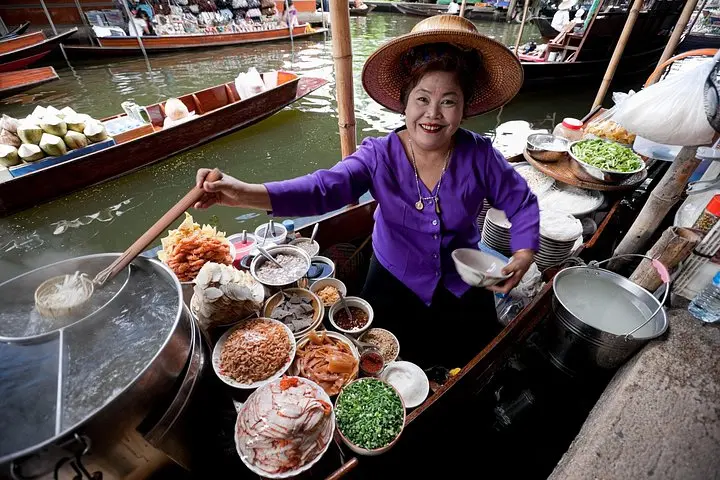
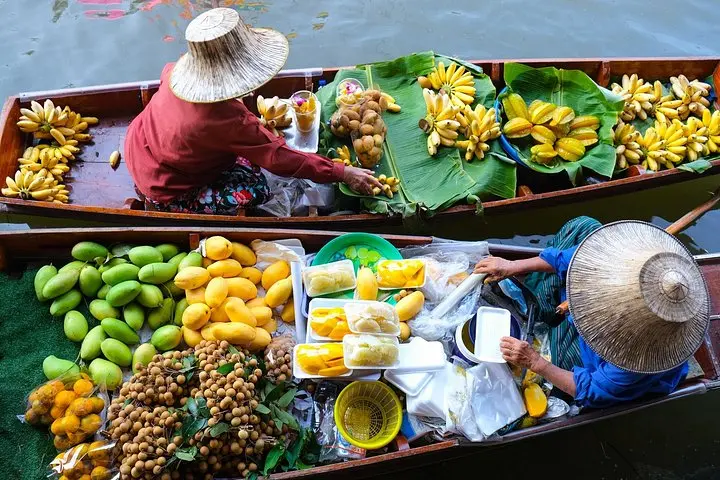
A short drive away the water takes over. Damnoen Saduak’s narrow khlongs are threaded with painted boats selling grilled fish, coconut pancakes, and handmade crafts. These markets grew from 19th‑century canal construction that opened the Central Plains to trade; the low, alluvial landscape still moves with tides, rain, and seasonal harvests.
Expect sensory clarity: lacquered oars, steam from woks, the quick negotiation of price. Culturally, these markets reveal daily Thai life as much as they sell it — family-run boats, vendors who read habits of tourists and locals alike, and an economy built on freshness and speed.
Practical guidance: book early to avoid the midday heat, carry small-denomination baht for purchases and tips, and set aside time for short walks between stops. Wear comfortable shoes — boardwalks and train tracks are uneven — and bring sun protection or a compact rain shell depending on the season. If you want photos without crowds, aim for the earliest pickup; the market choreography gets more performative as tour buses arrive. This half‑day private outing blends easy logistics with lively market immersion — a tight, practical window into Bangkok’s market culture.
Yes — the tour includes private hotel pickup and drop‑off in Bangkok as part of the half‑day itinerary.
No formal admission is required for the markets; the tour covers transportation and guide services but purchases and any optional boat rides are extra.
Street food at both markets is popular and generally safe when choosing busy stalls with high turnover; bring hand sanitizer and drink bottled water if you’re sensitive.
Accessibility is limited — narrow aisles, temporary awnings, and boarding small boats make full participation difficult for wheelchair users; contact the operator to discuss needs.
Opatrip.com Thailand operates guided outdoor trips and adventures with an emphasis on safety, stewardship, and memorable experiences.
The day opens before the city's rush — your driver lifts you from your hotel into cooler morning light and highways that push west toward canals and old tracks. At Maeklong Railway Market the scene compresses: umbrellas and awnings are clipped, baskets shifted, stalls folded back in a practiced choreography the moment the train’s horn appears. Vendors reassemble seconds after the last car glides through, and you stand in a corridor where commerce and punctuality meet.
The day opens before the city's rush — your driver lifts you from your hotel into cooler morning light and highways that push west toward canals and old tracks. At Maeklong Railway Market the scene compresses: umbrellas and awnings are clipped, baskets shifted, stalls folded back in a practiced choreography the moment the train’s horn appears. Vendors reassemble seconds after the last car glides through, and you stand in a corridor where commerce and punctuality meet.
A short drive away the water takes over. Damnoen Saduak’s narrow khlongs are threaded with painted boats selling grilled fish, coconut pancakes, and handmade crafts. These markets grew from 19th‑century canal construction that opened the Central Plains to trade; the low, alluvial landscape still moves with tides, rain, and seasonal harvests.
Expect sensory clarity: lacquered oars, steam from woks, the quick negotiation of price. Culturally, these markets reveal daily Thai life as much as they sell it — family-run boats, vendors who read habits of tourists and locals alike, and an economy built on freshness and speed.
Practical guidance: book early to avoid the midday heat, carry small-denomination baht for purchases and tips, and set aside time for short walks between stops. Wear comfortable shoes — boardwalks and train tracks are uneven — and bring sun protection or a compact rain shell depending on the season. If you want photos without crowds, aim for the earliest pickup; the market choreography gets more performative as tour buses arrive. This half‑day private outing blends easy logistics with lively market immersion — a tight, practical window into Bangkok’s market culture.