THE ADVENTURE COLLECTIVE® · Independent discovery and booking for outdoor travel

A compact, history-rich day trip from Bangkok that pairs Erawan’s emerald pools with the WWII-era Bridge over the River Kwai and Khmer ruins at Mueang Sing. Expect swimming, short hikes, and cultural stops across a full 9‑hour day.
A compact, history-rich day trip from Bangkok that pairs Erawan’s emerald pools with the WWII-era Bridge over the River Kwai and Khmer ruins at Mueang Sing. Expect swimming, short hikes, and cultural stops across a full 9‑hour day.
You step off an air-conditioned van as heat and green close around you: limestone ridges and dipterocarp forest rise behind a ribbon of clear pools, each one a different shade of emerald. The path to Erawan (often spelled Arawan in local listings) climbs through jungle, under fig roots and beside cascades that insist you slow down and listen.
Verified experiences and guided adventures in the surrounding area.
Operated by Asia Connect Travel · Kanchanaburi, Kanchanaburi Province
You step off an air-conditioned van as heat and green close around you: limestone ridges and dipterocarp forest rise behind a ribbon of clear pools, each one a different shade of emerald. The path to Erawan (often spelled Arawan in local listings) climbs through jungle, under fig roots and beside cascades that insist you slow down and listen.
This one-day loop links three different histories: the seven-tiered Erawan falls born of karst geology and seasonal runoff; the iron-latticed Bridge over the River Kwai, a WWII landmark tied to the Death Railway; and the Khmer-style ruins at Mueang Sing, reminders of Angkor-influenced architecture along the Kwai Noi.
Culture here blends rural market life with wartime memory—riverbank vendors, simple Thai lunches, and guides who can point out where the railway once cut through rock. Geologically, the limestone layers feed seep springs and sculpt the stepped pools that make each tier swimmable in low-to-moderate flows.
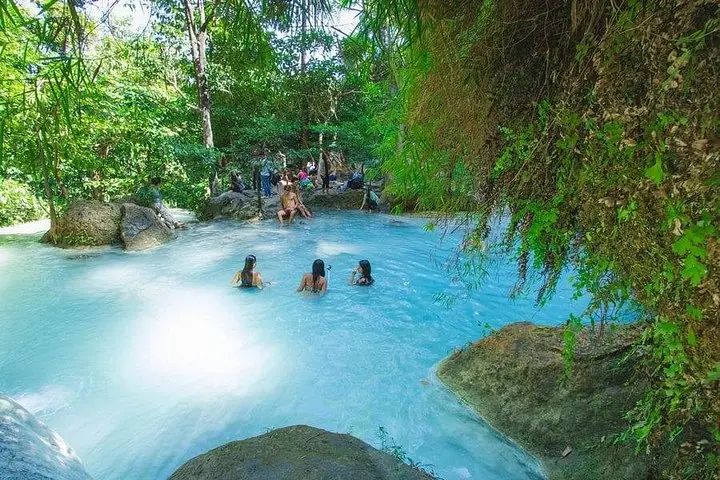
Practical guide: allow roughly 9 hours for a round-trip from Bangkok including transit; plan to spend 2–3 hours exploring the falls. Wear sturdy water-friendly shoes for slick rock; swimming is allowed in designated basins but avoid shirts with sunscreen residue. Bring cash for local snacks and modest admissions. Timing matters—arrive mid-morning on weekdays for quieter pools; avoid the heaviest monsoon days when trails are muddy and some upper tiers may close.
This route is accessible for most fitness levels but expect uneven trails, stone steps and short scrambles. A knowledgeable guide will handle logistics and local context so you can focus on the water, the history, and the river that keeps pushing the landscape onward.
Typical door-to-door time is about 2.5–3.5 hours each way depending on traffic and your pickup point in Bangkok.
Yes—swimming is allowed in designated pools, but people with limited mobility should be cautious on uneven access paths and slippery rock.
This tour lists lunch and admission as included, but confirm any additional local fees or optional activities with your operator before travel.
During peak monsoon some upper tiers and trails can be muddy or closed; the operator will adjust the itinerary for safety if needed.
Asia Connect Travel operates guided outdoor trips and adventures with an emphasis on safety, stewardship, and memorable experiences.
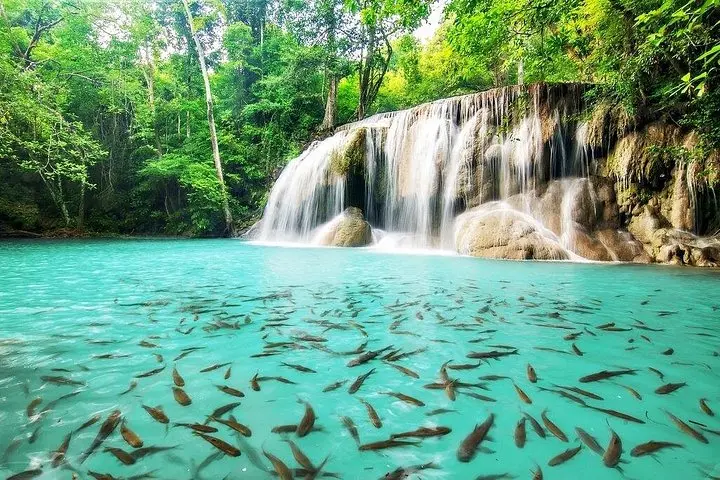
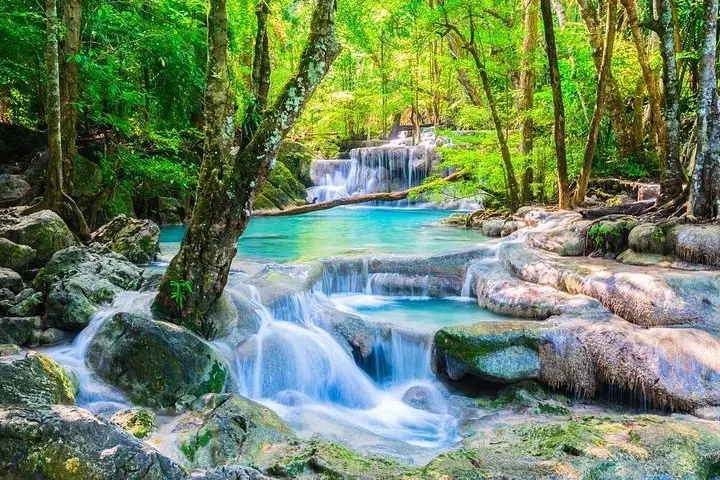
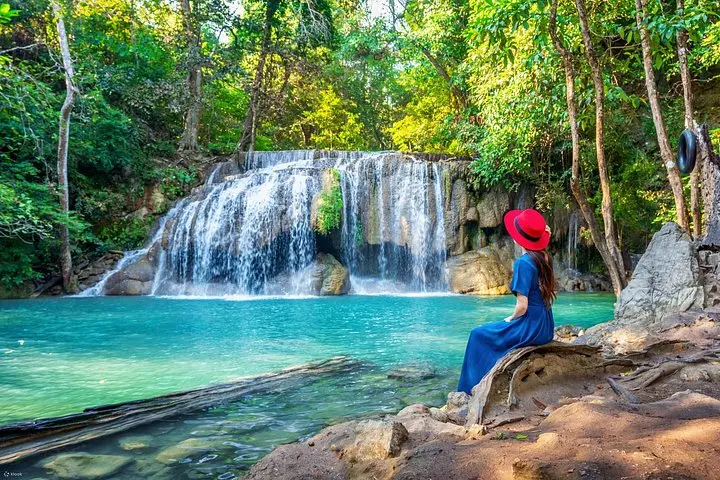
You step off an air-conditioned van as heat and green close around you: limestone ridges and dipterocarp forest rise behind a ribbon of clear pools, each one a different shade of emerald. The path to Erawan (often spelled Arawan in local listings) climbs through jungle, under fig roots and beside cascades that insist you slow down and listen.
You step off an air-conditioned van as heat and green close around you: limestone ridges and dipterocarp forest rise behind a ribbon of clear pools, each one a different shade of emerald. The path to Erawan (often spelled Arawan in local listings) climbs through jungle, under fig roots and beside cascades that insist you slow down and listen.
This one-day loop links three different histories: the seven-tiered Erawan falls born of karst geology and seasonal runoff; the iron-latticed Bridge over the River Kwai, a WWII landmark tied to the Death Railway; and the Khmer-style ruins at Mueang Sing, reminders of Angkor-influenced architecture along the Kwai Noi.
Culture here blends rural market life with wartime memory—riverbank vendors, simple Thai lunches, and guides who can point out where the railway once cut through rock. Geologically, the limestone layers feed seep springs and sculpt the stepped pools that make each tier swimmable in low-to-moderate flows.
Practical guide: allow roughly 9 hours for a round-trip from Bangkok including transit; plan to spend 2–3 hours exploring the falls. Wear sturdy water-friendly shoes for slick rock; swimming is allowed in designated basins but avoid shirts with sunscreen residue. Bring cash for local snacks and modest admissions. Timing matters—arrive mid-morning on weekdays for quieter pools; avoid the heaviest monsoon days when trails are muddy and some upper tiers may close.
This route is accessible for most fitness levels but expect uneven trails, stone steps and short scrambles. A knowledgeable guide will handle logistics and local context so you can focus on the water, the history, and the river that keeps pushing the landscape onward.