THE ADVENTURE COLLECTIVE® · Independent discovery and booking for outdoor travel

Fly over the Pastaza Gorge by zip line, cross a swinging Tibetan bridge and clip into a via ferrata rock climb — all in two hours near Baños. This compact adventure packs high exposure, local geology and professional guides into a pulse-quickening morning.
Fly over the Pastaza Gorge by zip line, cross a swinging Tibetan bridge and clip into a via ferrata rock climb — all in two hours near Baños. This compact adventure packs high exposure, local geology and professional guides into a pulse-quickening morning.
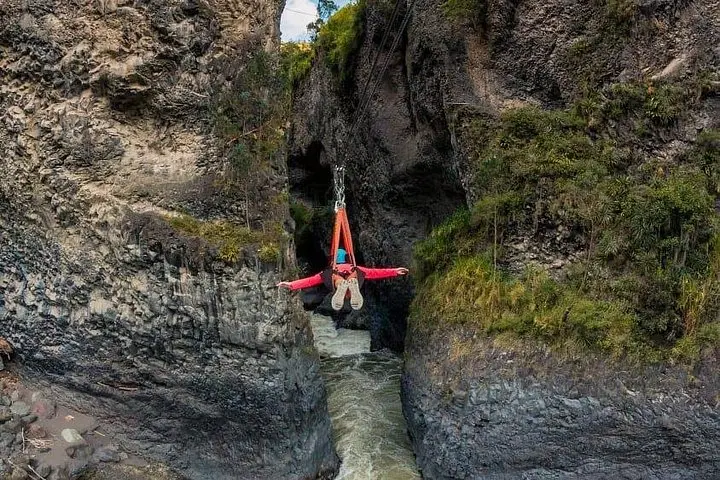
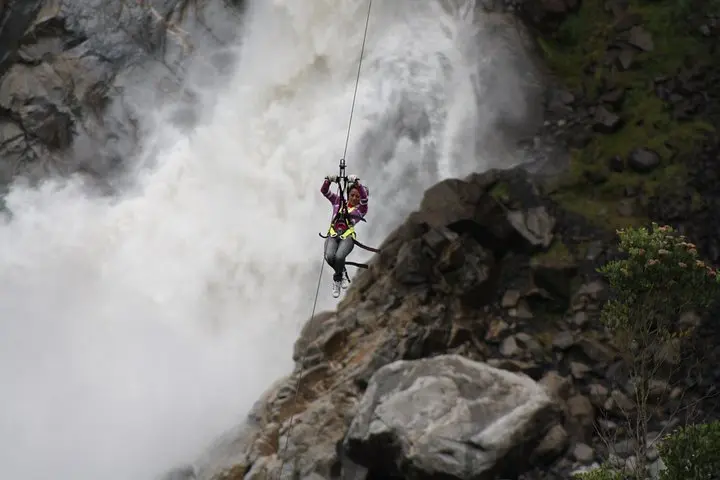
The cable hums before you see it — a silver thread cutting across the green, angling down toward the Pastaza River. You clip in on a forested ridge, feel the harness snug, and step off a timber platform into a wide, wind-pushed breath. The zip line pulls you across the gorge; water and jungle rush beneath, cliffs rise and fall like the ribs of the valley.
Verified experiences and guided adventures in the surrounding area.
Operated by Special holiday offer. Best of Ecuador | Tour Operator - Explorjungle · Baños de Agua Santa, Tungurahua
The cable hums before you see it — a silver thread cutting across the green, angling down toward the Pastaza River. You clip in on a forested ridge, feel the harness snug, and step off a timber platform into a wide, wind-pushed breath. The zip line pulls you across the gorge; water and jungle rush beneath, cliffs rise and fall like the ribs of the valley.
This two-hour “3-in-1” run outside Baños de Agua Santa stitches three distinct ways to meet the canyon: a fast zip line, a swaying Tibetan bridge, and a short via ferrata-style rock climb. The route plays out above the Pastaza, a river that has carved its channel through volcanic highlands and braided routes toward the Amazon basin. The cliffs here are volcanic tuff and andesite — fractured but climbable — which is why local operators place platforms and cables where the rock offers purchase and the views are best.
Baños itself is a frontier town between Andean peaks and the eastern Amazon, known for hot springs, waterfalls and a culture shaped by mountaineering and eco-tourism. The canopy-and-climb format is a relatively recent addition, part of a decade-long push to add adventure infrastructure that brings economic benefits to communities while keeping impacts concentrated on engineered lines and anchored routes.
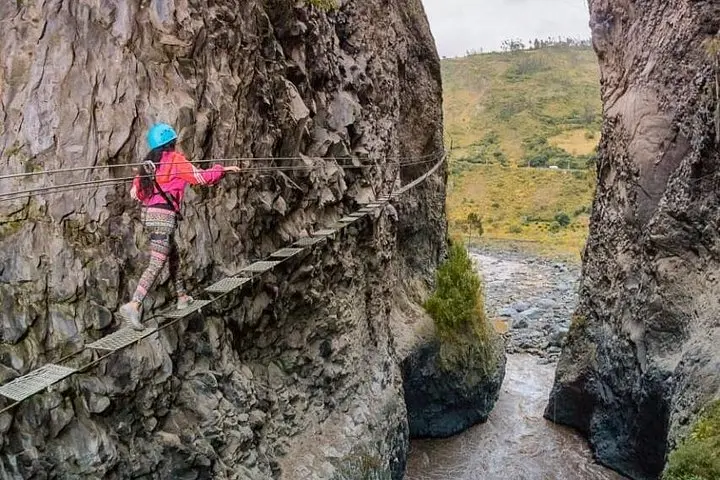
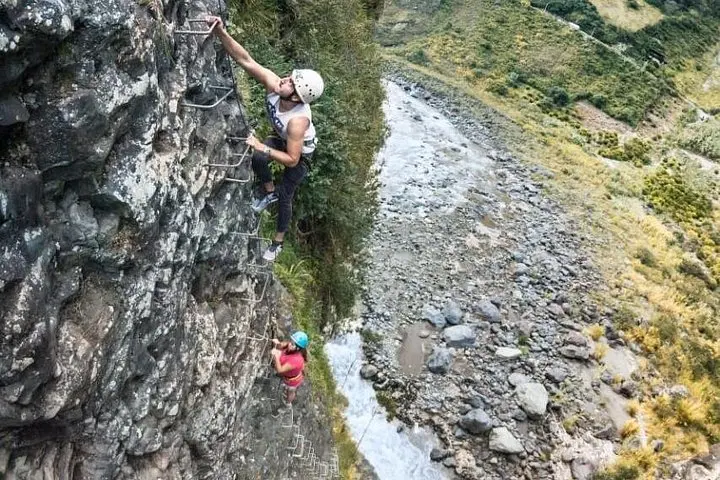
On the ground the experience is stripped and brutal in the best way: short hikes on packed dirt, stair-stepped approaches, and platforms set 20–60 meters above the water. Expect two zip-line runs that vary in length, a 20–40 meter Tibetan bridge that tests your balance as it sags and sways above the current, and a protected rock section where fixed iron rungs and a steel cable let you climb 8–15 meters with a belay system.
Guides brief and kit you in helmets, harnesses and pulleys; operators maintain equipment to international standards, but personal preparation matters. Aim for a morning slot — the valley often collects afternoon cloud and rain. Wear sturdy shoes with good grip, bring a small daypack with water and a wind/rain shell, and keep cameras tethered. If you’re traveling with kids, ask about age and weight limits in advance — the course can be physically demanding and requires focus.
Practical points: plan 90–120 minutes on-site, allow extra time for transfers from central Baños, and choose operators who include transportation and certified guides. This is a compact, high-adrenaline taste of the Pastaza gorge: fast, exposed and undeniably local — a neat way to feel the meeting point of Andes and Amazon without a multi-day expedition.
No. Guides teach clip-in technique and you’re attached to safety cables for the via ferrata; a basic comfort with heights helps.
Yes, reputable operators supply certified helmets, harnesses and pulley systems as part of the tour.
Limits vary by operator; many set a minimum age around 6–10 and a maximum weight near 120–140 kg — confirm when booking.
The tour runs about 90–120 minutes on-site and typically includes kit, certified guides and transport from a central meeting point in Baños.
Operators may continue in light rain but can cancel for heavy weather; morning departures reduce the likelihood of cancellation due to afternoon storms.
Yes, but secure it with a strap; operators may restrict handheld use on certain sections for safety.
Special holiday offer. Best of Ecuador | Tour Operator - Explorjungle operates guided outdoor trips and adventures with an emphasis on safety, stewardship, and memorable experiences.
The cable hums before you see it — a silver thread cutting across the green, angling down toward the Pastaza River. You clip in on a forested ridge, feel the harness snug, and step off a timber platform into a wide, wind-pushed breath. The zip line pulls you across the gorge; water and jungle rush beneath, cliffs rise and fall like the ribs of the valley.
The cable hums before you see it — a silver thread cutting across the green, angling down toward the Pastaza River. You clip in on a forested ridge, feel the harness snug, and step off a timber platform into a wide, wind-pushed breath. The zip line pulls you across the gorge; water and jungle rush beneath, cliffs rise and fall like the ribs of the valley.
This two-hour “3-in-1” run outside Baños de Agua Santa stitches three distinct ways to meet the canyon: a fast zip line, a swaying Tibetan bridge, and a short via ferrata-style rock climb. The route plays out above the Pastaza, a river that has carved its channel through volcanic highlands and braided routes toward the Amazon basin. The cliffs here are volcanic tuff and andesite — fractured but climbable — which is why local operators place platforms and cables where the rock offers purchase and the views are best.
Baños itself is a frontier town between Andean peaks and the eastern Amazon, known for hot springs, waterfalls and a culture shaped by mountaineering and eco-tourism. The canopy-and-climb format is a relatively recent addition, part of a decade-long push to add adventure infrastructure that brings economic benefits to communities while keeping impacts concentrated on engineered lines and anchored routes.
On the ground the experience is stripped and brutal in the best way: short hikes on packed dirt, stair-stepped approaches, and platforms set 20–60 meters above the water. Expect two zip-line runs that vary in length, a 20–40 meter Tibetan bridge that tests your balance as it sags and sways above the current, and a protected rock section where fixed iron rungs and a steel cable let you climb 8–15 meters with a belay system.
Guides brief and kit you in helmets, harnesses and pulleys; operators maintain equipment to international standards, but personal preparation matters. Aim for a morning slot — the valley often collects afternoon cloud and rain. Wear sturdy shoes with good grip, bring a small daypack with water and a wind/rain shell, and keep cameras tethered. If you’re traveling with kids, ask about age and weight limits in advance — the course can be physically demanding and requires focus.
Practical points: plan 90–120 minutes on-site, allow extra time for transfers from central Baños, and choose operators who include transportation and certified guides. This is a compact, high-adrenaline taste of the Pastaza gorge: fast, exposed and undeniably local — a neat way to feel the meeting point of Andes and Amazon without a multi-day expedition.