THE ADVENTURE COLLECTIVE® · Independent discovery and booking for outdoor travel

Venture northwest of Siem Reap to explore the rarely visited Banteay Chhmar complex, a sprawling Angkorian site with unfinished galleries and striking bas-reliefs. Finish with a hands-on look at traditional silk weaving at the Angkor Silk Farm.
Venture northwest of Siem Reap to explore the rarely visited Banteay Chhmar complex, a sprawling Angkorian site with unfinished galleries and striking bas-reliefs. Finish with a hands-on look at traditional silk weaving at the Angkor Silk Farm.
You arrive before the heat has fully climbed, the SUV rolling off the sealed road into a patchwork of red earth and scrub. Stone blocks sit half-swallowed by roots; faces chiseled in the 12th century watch the trail as if remembering the pilgrims who once passed. Wind stirs the tall grasses around a broad reservoir and the sound of village life edges closer.
Verified experiences and guided adventures in the surrounding area.
Operated by About Cambodia Travel & Tours · Siem Reap, Siem Reap Province
You arrive before the heat has fully climbed, the SUV rolling off the sealed road into a patchwork of red earth and scrub. Stone blocks sit half-swallowed by roots; faces chiseled in the 12th century watch the trail as if remembering the pilgrims who once passed. Wind stirs the tall grasses around a broad reservoir and the sound of village life edges closer.
Banteay Chhmar is one of Jayavarman VII’s more ambitious, less-restored projects — an extensive Angkorian complex where Buddhist and Hindu iconography coexist and many galleries remain collapsed or unfinished. Geologically the site sits on alluvial plains fed by ancient waterworks; the nearby West Baray is a reminder of Khmer hydraulic engineering. Culturally, the area retains living traditions: pagoda ceremonies at Svay Romiet and small-scale silk production that follows techniques unchanged for generations.
The private day trip combines slow exploration of the main complex, a shorter visit to Banteay Toap (“Fortress of the Army”), and a practical walk-through of the Angkor Silk Farm where you’ll see mulberry cultivation, silkworm rearing and hand-weaving.
Plan for an 8–9 hour day with long vehicle transfers on rural roads and short walks over uneven stone and compacted earth. Bring sun and insect protection, modest clothing for temple respect, and small local currency for entrance and donations. Start early, move deliberately through shaded galleries, and allow extra time at the reservoir banks for late-afternoon light—when the place feels most like an archaeological site still deciding whether to sleep or wake.
Expect an 8–9 hour private day trip including round-trip transfers, site time, and the silk farm visit.
Yes—this tour includes entrance fees for the listed sites as part of the private package.
The trip is rated easy but includes uneven ground and some steps; infants must sit on laps and infant seats are available on request.
Dry season (Nov–Feb) offers cooler, clearer conditions; early morning starts are recommended year-round to avoid heat.
About Cambodia Travel & Tours operates guided outdoor trips and adventures with an emphasis on safety, stewardship, and memorable experiences.
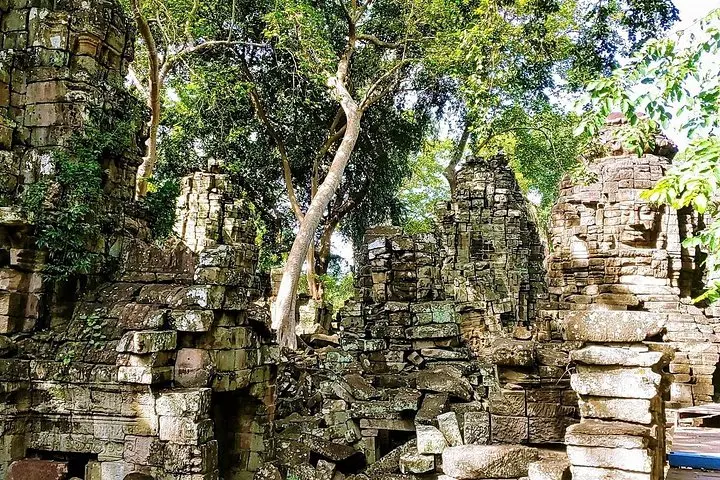
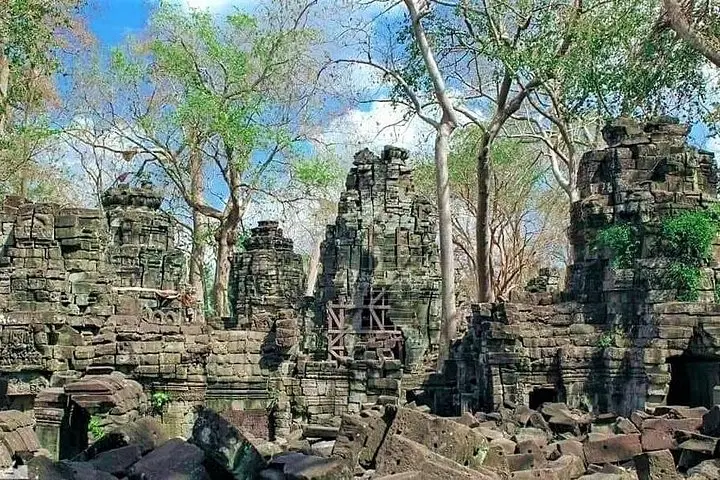
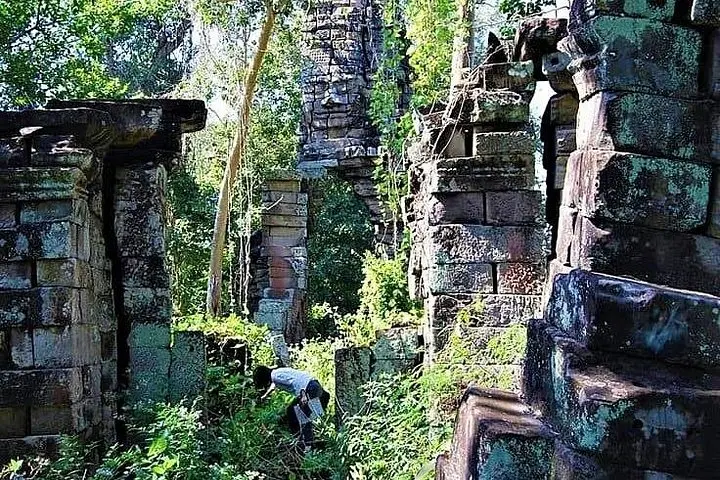
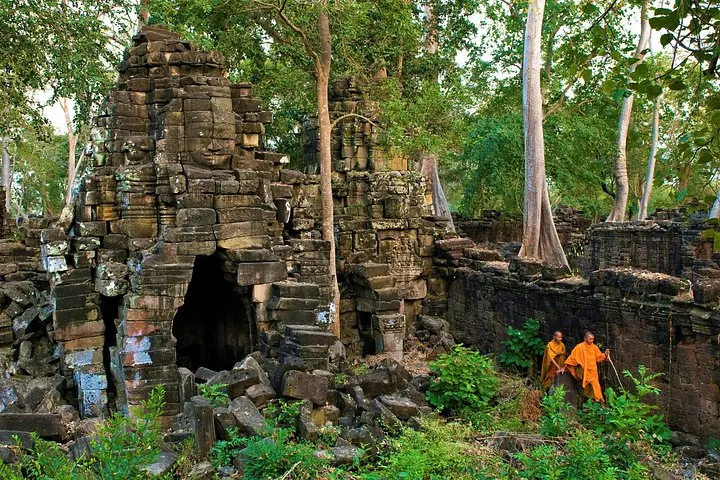
You arrive before the heat has fully climbed, the SUV rolling off the sealed road into a patchwork of red earth and scrub. Stone blocks sit half-swallowed by roots; faces chiseled in the 12th century watch the trail as if remembering the pilgrims who once passed. Wind stirs the tall grasses around a broad reservoir and the sound of village life edges closer.
You arrive before the heat has fully climbed, the SUV rolling off the sealed road into a patchwork of red earth and scrub. Stone blocks sit half-swallowed by roots; faces chiseled in the 12th century watch the trail as if remembering the pilgrims who once passed. Wind stirs the tall grasses around a broad reservoir and the sound of village life edges closer.
Banteay Chhmar is one of Jayavarman VII’s more ambitious, less-restored projects — an extensive Angkorian complex where Buddhist and Hindu iconography coexist and many galleries remain collapsed or unfinished. Geologically the site sits on alluvial plains fed by ancient waterworks; the nearby West Baray is a reminder of Khmer hydraulic engineering. Culturally, the area retains living traditions: pagoda ceremonies at Svay Romiet and small-scale silk production that follows techniques unchanged for generations.
The private day trip combines slow exploration of the main complex, a shorter visit to Banteay Toap (“Fortress of the Army”), and a practical walk-through of the Angkor Silk Farm where you’ll see mulberry cultivation, silkworm rearing and hand-weaving.
Plan for an 8–9 hour day with long vehicle transfers on rural roads and short walks over uneven stone and compacted earth. Bring sun and insect protection, modest clothing for temple respect, and small local currency for entrance and donations. Start early, move deliberately through shaded galleries, and allow extra time at the reservoir banks for late-afternoon light—when the place feels most like an archaeological site still deciding whether to sleep or wake.