THE ADVENTURE COLLECTIVE® · Independent discovery and booking for outdoor travel

Explore Banteay Srei’s delicate pink sandstone carvings then hike the forested trail to Kbal Spean’s carved riverbed. This full-day combo pairs intimate temple art with a short, rewarding wilderness walk.
Explore Banteay Srei’s delicate pink sandstone carvings then hike the forested trail to Kbal Spean’s carved riverbed. This full-day combo pairs intimate temple art with a short, rewarding wilderness walk.
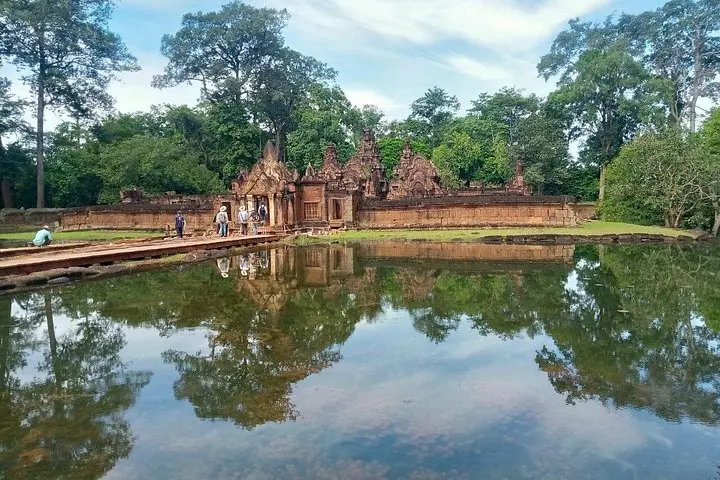
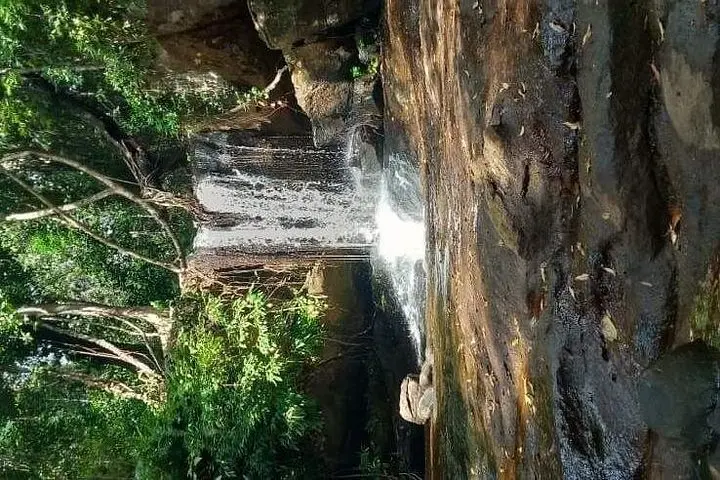
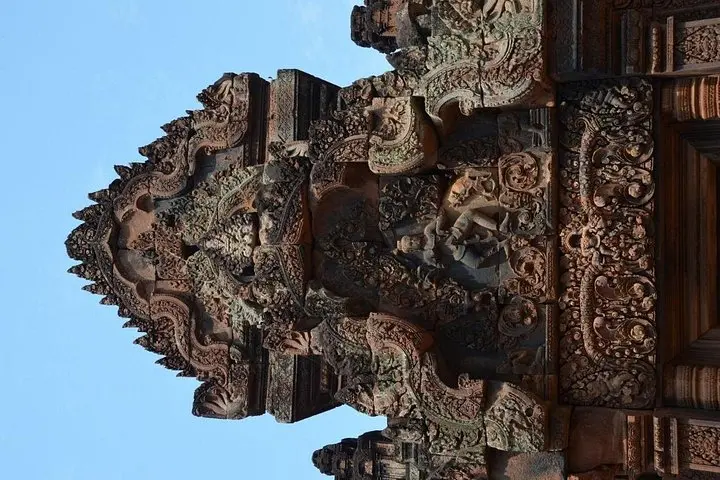
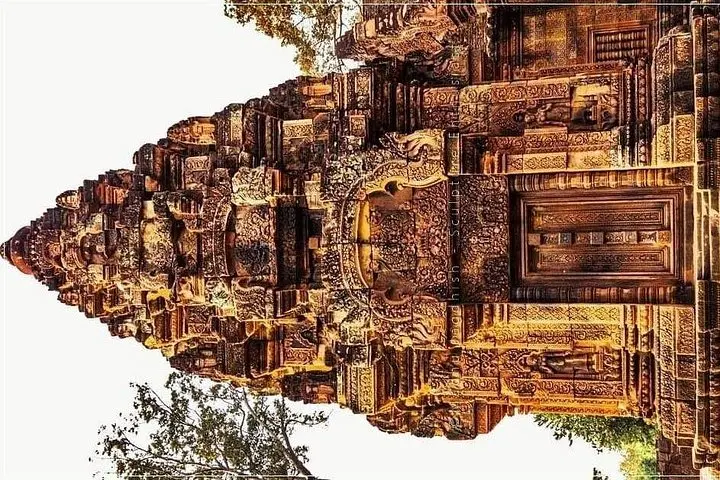
You arrive before the heat peaks, the road giving way to red-dusted earth and palms that lean as if to point the route. At Banteay Srei the sandstone glows pink in the morning light; bas-reliefs of gods and dancers hold the eye with a craftsmanship that feels intimate rather than imperial. A few hours later the trail to Kbal Spean slips into dipterocarp forest, where the river dares you upstream toward rock-cut lingas and sculpted Vishnu figures hidden beneath a canopy of leaves.
Verified experiences and guided adventures in the surrounding area.
Operated by Van Express Tours · Siem Reap, Siem Reap Province
You arrive before the heat peaks, the road giving way to red-dusted earth and palms that lean as if to point the route. At Banteay Srei the sandstone glows pink in the morning light; bas-reliefs of gods and dancers hold the eye with a craftsmanship that feels intimate rather than imperial. A few hours later the trail to Kbal Spean slips into dipterocarp forest, where the river dares you upstream toward rock-cut lingas and sculpted Vishnu figures hidden beneath a canopy of leaves.
Banteay Srei was carved in the 10th century using hard, reddish sandstone and dedicated to Shiva; its smaller scale allowed artisans to push fine detail. Kbal Spean—often called the River of a Thousand Lingas—was a sacred hydraulic sculpture project from later Angkorian times that modified river rock as a religious landscape. Geologically, the area sits on sandstone bedrock that holds intricate carving but also weathers unevenly, which is why many features require care.
Locally, villages support small vendors selling cold water and snacks; guides will translate the symbolic panels and point out Khmer inscriptions. Expect a mix of cultural immersion and light adventure: short climbs, uneven stone steps, and a woodland hike of roughly 1–2 km each way at Kbal Spean.
Practical guidance: wear sturdy shoes with grippy soles for wet rock, carry 1–2 liters of water, and bring sun protection for open stretches. Start early to avoid mid-day crowds and heat; respect carvings—no climbing—and pack out trash. With moderate fitness, this combined visit delivers art, history, and a river that still feels like it has a story to tell.
The hike from the trailhead to the main carved riverbed is about 1–2 km each way with some short, steep sections.
This tour’s description notes admission not included—expect separate ticket fees for temple areas and Kbal Spean national park where applicable.
Older children who can handle uneven terrain and short hikes do fine; families with very young children should plan logistics carefully.
Yes—photography is allowed, but avoid flash on delicate bas-reliefs and do not climb on or touch sculptures.
Van Express Tours operates guided outdoor trips and adventures with an emphasis on safety, stewardship, and memorable experiences.
You arrive before the heat peaks, the road giving way to red-dusted earth and palms that lean as if to point the route. At Banteay Srei the sandstone glows pink in the morning light; bas-reliefs of gods and dancers hold the eye with a craftsmanship that feels intimate rather than imperial. A few hours later the trail to Kbal Spean slips into dipterocarp forest, where the river dares you upstream toward rock-cut lingas and sculpted Vishnu figures hidden beneath a canopy of leaves.
You arrive before the heat peaks, the road giving way to red-dusted earth and palms that lean as if to point the route. At Banteay Srei the sandstone glows pink in the morning light; bas-reliefs of gods and dancers hold the eye with a craftsmanship that feels intimate rather than imperial. A few hours later the trail to Kbal Spean slips into dipterocarp forest, where the river dares you upstream toward rock-cut lingas and sculpted Vishnu figures hidden beneath a canopy of leaves.
Banteay Srei was carved in the 10th century using hard, reddish sandstone and dedicated to Shiva; its smaller scale allowed artisans to push fine detail. Kbal Spean—often called the River of a Thousand Lingas—was a sacred hydraulic sculpture project from later Angkorian times that modified river rock as a religious landscape. Geologically, the area sits on sandstone bedrock that holds intricate carving but also weathers unevenly, which is why many features require care.
Locally, villages support small vendors selling cold water and snacks; guides will translate the symbolic panels and point out Khmer inscriptions. Expect a mix of cultural immersion and light adventure: short climbs, uneven stone steps, and a woodland hike of roughly 1–2 km each way at Kbal Spean.
Practical guidance: wear sturdy shoes with grippy soles for wet rock, carry 1–2 liters of water, and bring sun protection for open stretches. Start early to avoid mid-day crowds and heat; respect carvings—no climbing—and pack out trash. With moderate fitness, this combined visit delivers art, history, and a river that still feels like it has a story to tell.