THE ADVENTURE COLLECTIVE® · Independent discovery and booking for outdoor travel

Explore the pink sandstone reliefs of Banteay Srei and the broader Grand Circuit on a private full‑day tour from Siem Reap. This itinerary combines intimate carving close‑ups with larger temple‑mountain panoramas and practical tips for timing, dress, and navigation.
Explore the pink sandstone reliefs of Banteay Srei and the broader Grand Circuit on a private full‑day tour from Siem Reap. This itinerary combines intimate carving close‑ups with larger temple‑mountain panoramas and practical tips for timing, dress, and navigation.
You step from the tuk‑tuk into a courtyard of pink stone: sunlight pushes into crevices and the carvings seem to lean forward, eager to be read. Early morning at Banteay Srei the air is warm but forgiving; the ornate lintels and devata figures are close enough to study, their details preserved in the softer sandstone that gives the temple its color.
Verified experiences and guided adventures in the surrounding area.
Operated by Angkor Focus Travel · Siem Reap, Siem Reap Province
You step from the tuk‑tuk into a courtyard of pink stone: sunlight pushes into crevices and the carvings seem to lean forward, eager to be read. Early morning at Banteay Srei the air is warm but forgiving; the ornate lintels and devata figures are close enough to study, their details preserved in the softer sandstone that gives the temple its color.
This full‑day private circuit pairs the delicate 10th‑century Banteay Srei — built under Rajendravarman II and famed for its intricate bas‑reliefs — with larger mountain temples like Pre Rup and the river island complex of Neak Pean. Geologically, the region is a low, seasonally flooded plain: sandstone and laterite were the Khmer builders’ common palette, and restoration projects have stabilized many stones while leaving roots and weathering to tell part of the story. Culturally the sites reflect Hindu and Buddhist phases of Angkorian kingship and remain active places of local reverence.
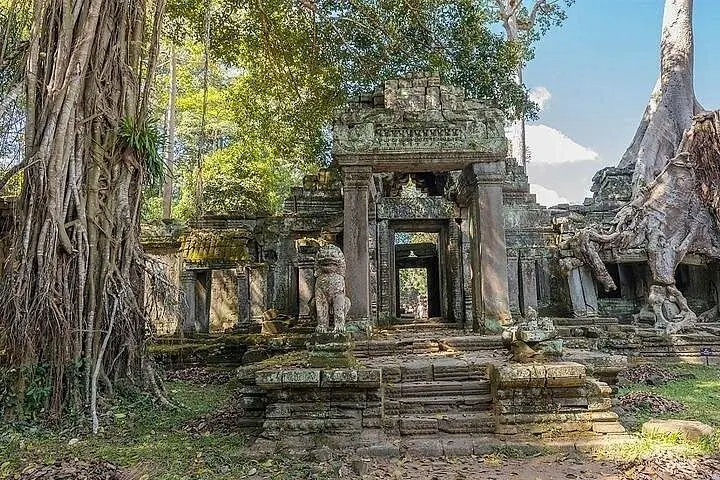
Practical guidance: start early to avoid midday heat, carry cash for the Angkor Pass (and small vendors), and wear closed shoes — temple stones are uneven and slick where moss grows. Bring sun protection and a refillable water bottle; operators usually provide cold towels and bottled water. Expect several short walks, stairs at Pre Rup, and some shaded pauses beneath figs where the empire’s stones collect reliefs and stories.
A private guide shapes the route to your pace — ask about quieter side cloisters and the best viewpoints for light on the carvings. With moderate fitness and respectful attire, the Grand Circuit is a compact, revealing day of Angkor’s layered history.
This private full‑day tour runs about eight hours and typically includes Banteay Srei, Pre Rup, East Mebon, Ta Som, Neak Pean, and Preah Khan as described by the operator.
Yes—entry to Angkor Archaeological Park requires a paid Angkor Pass, purchased at the official ticket center near Siem Reap; bring ID and cash or card depending on the counter.
Children with moderate stamina can manage the day, but some temples have many steps and uneven surfaces; travelers with limited mobility should discuss tailored pacing and vehicle access with the operator beforehand.
The private tour provides an English‑speaking guide and transportation; confirm whether temple entry fees are included when booking—typically the Angkor Pass is extra.
Angkor Focus Travel operates guided outdoor trips and adventures with an emphasis on safety, stewardship, and memorable experiences.
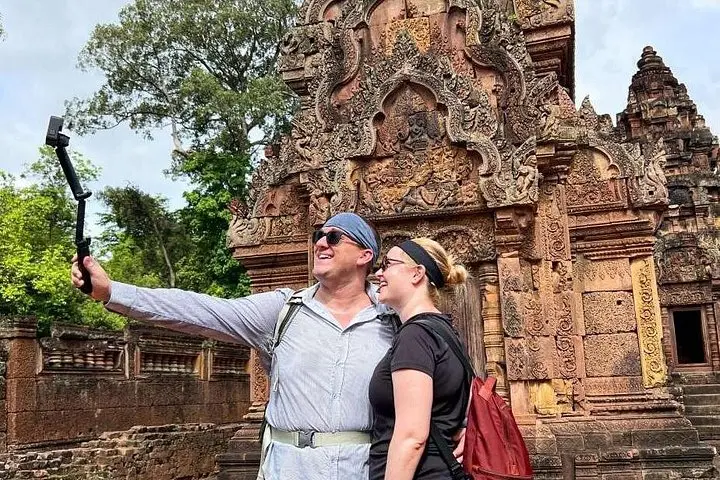
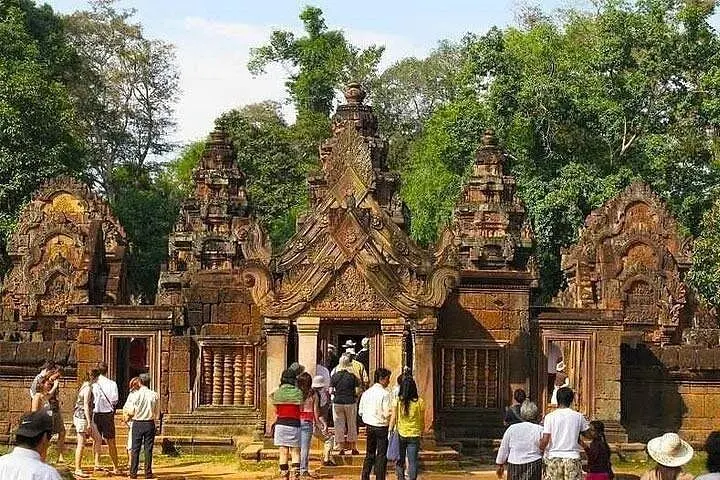
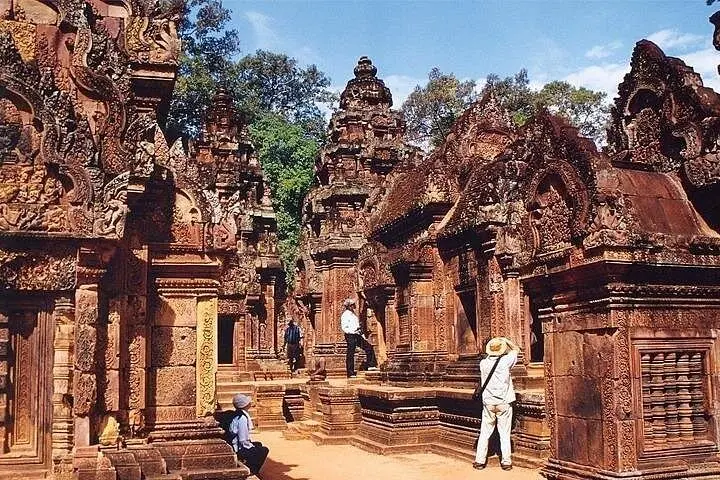
You step from the tuk‑tuk into a courtyard of pink stone: sunlight pushes into crevices and the carvings seem to lean forward, eager to be read. Early morning at Banteay Srei the air is warm but forgiving; the ornate lintels and devata figures are close enough to study, their details preserved in the softer sandstone that gives the temple its color.
You step from the tuk‑tuk into a courtyard of pink stone: sunlight pushes into crevices and the carvings seem to lean forward, eager to be read. Early morning at Banteay Srei the air is warm but forgiving; the ornate lintels and devata figures are close enough to study, their details preserved in the softer sandstone that gives the temple its color.
This full‑day private circuit pairs the delicate 10th‑century Banteay Srei — built under Rajendravarman II and famed for its intricate bas‑reliefs — with larger mountain temples like Pre Rup and the river island complex of Neak Pean. Geologically, the region is a low, seasonally flooded plain: sandstone and laterite were the Khmer builders’ common palette, and restoration projects have stabilized many stones while leaving roots and weathering to tell part of the story. Culturally the sites reflect Hindu and Buddhist phases of Angkorian kingship and remain active places of local reverence.
Practical guidance: start early to avoid midday heat, carry cash for the Angkor Pass (and small vendors), and wear closed shoes — temple stones are uneven and slick where moss grows. Bring sun protection and a refillable water bottle; operators usually provide cold towels and bottled water. Expect several short walks, stairs at Pre Rup, and some shaded pauses beneath figs where the empire’s stones collect reliefs and stories.
A private guide shapes the route to your pace — ask about quieter side cloisters and the best viewpoints for light on the carvings. With moderate fitness and respectful attire, the Grand Circuit is a compact, revealing day of Angkor’s layered history.