THE ADVENTURE COLLECTIVE® · Independent discovery and booking for outdoor travel

Explore remote Khmer temples and a stilted floating village on a full‑day trip from Siem Reap. This route pairs intricate 10th‑century carvings and jungle‑softened ruins with the water‑borne communities of Tonle Sap.
Explore remote Khmer temples and a stilted floating village on a full‑day trip from Siem Reap. This route pairs intricate 10th‑century carvings and jungle‑softened ruins with the water‑borne communities of Tonle Sap.
Morning light pours across red sandstone as the minivan eases onto a country road north of Siem Reap. The air smells of dust and rice husks; distant calls of birds puncture the quiet. By mid‑day you’re threading tree‑rooted corridors at Beng Mealea, then standing before the tiny, jewel‑like carvings of Banteay Srey—places where stone seems to hold the past in a patient grip.
Verified experiences and guided adventures in the surrounding area.
Operated by Angkor Doors · Siem Reap, Siem Reap Province
Morning light pours across red sandstone as the minivan eases onto a country road north of Siem Reap. The air smells of dust and rice husks; distant calls of birds puncture the quiet. By mid‑day you’re threading tree‑rooted corridors at Beng Mealea, then standing before the tiny, jewel‑like carvings of Banteay Srey—places where stone seems to hold the past in a patient grip.
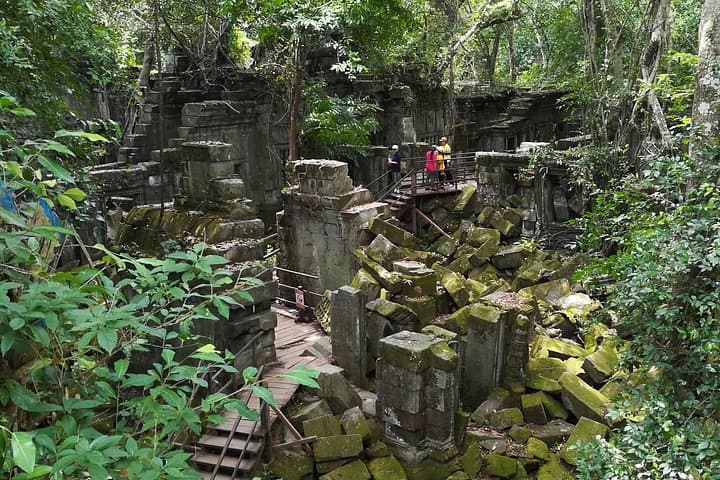
These sites span centuries of Khmer history. Banteay Srey, a 10th‑century shrine dedicated to Shiva, is famed for exceptionally fine sandstone carvings. Beng Mealea wears collapse and regrowth—fallen blocks and trees that have moved through the temple like curious neighbors—while Rolous contains the earliest brick-and-laterite monuments that mark the rise of Angkorian urbanism. Downriver, Kampong Phluk demonstrates an adaptive human geography: houses on stilts and mangrove fringes that respond to the Tonle Sap’s seasonal moods.
Expect uneven ground, stepped terraces, occasional steep climbs and long stretches under sun. Guides usually handle permits and local customs; visitors must cover shoulders and knees at temple entrances. Bring water, sun protection and modest cash for small vendors.
Timing matters: start early to avoid heat and crowds, and schedule the floating village for late afternoon when water and light are at their most dramatic. Respect community life in Kampong Phluk—photograph with permission and use local guides to support livelihoods.
This day tour balances big archaeological scenes with living, water‑borne culture, offering both solitude among ruins and the tactile immediacy of lakeside life.
Yes—most temple sites require an Angkor pass; many tour operators arrange or advise on passes in advance, so confirm with your provider.
Kampong Phluk’s water level varies seasonally—boats operate year‑round but the village’s appearance and accessibility change between dry and wet seasons.
Generally yes—sites are family‑friendly but involve uneven surfaces and some stairs; take a slower pace and plan rest breaks.
Most full‑day tours include a lunch break at a local restaurant or simple boxed lunch; confirm dietary needs when booking.
Angkor Doors operates guided outdoor trips and adventures with an emphasis on safety, stewardship, and memorable experiences.


Morning light pours across red sandstone as the minivan eases onto a country road north of Siem Reap. The air smells of dust and rice husks; distant calls of birds puncture the quiet. By mid‑day you’re threading tree‑rooted corridors at Beng Mealea, then standing before the tiny, jewel‑like carvings of Banteay Srey—places where stone seems to hold the past in a patient grip.
Morning light pours across red sandstone as the minivan eases onto a country road north of Siem Reap. The air smells of dust and rice husks; distant calls of birds puncture the quiet. By mid‑day you’re threading tree‑rooted corridors at Beng Mealea, then standing before the tiny, jewel‑like carvings of Banteay Srey—places where stone seems to hold the past in a patient grip.
These sites span centuries of Khmer history. Banteay Srey, a 10th‑century shrine dedicated to Shiva, is famed for exceptionally fine sandstone carvings. Beng Mealea wears collapse and regrowth—fallen blocks and trees that have moved through the temple like curious neighbors—while Rolous contains the earliest brick-and-laterite monuments that mark the rise of Angkorian urbanism. Downriver, Kampong Phluk demonstrates an adaptive human geography: houses on stilts and mangrove fringes that respond to the Tonle Sap’s seasonal moods.
Expect uneven ground, stepped terraces, occasional steep climbs and long stretches under sun. Guides usually handle permits and local customs; visitors must cover shoulders and knees at temple entrances. Bring water, sun protection and modest cash for small vendors.
Timing matters: start early to avoid heat and crowds, and schedule the floating village for late afternoon when water and light are at their most dramatic. Respect community life in Kampong Phluk—photograph with permission and use local guides to support livelihoods.
This day tour balances big archaeological scenes with living, water‑borne culture, offering both solitude among ruins and the tactile immediacy of lakeside life.