THE ADVENTURE COLLECTIVE® · Independent discovery and booking for outdoor travel

Lift off from Hoffnungsthal and watch the Barossa unfold beneath you: historic cellars, limestone quarries, vine-covered ridges and the Whispering Wall. This brief helicopter flight offers a concentrated aerial survey of the valley’s wine country and history.
Lift off from Hoffnungsthal and watch the Barossa unfold beneath you: historic cellars, limestone quarries, vine-covered ridges and the Whispering Wall. This brief helicopter flight offers a concentrated aerial survey of the valley’s wine country and history.
You climb into the helicopter against the low slope of the Hoffnungsthal Valley and the rotors lift you away from a patchwork of vineyards, pocket wetlands and palm-lined lanes. Below, rows of shiraz and riesling bend over the contours of the hills and farm tracks thread between stone homesteads; the pilot banks gently and points out Seppeltsfield’s old cellars, the white face of the Whispering Wall and the broad sweep of Penfolds’ holdings.
Verified experiences and guided adventures in the surrounding area.
Operated by Barossa Helicopters · Tanunda, South Australia
You climb into the helicopter against the low slope of the Hoffnungsthal Valley and the rotors lift you away from a patchwork of vineyards, pocket wetlands and palm-lined lanes. Below, rows of shiraz and riesling bend over the contours of the hills and farm tracks thread between stone homesteads; the pilot banks gently and points out Seppeltsfield’s old cellars, the white face of the Whispering Wall and the broad sweep of Penfolds’ holdings.
The Barossa’s landscape is shaped by ancient sedimentary limestone and lateritic soils; German settlers arriving in the 1840s planted vines that turned the valley into one of Australia’s defining wine regions. From the air you’ll see how geology, irrigation and century-old parcels of land combine to form the patterns winemakers read when deciding rootstocks and varieties.
Culturally, the valley still carries German place names and pubs where local history is visible in stone and signboards. Birdlife — wedge-tailed eagles and rosellas — often ride thermal drafts along the ridges, and the occasional kangaroo dots fallow paddocks.
Practical guide: flights run about 30–40 minutes; arrive early for the safety briefing and leave loose items behind. Operators enforce a 130 kg individual weight limit and require children to meet a minimum height. Expect headset commentary and an emphasis on photography windows — but follow crew instructions for boarding and seating. Weather and wind can cancel flights, so build flexibility into your day. Bring a charged camera, a windproof layer, and sunglasses; choose morning or late-afternoon departures for the most dramatic light over vine rows.
The advertised experience lasts about 30–40 minutes total in the air; allow additional time for check-in and briefing.
Yes — maximum individual weight is 130 kg and combined passenger limits apply; children must be at least 100 cm tall.
Flights are typically cancelled for unsafe weather; operators will offer refunds or rebookings if your flight is cancelled due to weather.
Ground facilities and boarding areas are listed as wheelchair accessible, but final boarding requires consultation with staff to confirm safe transfer into the helicopter.
Barossa Helicopters operates guided outdoor trips and adventures with an emphasis on safety, stewardship, and memorable experiences.
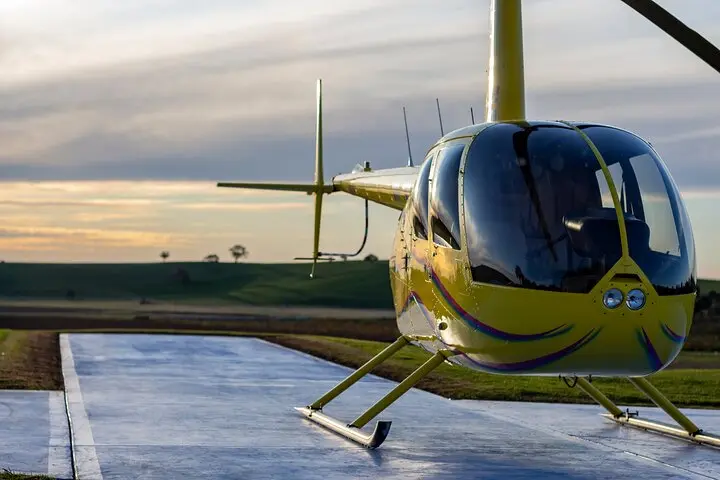
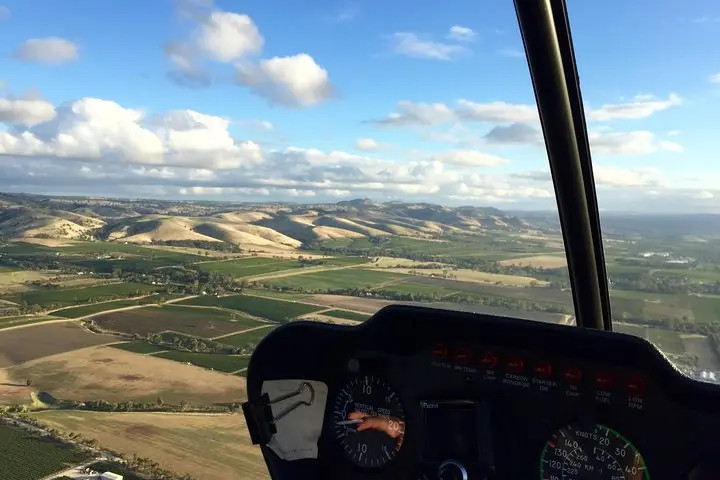
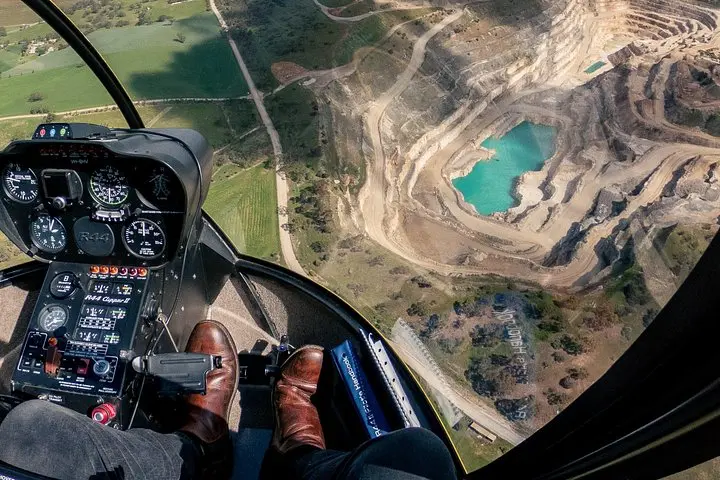
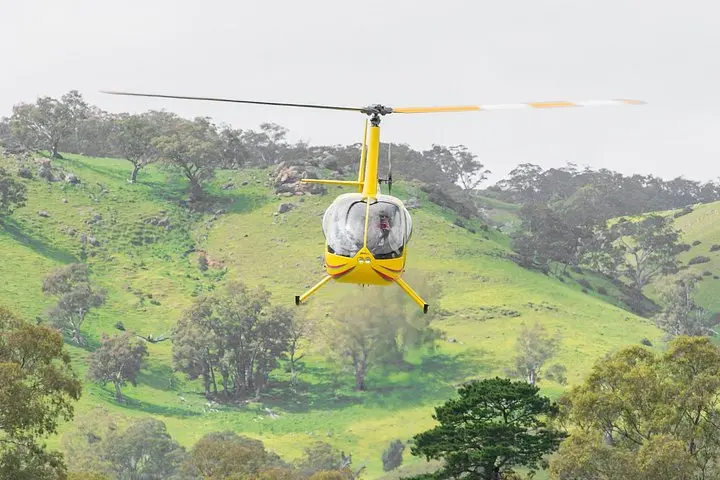
You climb into the helicopter against the low slope of the Hoffnungsthal Valley and the rotors lift you away from a patchwork of vineyards, pocket wetlands and palm-lined lanes. Below, rows of shiraz and riesling bend over the contours of the hills and farm tracks thread between stone homesteads; the pilot banks gently and points out Seppeltsfield’s old cellars, the white face of the Whispering Wall and the broad sweep of Penfolds’ holdings.
You climb into the helicopter against the low slope of the Hoffnungsthal Valley and the rotors lift you away from a patchwork of vineyards, pocket wetlands and palm-lined lanes. Below, rows of shiraz and riesling bend over the contours of the hills and farm tracks thread between stone homesteads; the pilot banks gently and points out Seppeltsfield’s old cellars, the white face of the Whispering Wall and the broad sweep of Penfolds’ holdings.
The Barossa’s landscape is shaped by ancient sedimentary limestone and lateritic soils; German settlers arriving in the 1840s planted vines that turned the valley into one of Australia’s defining wine regions. From the air you’ll see how geology, irrigation and century-old parcels of land combine to form the patterns winemakers read when deciding rootstocks and varieties.
Culturally, the valley still carries German place names and pubs where local history is visible in stone and signboards. Birdlife — wedge-tailed eagles and rosellas — often ride thermal drafts along the ridges, and the occasional kangaroo dots fallow paddocks.
Practical guide: flights run about 30–40 minutes; arrive early for the safety briefing and leave loose items behind. Operators enforce a 130 kg individual weight limit and require children to meet a minimum height. Expect headset commentary and an emphasis on photography windows — but follow crew instructions for boarding and seating. Weather and wind can cancel flights, so build flexibility into your day. Bring a charged camera, a windproof layer, and sunglasses; choose morning or late-afternoon departures for the most dramatic light over vine rows.