THE ADVENTURE COLLECTIVE® · Independent discovery and booking for outdoor travel

Glide into a candle-dark cave once used by the ancient Maya, then rinse off in the cool pool beneath Big Rock Falls. This full-day combo from San Ignacio pairs gentle canoeing with a refreshing waterfall swim—perfect for travelers who want history, geology, and a low-key adventure in one package.
Glide into a candle-dark cave once used by the ancient Maya, then rinse off in the cool pool beneath Big Rock Falls. This full-day combo from San Ignacio pairs gentle canoeing with a refreshing waterfall swim—perfect for travelers who want history, geology, and a low-key adventure in one package.
You push off in a dugout canoe and the rainforest closes around you—green walls low enough to hear birds slide past, the river breathing. The guide’s paddle is a metronome; the cave ahead is a dark mouth, cool and dry compared with the heavy Belizean heat outside. Stalactites drip in slow time, and on the low ledges you can still see the fingerprints of ancient Maya ritual. This is more glide than exertion: a slow, careful descent into a place that asked to be entered softly.
Verified experiences and guided adventures in the surrounding area.
Operated by Cayo Inland Expeditions · San Ignacio, Cayo District
You push off in a dugout canoe and the rainforest closes around you—green walls low enough to hear birds slide past, the river breathing. The guide’s paddle is a metronome; the cave ahead is a dark mouth, cool and dry compared with the heavy Belizean heat outside. Stalactites drip in slow time, and on the low ledges you can still see the fingerprints of ancient Maya ritual. This is more glide than exertion: a slow, careful descent into a place that asked to be entered softly.
The combo pairs two very different faces of the Cayo District. Barton Creek Cave sits on the karst edge of the Mountain Pine Ridge Reserve, a limestone ruin carved by millennia of moving water. Archaeologists found pottery from the Early to Late Classic Maya (200–900 AD) and human remains on ledges inside the first kilometer—evidence that the cave was a place of ceremony and passage, not just shelter.
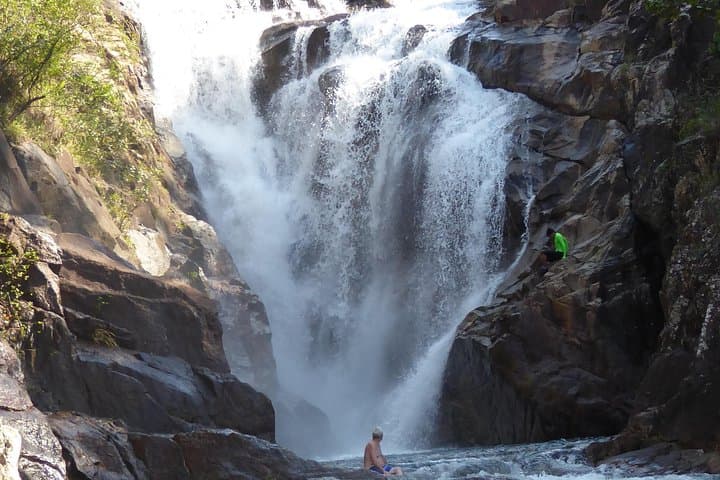
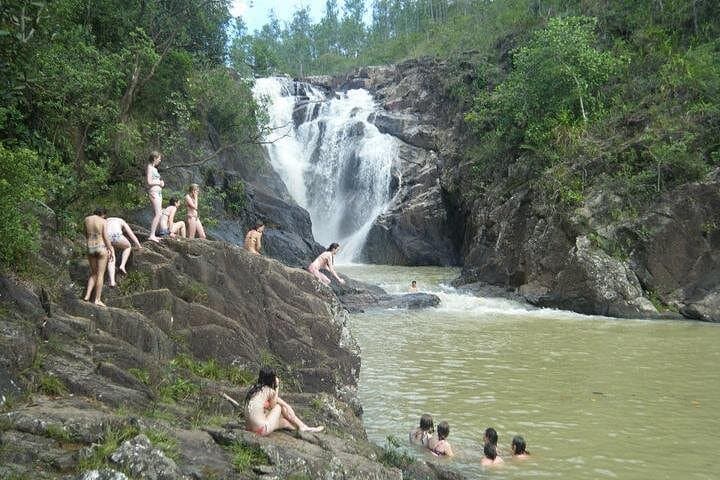
An hour’s scenic drive from San Ignacio threads past small Maya villages and rolling farmland, the road climbing toward pine forests and deeper humidity. The geology shifts—limestone bluffs, sinkholes, and cave mouths—signs that water has been an active sculptor here. After the cave, the tour continues to Big Rock Falls: a wide, stepped cascade tucked into a pool where the forest seems to lean in to watch. The waterfall is shallow at the edges and refreshingly cold, the kind of place that invites a long swim to wash off the cave dust and heat.
For travelers, this is a measured day: the shared tour departs San Ignacio at 8:30 a.m., returns about 4:00 p.m., and includes hotel pickup within roughly 10–20 km. The canoe portion is gentle—guides do the steering and most of the paddling—so children and less experienced paddlers can participate; the company recommends at least a moderate fitness level for the full-day nature of the outing. Lunch and bottled water are provided, and the guide’s commentary frames both natural history and local culture.
Practical notes: sunscreen and a hat are essential for the drive and waterfall; water shoes with a grippy sole help in and out of the canoe and on the wet rocks at Big Rock Falls. The cave is dark and can be slippery—follow your guide’s instructions and don’t touch delicate formations. The tour runs year-round but is subject to cancellation in severe weather or if minimum numbers aren’t met; book in advance during peak dry-season months.
This is a trip that pairs quiet curiosity with easy adventure: a canoe that asks you to listen, a waterfall that invites you to cool off, and a guide who points out the marks left by people who crossed this landscape centuries ago. It’s a full-day primer on why Belize’s interior feels both wild and lived-in.
Minimal paddling is required from participants; guides do most of the steering. Expect a gentle glide of roughly one kilometer of cave passage with short stretches of sitting and standing on the banks.
Yes—children can join when accompanied by adults, but the operator requires at least two paying adults per child and advises close supervision inside the cave and at the waterfall.
Quick-dry clothing, water shoes, a hat, and a light layer for the morning drive are recommended. Bring swimwear for Big Rock Falls and a towel.
Basic facilities are available near the tour staging areas and at the Big Rock Falls site, but expect limited amenities en route in the reserve.
The drive to Barton Creek Cave is about 45–60 minutes depending on road conditions; Big Rock Falls is roughly 30–45 minutes further into the Mountain Pine Ridge area.
The tour operates in most weather but may be canceled for safety in heavy rain or flooding; operators recommend flexible scheduling during the wet season.
Cayo Inland Expeditions operates guided outdoor trips and adventures with an emphasis on safety, stewardship, and memorable experiences.
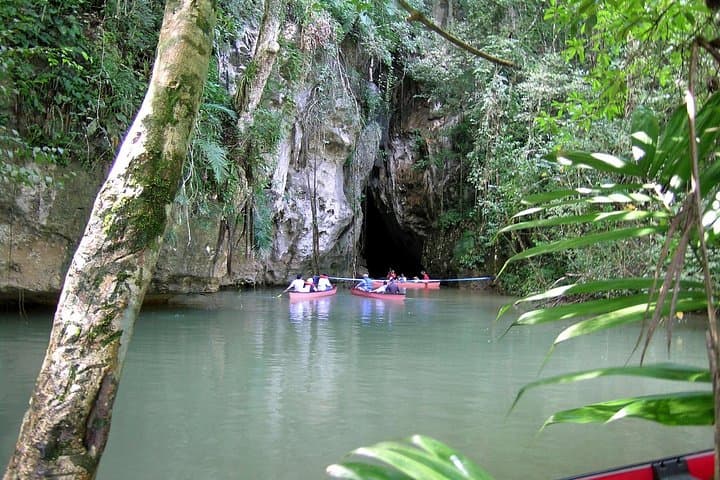
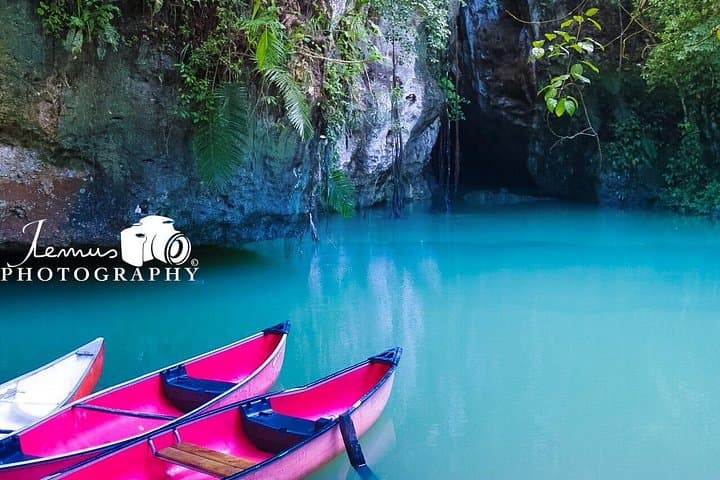
You push off in a dugout canoe and the rainforest closes around you—green walls low enough to hear birds slide past, the river breathing. The guide’s paddle is a metronome; the cave ahead is a dark mouth, cool and dry compared with the heavy Belizean heat outside. Stalactites drip in slow time, and on the low ledges you can still see the fingerprints of ancient Maya ritual. This is more glide than exertion: a slow, careful descent into a place that asked to be entered softly.
You push off in a dugout canoe and the rainforest closes around you—green walls low enough to hear birds slide past, the river breathing. The guide’s paddle is a metronome; the cave ahead is a dark mouth, cool and dry compared with the heavy Belizean heat outside. Stalactites drip in slow time, and on the low ledges you can still see the fingerprints of ancient Maya ritual. This is more glide than exertion: a slow, careful descent into a place that asked to be entered softly.
The combo pairs two very different faces of the Cayo District. Barton Creek Cave sits on the karst edge of the Mountain Pine Ridge Reserve, a limestone ruin carved by millennia of moving water. Archaeologists found pottery from the Early to Late Classic Maya (200–900 AD) and human remains on ledges inside the first kilometer—evidence that the cave was a place of ceremony and passage, not just shelter.
An hour’s scenic drive from San Ignacio threads past small Maya villages and rolling farmland, the road climbing toward pine forests and deeper humidity. The geology shifts—limestone bluffs, sinkholes, and cave mouths—signs that water has been an active sculptor here. After the cave, the tour continues to Big Rock Falls: a wide, stepped cascade tucked into a pool where the forest seems to lean in to watch. The waterfall is shallow at the edges and refreshingly cold, the kind of place that invites a long swim to wash off the cave dust and heat.
For travelers, this is a measured day: the shared tour departs San Ignacio at 8:30 a.m., returns about 4:00 p.m., and includes hotel pickup within roughly 10–20 km. The canoe portion is gentle—guides do the steering and most of the paddling—so children and less experienced paddlers can participate; the company recommends at least a moderate fitness level for the full-day nature of the outing. Lunch and bottled water are provided, and the guide’s commentary frames both natural history and local culture.
Practical notes: sunscreen and a hat are essential for the drive and waterfall; water shoes with a grippy sole help in and out of the canoe and on the wet rocks at Big Rock Falls. The cave is dark and can be slippery—follow your guide’s instructions and don’t touch delicate formations. The tour runs year-round but is subject to cancellation in severe weather or if minimum numbers aren’t met; book in advance during peak dry-season months.
This is a trip that pairs quiet curiosity with easy adventure: a canoe that asks you to listen, a waterfall that invites you to cool off, and a guide who points out the marks left by people who crossed this landscape centuries ago. It’s a full-day primer on why Belize’s interior feels both wild and lived-in.