THE ADVENTURE COLLECTIVE® · Independent discovery and booking for outdoor travel

A full-day guided trek from Puerto Natales to the Mirador Base Torres delivers Patagonia's most iconic granite peaks in a single, intense outing. Expect 20 km round-trip, exposed moraine climbs, and a long but deeply rewarding day in Torres del Paine.
A full-day guided trek from Puerto Natales to the Mirador Base Torres delivers Patagonia's most iconic granite peaks in a single, intense outing. Expect 20 km round-trip, exposed moraine climbs, and a long but deeply rewarding day in Torres del Paine.
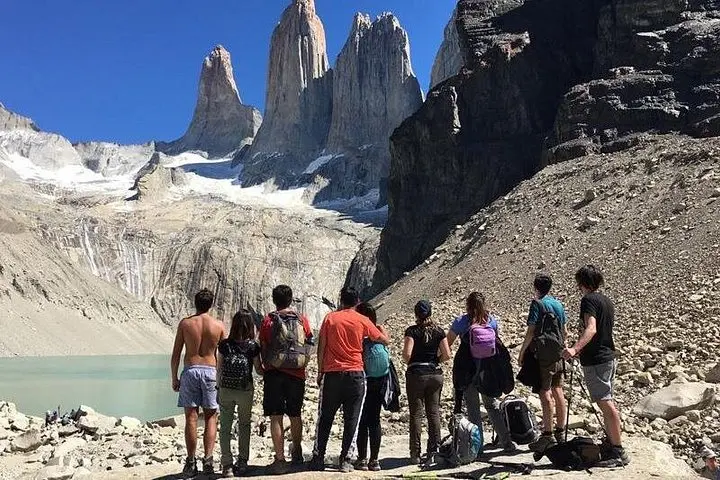
You set off before dawn from Puerto Natales, the town's harbor lights still clinging to the fjord. The road to Torres del Paine slips past lenga forests and flat, wind-sculpted plains until the bus drops you at Portería Amarga and the massif steps into view—granite towers rising like a challenge. The ascent begins on well-worn trail that threads Ascencio Valley, moves through quiet stands of Lenga, and finishes on a raw, rocky moraine that forces a slow, deliberate climb to Mirador Base Torres.
Verified experiences and guided adventures in the surrounding area.
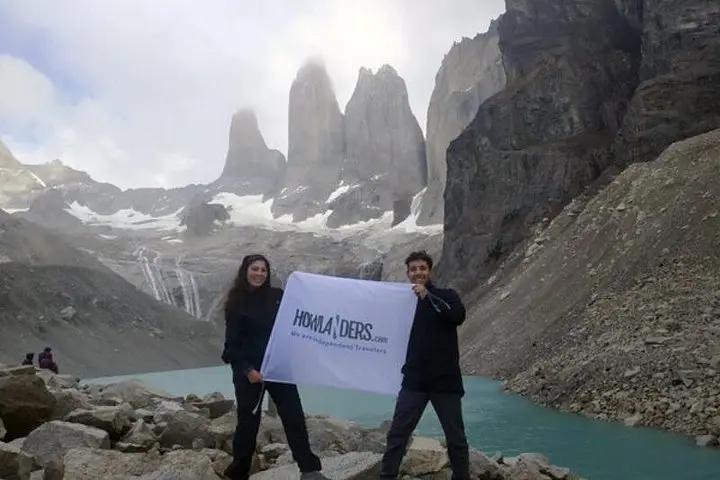
Operated by Howlanders · Puerto Natales, Magallanes y Antártica Chilena
You set off before dawn from Puerto Natales, the town's harbor lights still clinging to the fjord. The road to Torres del Paine slips past lenga forests and flat, wind-sculpted plains until the bus drops you at Portería Amarga and the massif steps into view—granite towers rising like a challenge. The ascent begins on well-worn trail that threads Ascencio Valley, moves through quiet stands of Lenga, and finishes on a raw, rocky moraine that forces a slow, deliberate climb to Mirador Base Torres.
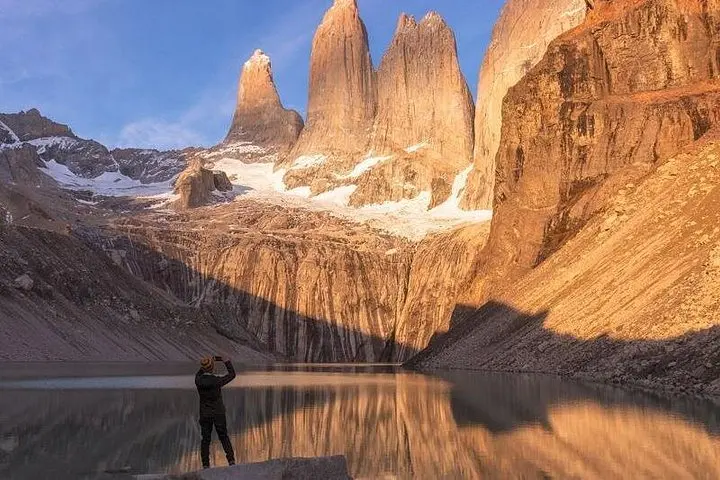
This is a landscape shaped by ice and fire. The towers themselves are the exposed cores of an ancient batholith carved by repeated glaciation; what remains now are vertical faces that catch sunrise and turn the morning into a study of shadow and orange. Indigenous Kawésqar and Tehuelche peoples crossed these plains for millennia; the name Paine comes from the Tehuelche word for 'blue,' a nod to the park's glaciers and lagoons. In 1959 the area received official protection, and today it draws hikers who want a concentrated encounter with Patagonia's extremes.
On the trail you move from forest to wind-battered scrub to the moraine rockfield—terrain that makes the landscape feel like it's participating. Winds test your balance; the river Ascensio dares you to keep a steady rhythm. Wildlife is discreet but present: guanacos watch from ridges and condors ride the thermals above the cirques.
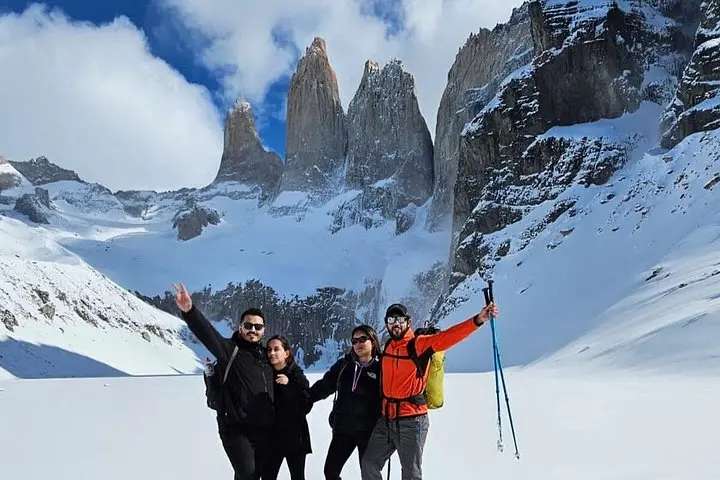
Practical reality keeps pace with the romance. The round-trip trek from the park entrance to the viewpoint is about 20 km with roughly 780 m of elevation gain; expect 10–12 hours door-to-door from Puerto Natales including about two hours each way by shuttle. The trail is maintained but includes steep rocky sections and a final moraine that requires careful footwork—guides in winter fit crampons. Groups are guided and supported with poles and a first-aid kit; in summer groups are larger but split into smaller subgroups to accommodate different paces.
What to plan for: buy your park pass in advance (pasesparques.cl), wear stiff-soled mountain boots, and layer for wind and fast temperature swings—Patagonian weather can flip from sun to sleet in an hour. Hydrate and bring high-energy food; there is a brief lunch window at the viewpoint but no services on the trail. If winter travel is your aim, reserve trekking gear rentals and verify crampon availability.
For photographers, sunrise on the towers is a reward for an early start; for hikers, reaching the base is a moment of earned quiet—an opportunity to stand beneath geology that feels alive. Leave no trace, respect restricted areas, and let the mountains keep their mood. Return to Puerto Natales exhausted, sunburned or wind-chapped, and with one of Patagonia's clearest memories: the towers staring you back down.
The guided outing covers about 20 km round-trip with approximately 780 m of elevation gain; the full day including transport typically takes 10–12 hours.
Yes—visitors must purchase Torres del Paine entrance tickets in advance at pasesparques.cl; bring proof on the day.
Hikers should be at least moderately fit; while the trail is well marked, the moraine and length make it challenging for true beginners.
Crampons are used in winter conditions; the operator supplies or arranges them when necessary—confirm in advance for June–September travel.
Guides do not typically provide full meals; bring packed lunch and snacks—there’s a lunch stop at the viewpoint but no services on the trail.
Group sizes vary by season; winter groups are smaller with a guide per four guests, while summer groups can be larger with roughly one guide per six hikers.
Howlanders operates guided outdoor trips and adventures with an emphasis on safety, stewardship, and memorable experiences.
You set off before dawn from Puerto Natales, the town's harbor lights still clinging to the fjord. The road to Torres del Paine slips past lenga forests and flat, wind-sculpted plains until the bus drops you at Portería Amarga and the massif steps into view—granite towers rising like a challenge. The ascent begins on well-worn trail that threads Ascencio Valley, moves through quiet stands of Lenga, and finishes on a raw, rocky moraine that forces a slow, deliberate climb to Mirador Base Torres.
You set off before dawn from Puerto Natales, the town's harbor lights still clinging to the fjord. The road to Torres del Paine slips past lenga forests and flat, wind-sculpted plains until the bus drops you at Portería Amarga and the massif steps into view—granite towers rising like a challenge. The ascent begins on well-worn trail that threads Ascencio Valley, moves through quiet stands of Lenga, and finishes on a raw, rocky moraine that forces a slow, deliberate climb to Mirador Base Torres.
This is a landscape shaped by ice and fire. The towers themselves are the exposed cores of an ancient batholith carved by repeated glaciation; what remains now are vertical faces that catch sunrise and turn the morning into a study of shadow and orange. Indigenous Kawésqar and Tehuelche peoples crossed these plains for millennia; the name Paine comes from the Tehuelche word for 'blue,' a nod to the park's glaciers and lagoons. In 1959 the area received official protection, and today it draws hikers who want a concentrated encounter with Patagonia's extremes.
On the trail you move from forest to wind-battered scrub to the moraine rockfield—terrain that makes the landscape feel like it's participating. Winds test your balance; the river Ascensio dares you to keep a steady rhythm. Wildlife is discreet but present: guanacos watch from ridges and condors ride the thermals above the cirques.
Practical reality keeps pace with the romance. The round-trip trek from the park entrance to the viewpoint is about 20 km with roughly 780 m of elevation gain; expect 10–12 hours door-to-door from Puerto Natales including about two hours each way by shuttle. The trail is maintained but includes steep rocky sections and a final moraine that requires careful footwork—guides in winter fit crampons. Groups are guided and supported with poles and a first-aid kit; in summer groups are larger but split into smaller subgroups to accommodate different paces.
What to plan for: buy your park pass in advance (pasesparques.cl), wear stiff-soled mountain boots, and layer for wind and fast temperature swings—Patagonian weather can flip from sun to sleet in an hour. Hydrate and bring high-energy food; there is a brief lunch window at the viewpoint but no services on the trail. If winter travel is your aim, reserve trekking gear rentals and verify crampon availability.
For photographers, sunrise on the towers is a reward for an early start; for hikers, reaching the base is a moment of earned quiet—an opportunity to stand beneath geology that feels alive. Leave no trace, respect restricted areas, and let the mountains keep their mood. Return to Puerto Natales exhausted, sunburned or wind-chapped, and with one of Patagonia's clearest memories: the towers staring you back down.