THE ADVENTURE COLLECTIVE® · Independent discovery and booking for outdoor travel

Explore Bath on a self-guided pen-and-paper quest that leads you through Roman baths, Georgian crescents and hidden lanes. Solve clues, learn local history, and set your own pace on this 60–90 minute walking discovery.
Explore Bath on a self-guided pen-and-paper quest that leads you through Roman baths, Georgian crescents and hidden lanes. Solve clues, learn local history, and set your own pace on this 60–90 minute walking discovery.
A gray morning light slides down Bath’s honey-colored terraces as a pen taps paper beneath a traveler’s palm. The quest begins at a piazza of stone and history: your pack contains a map, a handful of clues and the freedom to read the city on foot. Each solved riddle points the way — through narrow lanes, past carved facades, and across the sweep of the River Avon — inviting curiosity rather than a timetable.
Verified experiences and guided adventures in the surrounding area.
Operated by Sightseeing Quest · Bath, Somerset
A gray morning light slides down Bath’s honey-colored terraces as a pen taps paper beneath a traveler’s palm. The quest begins at a piazza of stone and history: your pack contains a map, a handful of clues and the freedom to read the city on foot. Each solved riddle points the way — through narrow lanes, past carved facades, and across the sweep of the River Avon — inviting curiosity rather than a timetable.
Bath’s story is visible in layered stone: Roman baths built around hot springs, medieval alleyways, and the clean, curved geometry of Georgian crescents. The city’s geology — warm springs rising through Jurassic limestone — shaped its use as a spa, while 18th-century architects transformed it into a classical stage. Culture here leans toward tea rooms, independent bookshops and quiet churchyards that hold the margins of big-name sights.
Practical guidance: expect 60–90 minutes of walking on paved streets and cobbles; wear supportive shoes and bring a pen (it’s a pen-and-paper experience). Start early to avoid peak crowds at the Abbey and the Roman Baths, and plan coffee stops into your route — the quest is deliberately flexible. Keep maps dry and pockets light; your clues rely on details in the built environment, so look up and around, not just at your feet.
This self-led format suits small groups and families wanting an active, phone-free way to learn Bath’s layered history. Respect local signage, support independent cafes along the route, and allow time to pause — the city rewards slow attention.
The route is designed for 60–90 minutes at a steady pace; allow extra time for stops, photos and cafes.
Yes — the pen-and-paper format is family-friendly; younger kids may need help reading some clues.
No — the pack is phone-free and contains all maps and clues, though a phone helps for emergencies.
Many central streets and key viewpoints are accessible, but some narrow lanes and cobbles may be challenging for certain mobility aids.
Sightseeing Quest operates guided outdoor trips and adventures with an emphasis on safety, stewardship, and memorable experiences.
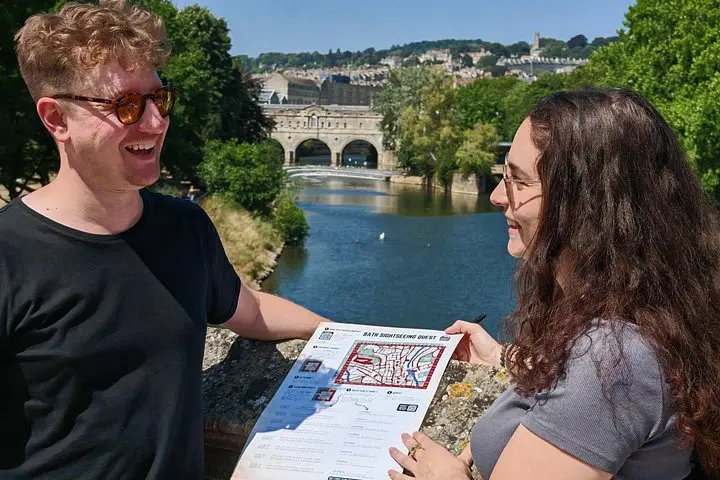
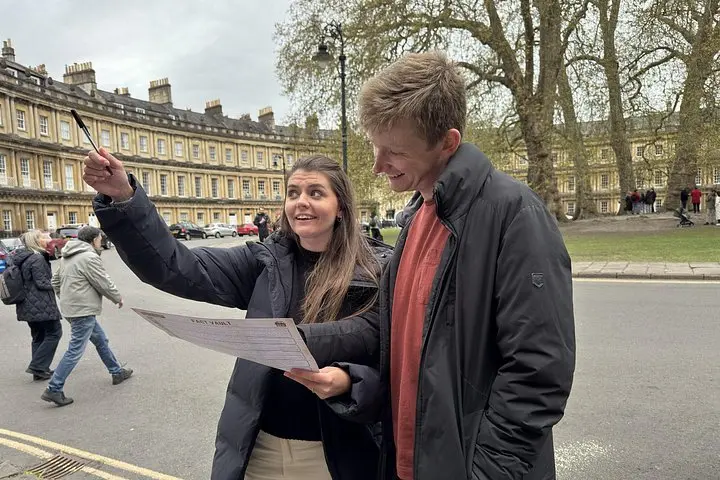
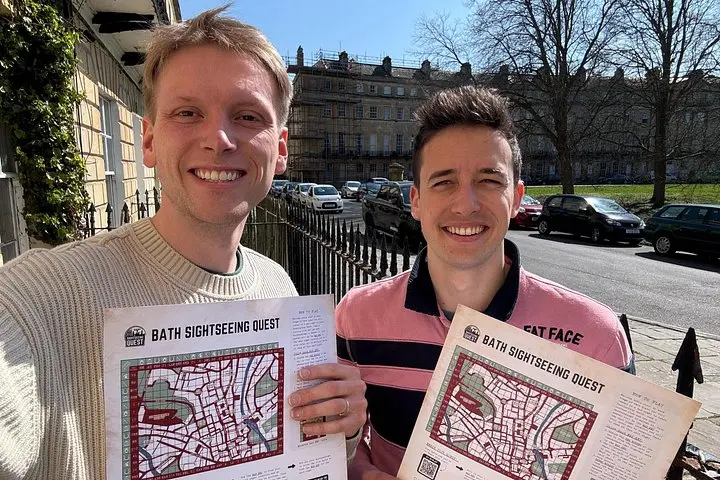

A gray morning light slides down Bath’s honey-colored terraces as a pen taps paper beneath a traveler’s palm. The quest begins at a piazza of stone and history: your pack contains a map, a handful of clues and the freedom to read the city on foot. Each solved riddle points the way — through narrow lanes, past carved facades, and across the sweep of the River Avon — inviting curiosity rather than a timetable.
A gray morning light slides down Bath’s honey-colored terraces as a pen taps paper beneath a traveler’s palm. The quest begins at a piazza of stone and history: your pack contains a map, a handful of clues and the freedom to read the city on foot. Each solved riddle points the way — through narrow lanes, past carved facades, and across the sweep of the River Avon — inviting curiosity rather than a timetable.
Bath’s story is visible in layered stone: Roman baths built around hot springs, medieval alleyways, and the clean, curved geometry of Georgian crescents. The city’s geology — warm springs rising through Jurassic limestone — shaped its use as a spa, while 18th-century architects transformed it into a classical stage. Culture here leans toward tea rooms, independent bookshops and quiet churchyards that hold the margins of big-name sights.
Practical guidance: expect 60–90 minutes of walking on paved streets and cobbles; wear supportive shoes and bring a pen (it’s a pen-and-paper experience). Start early to avoid peak crowds at the Abbey and the Roman Baths, and plan coffee stops into your route — the quest is deliberately flexible. Keep maps dry and pockets light; your clues rely on details in the built environment, so look up and around, not just at your feet.
This self-led format suits small groups and families wanting an active, phone-free way to learn Bath’s layered history. Respect local signage, support independent cafes along the route, and allow time to pause — the city rewards slow attention.