THE ADVENTURE COLLECTIVE® · Independent discovery and booking for outdoor travel

See Bath’s Roman Baths and Georgian crescents in a compact private walk. This two-hour guided tour pairs archaeology and architecture with practical pacing—ideal for first-time visitors who want a concentrated primer on the city’s highlights.
See Bath’s Roman Baths and Georgian crescents in a compact private walk. This two-hour guided tour pairs archaeology and architecture with practical pacing—ideal for first-time visitors who want a concentrated primer on the city’s highlights.
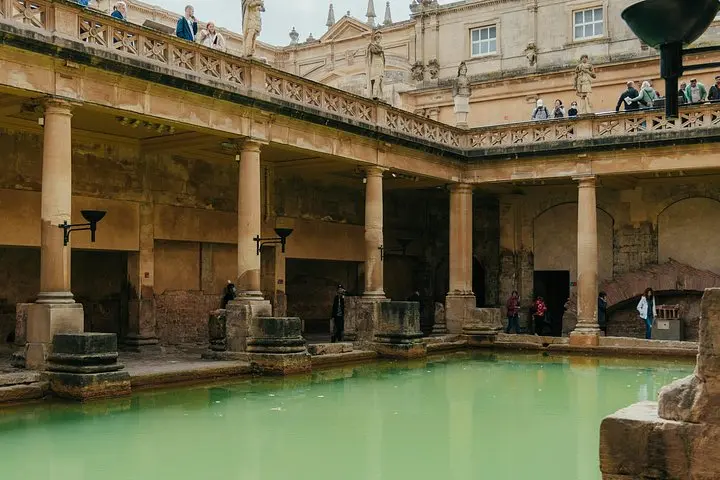
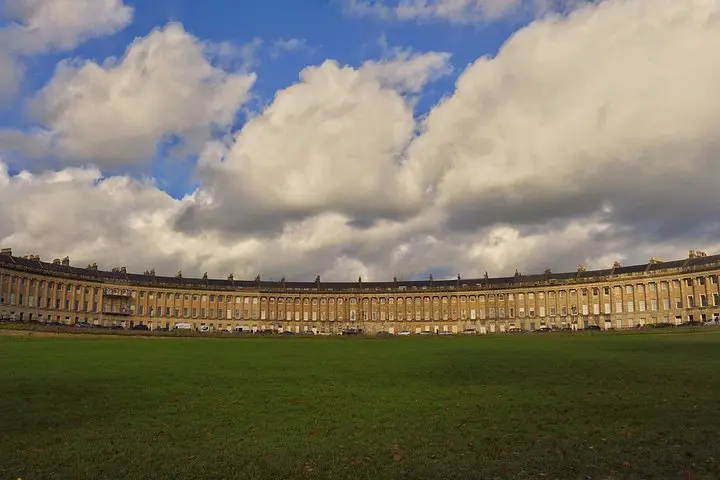
Stone and steam meet beneath the Abbey's shadow as your guide gathers the group outside Bath Abbey, the city’s medieval spine. Cobbled streets funnel you toward the ancient hot spring, and in two hours the city opens with brisk precision: the Roman Baths' steaming pools, The Circus’s strict circles, and the Royal Crescent’s bold curve.
Verified experiences and guided adventures in the surrounding area.
Operated by European Voyages · Bath, Somerset
Stone and steam meet beneath the Abbey's shadow as your guide gathers the group outside Bath Abbey, the city’s medieval spine. Cobbled streets funnel you toward the ancient hot spring, and in two hours the city opens with brisk precision: the Roman Baths' steaming pools, The Circus’s strict circles, and the Royal Crescent’s bold curve.
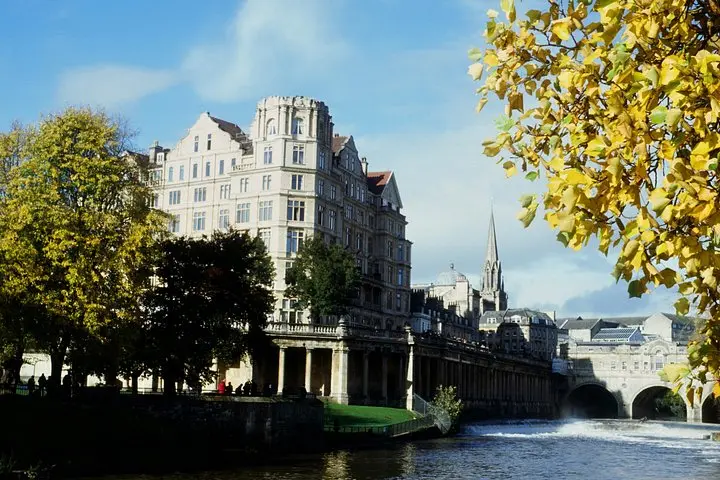
Bath's story reads in stone—Roman engineering around natural thermal springs that predate the city, then an 18th-century Georgian reimagining driven by architects like John Wood the Elder. The River Avon cuts a calmer line through the center, where Pulteney Bridge still wears shops across its span and Queen Square hints at Regency social rituals. Guides commonly fold archaeology into urban life, showing how Roman drainage shaped later streets and how Georgian taste reorganized the skyline.
This private format keeps the pace intentional: expect 20–30 minutes at the Baths (admission optional), short stops at the Circus and Royal Crescent for photos, and a walking sketch of Georgian society at Pulteney Bridge and Queen Square. Terrain is paved and compact—comfortable shoes suffice. Bring a waterproof layer and arrive slightly early to use public transport or find short-term parking nearby.
Timing matters: mornings are quieter for photos and clearer audio during commentary; late afternoons cast the stone a warmer tone but draw crowds. Ask your guide about skipping entrance tickets until you decide—this tour balances a focused itinerary with the flexibility of a private guide.
Not automatically—admission is optional and can be added if you request it when booking so the itinerary allows time for entry.
Yes, the route is stroller-accessible with mostly paved paths; inform the operator of any mobility needs when booking.
Very close—the central meeting point at Bath Abbey is within easy walking distance of Bath Spa train station and local bus stops.
Guides are available in multiple languages (English, Spanish, French, German, Italian, Arabic) but confirm language availability when booking.
European Voyages operates guided outdoor trips and adventures with an emphasis on safety, stewardship, and memorable experiences.

Stone and steam meet beneath the Abbey's shadow as your guide gathers the group outside Bath Abbey, the city’s medieval spine. Cobbled streets funnel you toward the ancient hot spring, and in two hours the city opens with brisk precision: the Roman Baths' steaming pools, The Circus’s strict circles, and the Royal Crescent’s bold curve.
Stone and steam meet beneath the Abbey's shadow as your guide gathers the group outside Bath Abbey, the city’s medieval spine. Cobbled streets funnel you toward the ancient hot spring, and in two hours the city opens with brisk precision: the Roman Baths' steaming pools, The Circus’s strict circles, and the Royal Crescent’s bold curve.
Bath's story reads in stone—Roman engineering around natural thermal springs that predate the city, then an 18th-century Georgian reimagining driven by architects like John Wood the Elder. The River Avon cuts a calmer line through the center, where Pulteney Bridge still wears shops across its span and Queen Square hints at Regency social rituals. Guides commonly fold archaeology into urban life, showing how Roman drainage shaped later streets and how Georgian taste reorganized the skyline.
This private format keeps the pace intentional: expect 20–30 minutes at the Baths (admission optional), short stops at the Circus and Royal Crescent for photos, and a walking sketch of Georgian society at Pulteney Bridge and Queen Square. Terrain is paved and compact—comfortable shoes suffice. Bring a waterproof layer and arrive slightly early to use public transport or find short-term parking nearby.
Timing matters: mornings are quieter for photos and clearer audio during commentary; late afternoons cast the stone a warmer tone but draw crowds. Ask your guide about skipping entrance tickets until you decide—this tour balances a focused itinerary with the flexibility of a private guide.