THE ADVENTURE COLLECTIVE® · Independent discovery and booking for outdoor travel

Join a family-run workshop near Galle to learn traditional wax-resist batik. Watch artisans at work, then design and dye your own fabric to take home in a 2–3 hour hands-on session.
Join a family-run workshop near Galle to learn traditional wax-resist batik. Watch artisans at work, then design and dye your own fabric to take home in a 2–3 hour hands-on session.
You step from the humid coastal air into a bright room where wax hisses and dyes bloom against plain cotton. At Shermila Batiks, the workbench hums with steady hands—tools, canting spouts and blocks move with practiced rhythm—and the sea beyond Koggala seems to push color into every palette.
Verified experiences and guided adventures in the surrounding area.
Operated by Batik Experience & Factory · Koggala, Southern Province
You step from the humid coastal air into a bright room where wax hisses and dyes bloom against plain cotton. At Shermila Batiks, the workbench hums with steady hands—tools, canting spouts and blocks move with practiced rhythm—and the sea beyond Koggala seems to push color into every palette.
Batik arrived in Sri Lanka through regional trade and local adaptation; by 1991 Shermila Batiks began translating that shared technique into a family craft. The southern coast’s coral-and-sand geology shaped settlement patterns and trade routes, and Galle’s Dutch Fort—just a short drive away—frames the cultural currents that carried textile ideas here.
The experience mixes demonstration and practice: a guided factory tour shows drawing, waxing, dyeing and boiling; then you design and apply wax to your own fabric, dye it, and watch the pattern reveal itself after the wax is removed. Skilled artisans explain traditional motifs and contemporary variations, and you leave with a handmade piece and a clearer sense of local craft economy.
Practical guidance: sessions run about 2–3 hours and require no prior skill; wear clothes you don’t mind staining and closed-toe shoes for the studio floor. Bring a camera, but respect artisans’ space and ask before close-up shots. Public transport and short taxis connect Galle and Koggala; mornings are cooler and better for concentrated work. Expect light refreshments and all materials provided. This is a hands-on cultural workshop—creative, tactile, and rooted in a living Southern Sri Lankan craft tradition.
No—sessions are designed for beginners and artisans guide each step, from design to waxing and dyeing.
You’ll take home the batik piece you create (size varies by session) and often small printed samples demonstrating techniques.
Yes—children can participate, but infants should sit on laps; check age recommendations when booking.
Shermila Batiks is a short taxi ride from Galle (15–30 minutes depending on traffic); local buses run between Galle and Koggala but are slower.
Batik Experience & Factory operates guided outdoor trips and adventures with an emphasis on safety, stewardship, and memorable experiences.
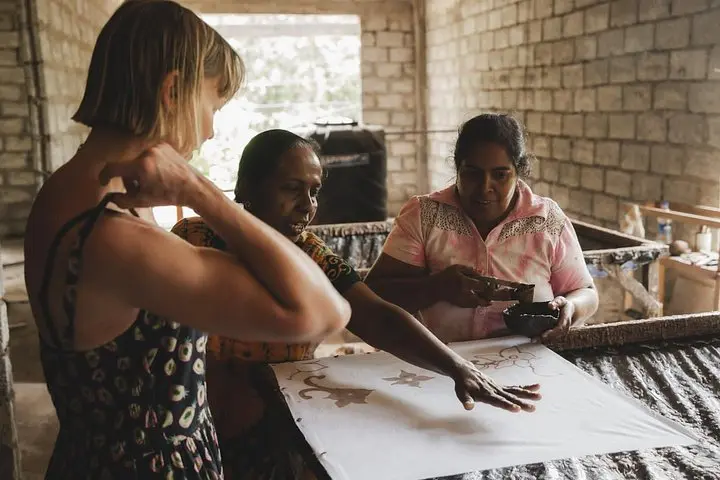
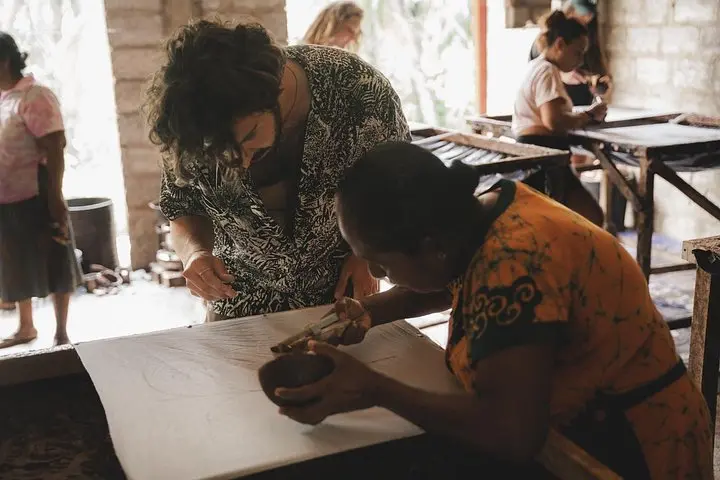
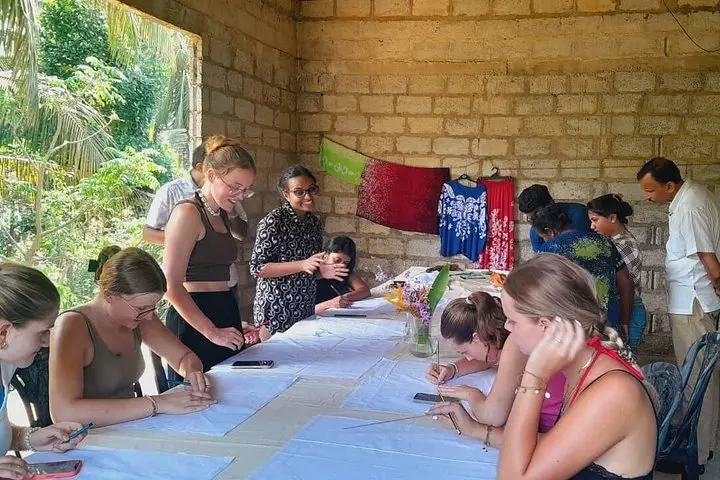
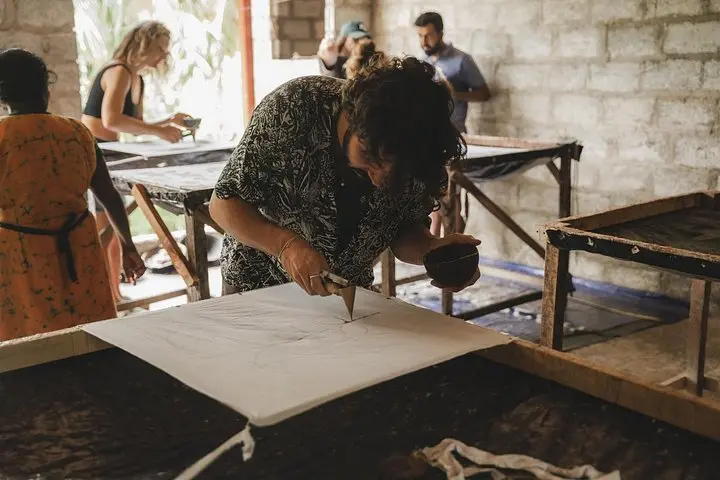
You step from the humid coastal air into a bright room where wax hisses and dyes bloom against plain cotton. At Shermila Batiks, the workbench hums with steady hands—tools, canting spouts and blocks move with practiced rhythm—and the sea beyond Koggala seems to push color into every palette.
You step from the humid coastal air into a bright room where wax hisses and dyes bloom against plain cotton. At Shermila Batiks, the workbench hums with steady hands—tools, canting spouts and blocks move with practiced rhythm—and the sea beyond Koggala seems to push color into every palette.
Batik arrived in Sri Lanka through regional trade and local adaptation; by 1991 Shermila Batiks began translating that shared technique into a family craft. The southern coast’s coral-and-sand geology shaped settlement patterns and trade routes, and Galle’s Dutch Fort—just a short drive away—frames the cultural currents that carried textile ideas here.
The experience mixes demonstration and practice: a guided factory tour shows drawing, waxing, dyeing and boiling; then you design and apply wax to your own fabric, dye it, and watch the pattern reveal itself after the wax is removed. Skilled artisans explain traditional motifs and contemporary variations, and you leave with a handmade piece and a clearer sense of local craft economy.
Practical guidance: sessions run about 2–3 hours and require no prior skill; wear clothes you don’t mind staining and closed-toe shoes for the studio floor. Bring a camera, but respect artisans’ space and ask before close-up shots. Public transport and short taxis connect Galle and Koggala; mornings are cooler and better for concentrated work. Expect light refreshments and all materials provided. This is a hands-on cultural workshop—creative, tactile, and rooted in a living Southern Sri Lankan craft tradition.