THE ADVENTURE COLLECTIVE® · Independent discovery and booking for outdoor travel
Take a full-day private run from Siem Reap to Battambang that pairs a quirky bamboo train ride through rice paddies with hilltop Angkorian temples and the solemn Killing Caves at Phnom Sampov. Expect countryside rhythms, colonial architecture, and intense historical context on an 8–10 hour day trip.
Take a full-day private run from Siem Reap to Battambang that pairs a quirky bamboo train ride through rice paddies with hilltop Angkorian temples and the solemn Killing Caves at Phnom Sampov. Expect countryside rhythms, colonial architecture, and intense historical context on an 8–10 hour day trip.
You leave Siem Reap before sunrise and the lowlands open up like a moving map: flooded rice paddies, solitary wooden houses, and narrow provincial roads that push the landscape past your window.
Verified experiences and guided adventures in the surrounding area.
Operated by About Cambodia Travel & Tours · Battambang, Battambang Province
You leave Siem Reap before sunrise and the lowlands open up like a moving map: flooded rice paddies, solitary wooden houses, and narrow provincial roads that push the landscape past your window.
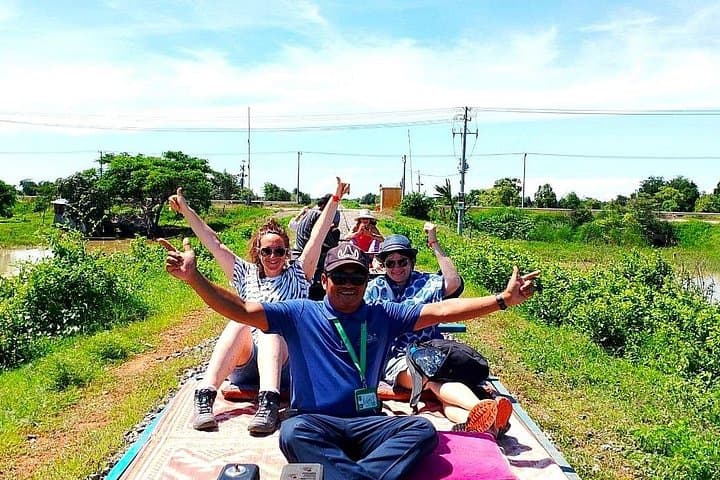
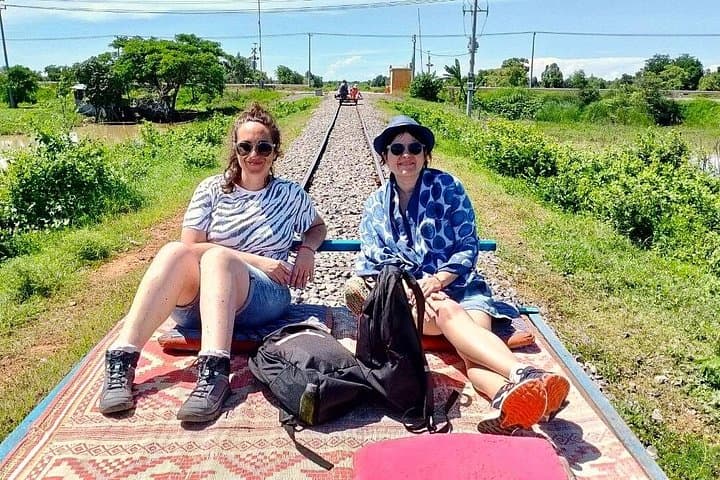
By midmorning you’re on a bamboo norry, a slatted platform perched on simple bogies, the gasoline engine chugging as the world slips by—villagers working fields, water buffaloes grazing, and warped French-era rails clicking underfoot. The ride is playful but honest: part rural transport, part mechanical folk art.
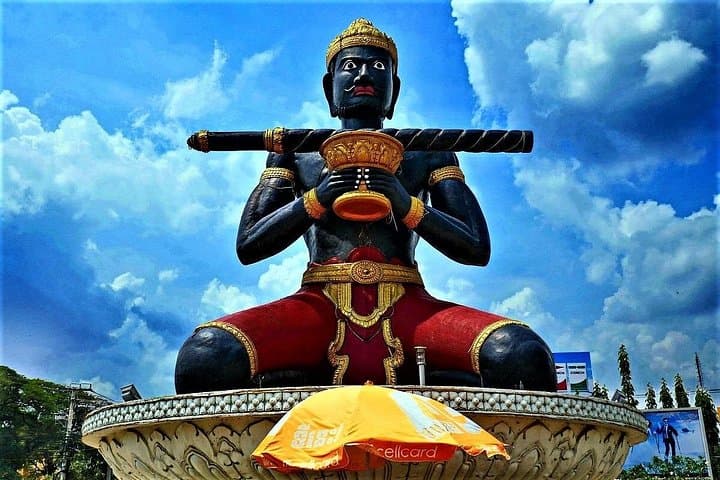
Battambang itself shows a quieter colonial poise—wide riverside avenues, Vann Molyvann’s mid-century Royal Bungalow, and neighborhood pagodas where daily life folds around stupa roofs.
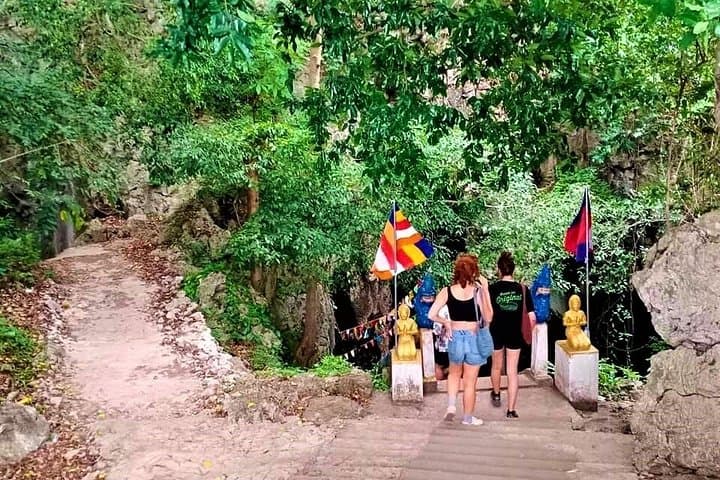
Geology and grief meet at Phnom Sampov: a limestone outcrop with karst caves where millions of bats pour from a dusk mouth and where the Killing Caves stand as a sobering memorial to Khmer Rouge atrocities. Nearby Phnom Banan rises in laterite steps to a compact Angkorian temple, its naga-flanked stairway and five towers offering clear panorama over the flat rice plain.
Practical edge: this is an all-day, private transfer tour—expect 8–10 hours on the road with short hikes, stair climbs and uneven surfaces. Wear broken-in shoes, sun protection and modest clothing for temples; bring water and small cash for donations, snacks, and local vendors. Guide narration will mix local history, wartime memory, and rural logistics, so plan to move deliberately between reflective sites and lively village moments.
Timing your visit for cooler morning light and bat emergence at dusk rewards both photography and perspective.
Travel time by private vehicle is roughly 2.5–3 hours each way depending on traffic and road conditions, making the itinerary a full 8–10 hour day.
The bamboo train is generally safe for families, but young children should sit securely and be supervised—the ride is exposed and the track is uneven.
Yes, the tour includes private air-conditioned transfers and entrance fees for the listed sites; confirm specifics with your operator at booking.
Photography is allowed in some areas but should be respectful; follow the guide’s directions and avoid photos of human remains or staged images.
About Cambodia Travel & Tours operates guided outdoor trips and adventures with an emphasis on safety, stewardship, and memorable experiences.
You leave Siem Reap before sunrise and the lowlands open up like a moving map: flooded rice paddies, solitary wooden houses, and narrow provincial roads that push the landscape past your window.
You leave Siem Reap before sunrise and the lowlands open up like a moving map: flooded rice paddies, solitary wooden houses, and narrow provincial roads that push the landscape past your window.
By midmorning you’re on a bamboo norry, a slatted platform perched on simple bogies, the gasoline engine chugging as the world slips by—villagers working fields, water buffaloes grazing, and warped French-era rails clicking underfoot. The ride is playful but honest: part rural transport, part mechanical folk art.
Battambang itself shows a quieter colonial poise—wide riverside avenues, Vann Molyvann’s mid-century Royal Bungalow, and neighborhood pagodas where daily life folds around stupa roofs.
Geology and grief meet at Phnom Sampov: a limestone outcrop with karst caves where millions of bats pour from a dusk mouth and where the Killing Caves stand as a sobering memorial to Khmer Rouge atrocities. Nearby Phnom Banan rises in laterite steps to a compact Angkorian temple, its naga-flanked stairway and five towers offering clear panorama over the flat rice plain.
Practical edge: this is an all-day, private transfer tour—expect 8–10 hours on the road with short hikes, stair climbs and uneven surfaces. Wear broken-in shoes, sun protection and modest clothing for temples; bring water and small cash for donations, snacks, and local vendors. Guide narration will mix local history, wartime memory, and rural logistics, so plan to move deliberately between reflective sites and lively village moments.
Timing your visit for cooler morning light and bat emergence at dusk rewards both photography and perspective.
