THE ADVENTURE COLLECTIVE® · Independent discovery and booking for outdoor travel

Swap Angkor’s crowds for a day in Battambang: ride the quirky bamboo train, climb 358 stairs to Phnom Banan and witness millions of bats erupt from Phnom Sampeau at dusk. This practical guide tells you what to expect and how to prepare for the long but rewarding day trip from Siem Reap.
Swap Angkor’s crowds for a day in Battambang: ride the quirky bamboo train, climb 358 stairs to Phnom Banan and witness millions of bats erupt from Phnom Sampeau at dusk. This practical guide tells you what to expect and how to prepare for the long but rewarding day trip from Siem Reap.
Early light on the highway flattens rice paddies into sheets of glass and the air hums with the promise of something unexpected. On a full-day run from Siem Reap, travelers trade temple crowds for the slow rhythms of Battambang—colonial facades, river bends and the rattle of a bamboo train threading between cultivated fields.
Verified experiences and guided adventures in the surrounding area.
Operated by Siem Reap Guide · Battambang, Battambang Province
Early light on the highway flattens rice paddies into sheets of glass and the air hums with the promise of something unexpected. On a full-day run from Siem Reap, travelers trade temple crowds for the slow rhythms of Battambang—colonial facades, river bends and the rattle of a bamboo train threading between cultivated fields.
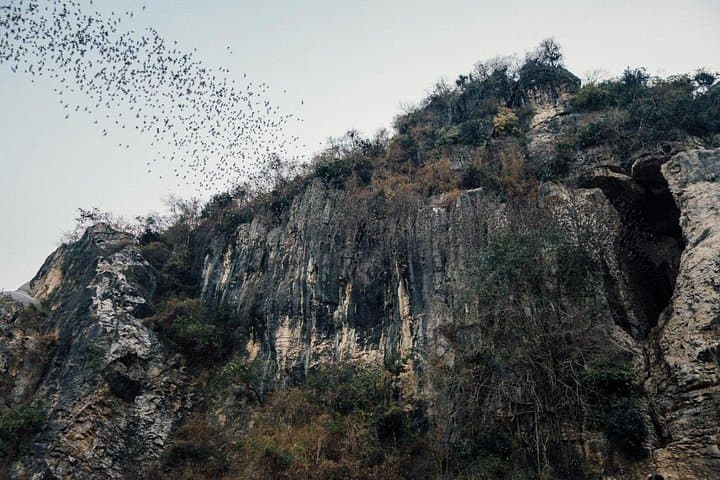
This route stitches together Khmer history and local geology: Phnom Banan’s 358 stairs rise from sugar palms to a compact hilltop temple offering river views carved by the Sangker; Phnom Sampeau—Ship Mountain—presents limestone caves and a bitter recent history at the Killing Caves, memorials to the Khmer Rouge era. At dusk, the Bat Cave spectacle pours millions of bats into the twilight, a wildlife event that carves a dark ribbon across the sky.
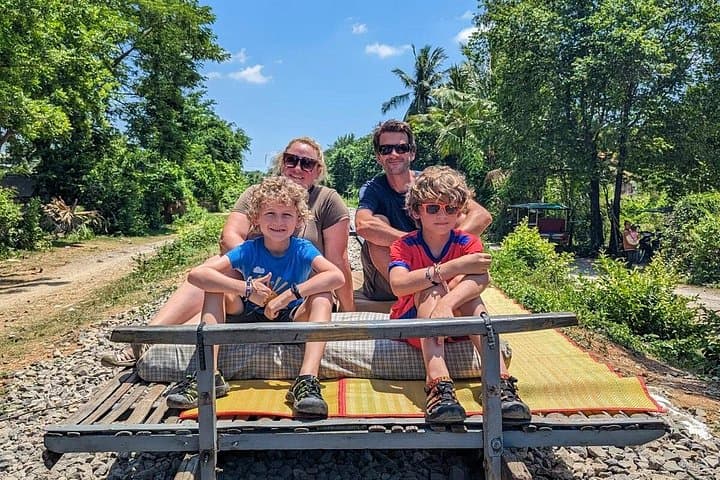
Culturally, Battambang is a working province—markets sell grilled fish and fried banana, and vendors set up for the evening bat viewing. The bamboo train is a local improvisation: a lightweight platform propelled along disused track, equal parts engineering thrift and rural theater.
Practical guidance: expect 2½–3 hours each way by air‑conditioned minivan, so plan for a 10–12 hour day. Wear good walking shoes for uneven stone and 358 stairs, bring 2–3 liters of water, sun protection and insect repellent. Dress smart-casual if visiting pagodas; modest shoulders and knees are required. Time the trip to arrive at Phnom Sampeau before dusk for the bat exodus. The itinerary is moderately active—comfortable for most travelers with average fitness—but be prepared for heat and steep steps.
Expect roughly 2.5–3 hours each way by air‑conditioned minivan, depending on traffic and road conditions.
Yes—viewing areas are set up for tourists, but stick to designated paths and follow your guide’s instructions, especially at dusk.
Some areas have limited accessibility; the operators list wheelchair access for parts of the tour, but temples and cave interiors include stairs and uneven surfaces.
Typical inclusions are private transport, a professional guide, admission to listed sites, bottled water and hotel pickup/drop‑off from Siem Reap.
Siem Reap Guide operates guided outdoor trips and adventures with an emphasis on safety, stewardship, and memorable experiences.

Early light on the highway flattens rice paddies into sheets of glass and the air hums with the promise of something unexpected. On a full-day run from Siem Reap, travelers trade temple crowds for the slow rhythms of Battambang—colonial facades, river bends and the rattle of a bamboo train threading between cultivated fields.
Early light on the highway flattens rice paddies into sheets of glass and the air hums with the promise of something unexpected. On a full-day run from Siem Reap, travelers trade temple crowds for the slow rhythms of Battambang—colonial facades, river bends and the rattle of a bamboo train threading between cultivated fields.
This route stitches together Khmer history and local geology: Phnom Banan’s 358 stairs rise from sugar palms to a compact hilltop temple offering river views carved by the Sangker; Phnom Sampeau—Ship Mountain—presents limestone caves and a bitter recent history at the Killing Caves, memorials to the Khmer Rouge era. At dusk, the Bat Cave spectacle pours millions of bats into the twilight, a wildlife event that carves a dark ribbon across the sky.
Culturally, Battambang is a working province—markets sell grilled fish and fried banana, and vendors set up for the evening bat viewing. The bamboo train is a local improvisation: a lightweight platform propelled along disused track, equal parts engineering thrift and rural theater.
Practical guidance: expect 2½–3 hours each way by air‑conditioned minivan, so plan for a 10–12 hour day. Wear good walking shoes for uneven stone and 358 stairs, bring 2–3 liters of water, sun protection and insect repellent. Dress smart-casual if visiting pagodas; modest shoulders and knees are required. Time the trip to arrive at Phnom Sampeau before dusk for the bat exodus. The itinerary is moderately active—comfortable for most travelers with average fitness—but be prepared for heat and steep steps.