THE ADVENTURE COLLECTIVE® · Independent discovery and booking for outdoor travel

A full-day private drive from Siem Reap to Battambang that pairs the idiosyncratic Bamboo Train with Phnom Sampov’s caves and local temples. Expect long road time, short cultural walks, and a sharp view into modern Cambodian history.
A full-day private drive from Siem Reap to Battambang that pairs the idiosyncratic Bamboo Train with Phnom Sampov’s caves and local temples. Expect long road time, short cultural walks, and a sharp view into modern Cambodian history.
You leave Siem Reap before dawn and the road unfurls into rice paddies, low wooden houses, and the slow rhythm of rural life. By midmorning you click onto a narrow gauge track aboard the ‘norry’ — the improvised Bamboo Train — that rattles past fields and village kitchens, the wind teasing the steam of roadside cooking fires.
Verified experiences and guided adventures in the surrounding area.
Operated by Tour East Cambodia · Battambang, Battambang Province
You leave Siem Reap before dawn and the road unfurls into rice paddies, low wooden houses, and the slow rhythm of rural life. By midmorning you click onto a narrow gauge track aboard the ‘norry’ — the improvised Bamboo Train — that rattles past fields and village kitchens, the wind teasing the steam of roadside cooking fires.
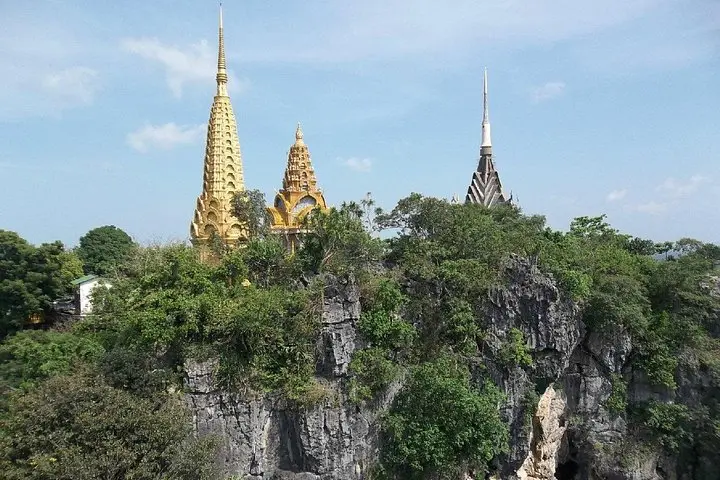
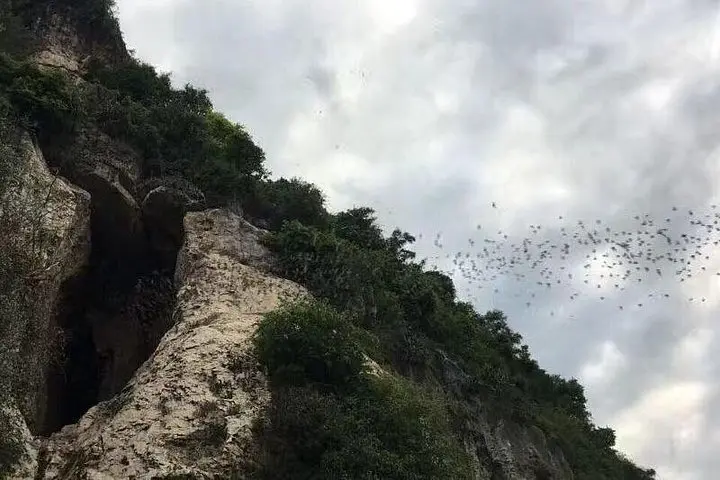
Battambang’s streets still carry French colonial facades and quiet markets that speak to a layered past: Angkorian temples nearby, a long colonial period, and the darker Khmer Rouge years whose scars are visible at Phnom Sampov’s killing caves. The limestone of Phnom Sampov rises in abrupt cliffs, punctuated by grotto shrines and stupas where monks maintain quiet rituals. Geologically, the hill is a karst outcrop that concentrates caves and caverns, making it a place of both refuge and remembrance.
Culture here is tactile — rice-threshing, bicycle traffic, and temples where saffron robes flash against stone. Expect short stair climbs, uneven cave floors, and warm, humid air most of the year.
Practical notes: the full-day private transfer is long (roughly three hours each way), so bring water, sun protection and motion-sickness prevention if you’re sensitive. Wear sturdy walking shoes for temple steps and cave surfaces. You’ll move between open fields, village lanes and shady temple paths, so layer for sun and sudden rain. Respect shrine etiquette, carry local currency for small purchases, and allow time to watch village life unfold — the best sights are often the unplanned ones.
Typical departure is 7:00am from Siem Reap hotels with a return by about 7:00pm the same day.
The Bamboo Train (norry) is a local, informal mode of transport; operators are experienced, but expect minimal safety features and follow staff instructions.
Transport and some flat areas may be accessible, but cave interiors and temple steps are not suitable for standard wheelchairs.
Admissions and private vehicle/guide are included; confirm if lunch is provided or if you should plan to pay for a local restaurant stop.
Tour East Cambodia operates guided outdoor trips and adventures with an emphasis on safety, stewardship, and memorable experiences.
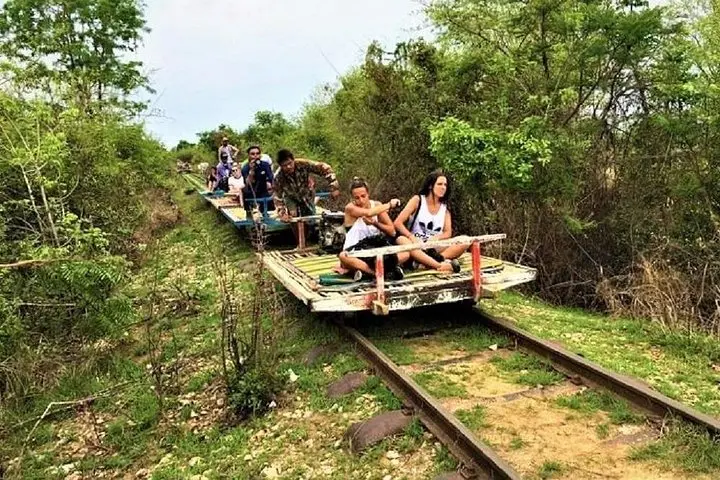
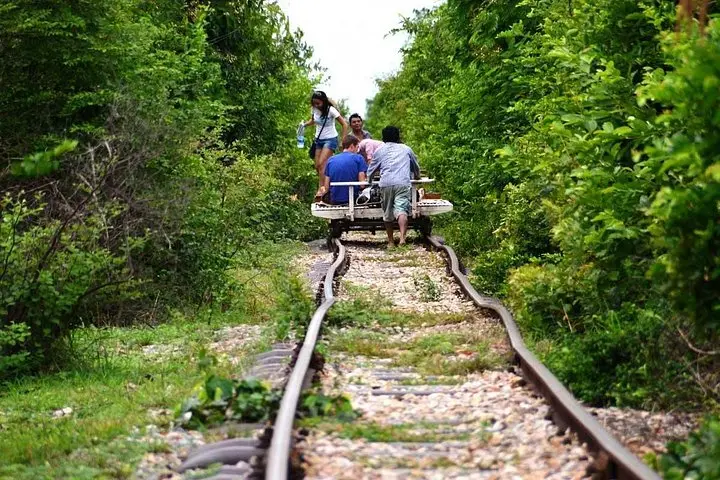
You leave Siem Reap before dawn and the road unfurls into rice paddies, low wooden houses, and the slow rhythm of rural life. By midmorning you click onto a narrow gauge track aboard the ‘norry’ — the improvised Bamboo Train — that rattles past fields and village kitchens, the wind teasing the steam of roadside cooking fires.
You leave Siem Reap before dawn and the road unfurls into rice paddies, low wooden houses, and the slow rhythm of rural life. By midmorning you click onto a narrow gauge track aboard the ‘norry’ — the improvised Bamboo Train — that rattles past fields and village kitchens, the wind teasing the steam of roadside cooking fires.
Battambang’s streets still carry French colonial facades and quiet markets that speak to a layered past: Angkorian temples nearby, a long colonial period, and the darker Khmer Rouge years whose scars are visible at Phnom Sampov’s killing caves. The limestone of Phnom Sampov rises in abrupt cliffs, punctuated by grotto shrines and stupas where monks maintain quiet rituals. Geologically, the hill is a karst outcrop that concentrates caves and caverns, making it a place of both refuge and remembrance.
Culture here is tactile — rice-threshing, bicycle traffic, and temples where saffron robes flash against stone. Expect short stair climbs, uneven cave floors, and warm, humid air most of the year.
Practical notes: the full-day private transfer is long (roughly three hours each way), so bring water, sun protection and motion-sickness prevention if you’re sensitive. Wear sturdy walking shoes for temple steps and cave surfaces. You’ll move between open fields, village lanes and shady temple paths, so layer for sun and sudden rain. Respect shrine etiquette, carry local currency for small purchases, and allow time to watch village life unfold — the best sights are often the unplanned ones.