THE ADVENTURE COLLECTIVE® · Independent discovery and booking for outdoor travel

Ride the original bamboo train, climb the stone steps of Wat Banan, and watch thousands of bats stream from Phnom Sampov at sunset. This full‑day Battambang tour blends rural ingenuity, Angkorian ruins, and recent history for a compact but powerful experience.
Ride the original bamboo train, climb the stone steps of Wat Banan, and watch thousands of bats stream from Phnom Sampov at sunset. This full‑day Battambang tour blends rural ingenuity, Angkorian ruins, and recent history for a compact but powerful experience.
Morning in Battambang begins with the smell of wet earth and diesel as a tuk‑tuk rattles out toward the rice plains.
Verified experiences and guided adventures in the surrounding area.
Operated by Battambang Tour: Mr Lychee · Battambang, Battambang Province
Morning in Battambang begins with the smell of wet earth and diesel as a tuk‑tuk rattles out toward the rice plains.
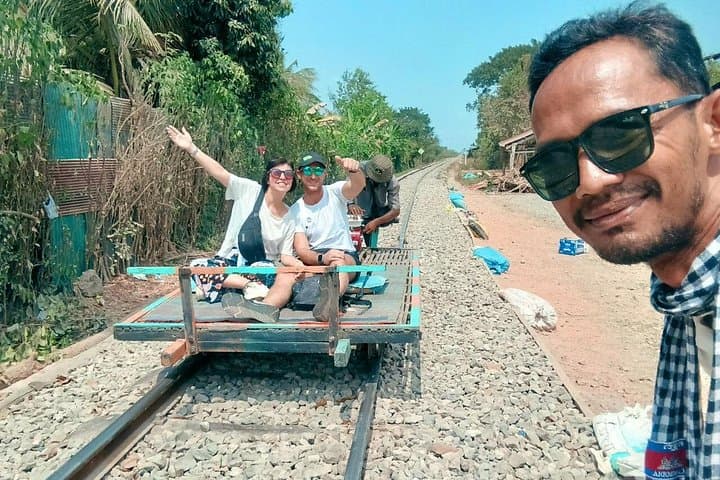
You feel the river dare you to slow down as roadside farmers bend over seedlings and a narrow-gauge track hums with an improvised bamboo carriage. The day moves in distinct scenes: a market flush with snacks, the rhythmic rattle of the original bamboo train, a climb of ancient stone to Wat Banan, and the hush that comes over Phnom Sampov as bats stir at dusk.
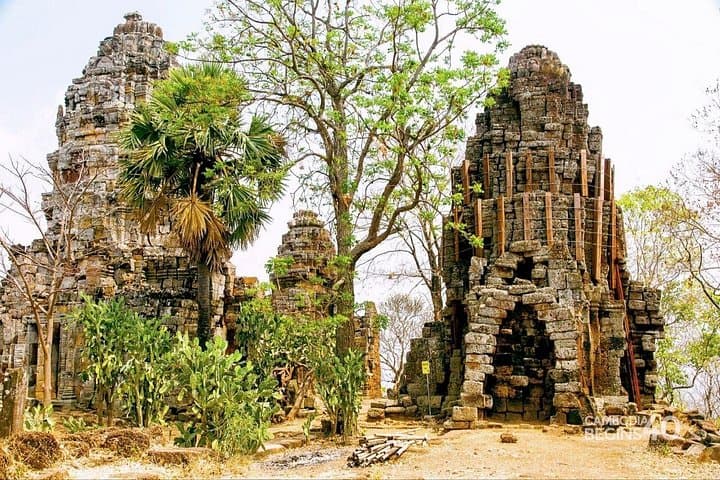
Wat Banan dates to the Angkorian era and stands on a low ridge of sandstone; its steep steps offer a clear view of the surrounding paddies. The bamboo train — a pragmatic, locally built “norry” — is a modern folk invention that speaks to rural ingenuity. Phnom Sampov itself is both geological rise and somber historical site: the Killing Cave memorial preserves Khmer Rouge history while the adjacent Bat Cave hosts large evening roosts that sweep out over the plain.
Expect easy walking between stops, intermittent uneven ground, and a stair climb to the temple. Cultural context matters: dress modestly at religious sites and behave with restraint at memorials. Bring a refillable water bottle and insect repellent; plan to arrive at the Bat Cave just before sunset for the most dramatic bat emergence. Local guides combine logistics with story—book a small-group or private tour to move efficiently between dispersed sites and to support village economies.
Yes; most operators include hotel pick‑up and drop‑off in Battambang; confirm your pickup point when you book.
The bamboo train is generally safe for all ages when operated by local handlers, but children should remain seated and supervised.
A local Cambodian lunch is typically included; notify the operator of dietary requirements ahead of time.
Photography policies vary—always ask the guide and avoid close-up images of human remains out of respect.
Battambang Tour: Mr Lychee operates guided outdoor trips and adventures with an emphasis on safety, stewardship, and memorable experiences.


Morning in Battambang begins with the smell of wet earth and diesel as a tuk‑tuk rattles out toward the rice plains.
Morning in Battambang begins with the smell of wet earth and diesel as a tuk‑tuk rattles out toward the rice plains.
You feel the river dare you to slow down as roadside farmers bend over seedlings and a narrow-gauge track hums with an improvised bamboo carriage. The day moves in distinct scenes: a market flush with snacks, the rhythmic rattle of the original bamboo train, a climb of ancient stone to Wat Banan, and the hush that comes over Phnom Sampov as bats stir at dusk.
Wat Banan dates to the Angkorian era and stands on a low ridge of sandstone; its steep steps offer a clear view of the surrounding paddies. The bamboo train — a pragmatic, locally built “norry” — is a modern folk invention that speaks to rural ingenuity. Phnom Sampov itself is both geological rise and somber historical site: the Killing Cave memorial preserves Khmer Rouge history while the adjacent Bat Cave hosts large evening roosts that sweep out over the plain.
Expect easy walking between stops, intermittent uneven ground, and a stair climb to the temple. Cultural context matters: dress modestly at religious sites and behave with restraint at memorials. Bring a refillable water bottle and insect repellent; plan to arrive at the Bat Cave just before sunset for the most dramatic bat emergence. Local guides combine logistics with story—book a small-group or private tour to move efficiently between dispersed sites and to support village economies.