THE ADVENTURE COLLECTIVE® · Independent discovery and booking for outdoor travel

Ride a unique bamboo train, watch millions of bats stream from Phnom Sampov at dusk, and explore the monumental, under-visited Banteay Chhmar across two compact days. This private tour blends rural transport history with Khmer archaeology.
Ride a unique bamboo train, watch millions of bats stream from Phnom Sampov at dusk, and explore the monumental, under-visited Banteay Chhmar across two compact days. This private tour blends rural transport history with Khmer archaeology.
Arrive in Battambang and the countryside opens like a long breath: low rice paddies, coconut palms, and the faint clack of a bamboo cart on old rail. The first day threads you through Phnom Sampov’s carved cliffs and memorial caves, then up the stone steps to Banan Temple where five towers squat atop laterite—quiet, wind-scoured guardians above the plain.
Verified experiences and guided adventures in the surrounding area.
Operated by ANGKOR CAB-OFF BEATEN TRUCK · Battambang, Battambang Province
Arrive in Battambang and the countryside opens like a long breath: low rice paddies, coconut palms, and the faint clack of a bamboo cart on old rail. The first day threads you through Phnom Sampov’s carved cliffs and memorial caves, then up the stone steps to Banan Temple where five towers squat atop laterite—quiet, wind-scoured guardians above the plain.
This route stitches colonial rail remnants, Angkor-period architecture, and Khmer Rouge history into a compact two-day arc. The bamboo train—an improvised platform on a colonial-era track powered by a small motor—gives a practical, kinetic taste of rural transport; nights bring the bat exodus from Phnom Sampov, a daily aerial river that pours out at dusk.
On day two the road opens west toward Banteay Chhmar, a late-12th-century complex built under Jayavarman VII. The site is vast and under-restored: bas-reliefs, long galleries, and isolated satellite shrines that reward slow exploration rather than polished presentation.
Plan for unpaved approaches, steep temple steps, and midday heat. Bring cash for local entrance fees, expect a private vehicle and English-speaking driver/guide, and allow time for photography stops along Road N5. Wear sturdy shoes for laterite steps, insect repellent for riverside waits, and a headlamp for cave paths. Timing matters: arrive at Phnom Sampov well before sunset to watch the bats, and leave room in your schedule—these sites are best experienced without rush.
Expect roughly 2–3 hours between Battambang and Banteay Chhmar by vehicle with photo stops along Road N5.
The bamboo train is an improvised, popular local experience on a historic track; operators keep it low-speed—use common-sense caution and follow crew instructions.
Entrance fees are paid on the spot for several sites; the operator will advise and can often purchase tickets en route if arranged in advance.
The tour is physically easy, but cave access and some climbs may be unsuitable for pregnant travelers; check the provider’s guidance for infants and small children.
ANGKOR CAB-OFF BEATEN TRUCK operates guided outdoor trips and adventures with an emphasis on safety, stewardship, and memorable experiences.
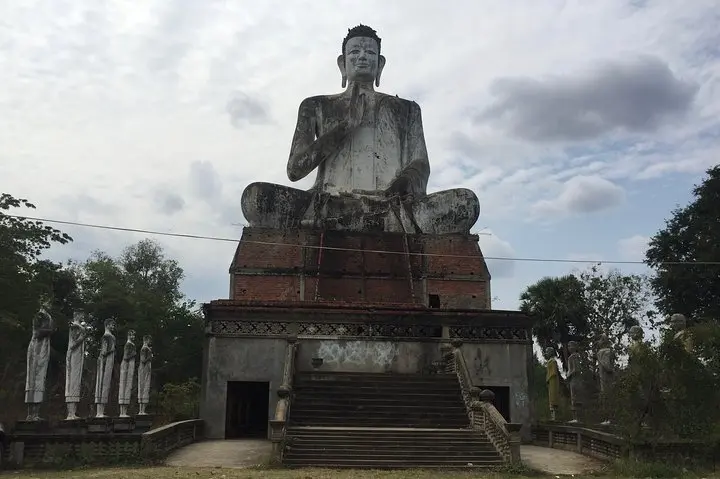
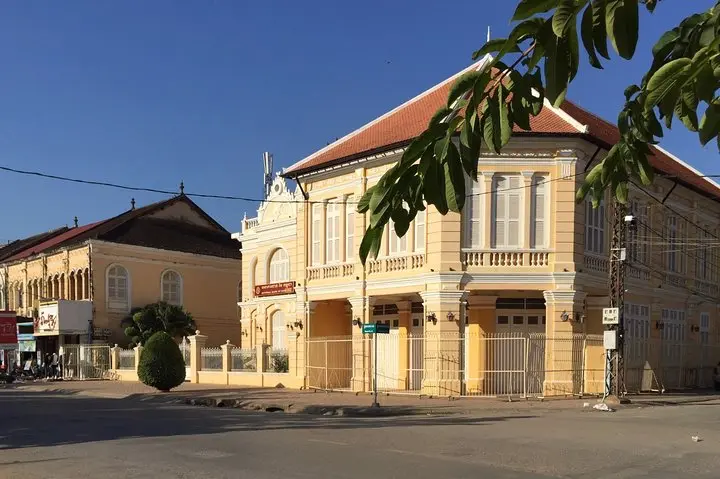
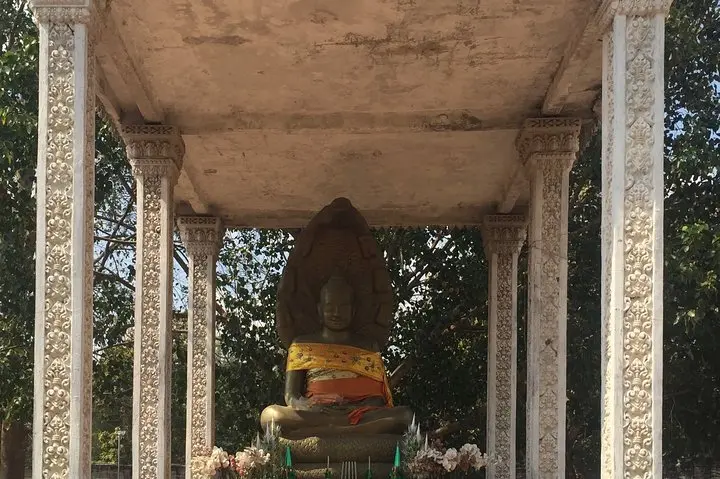
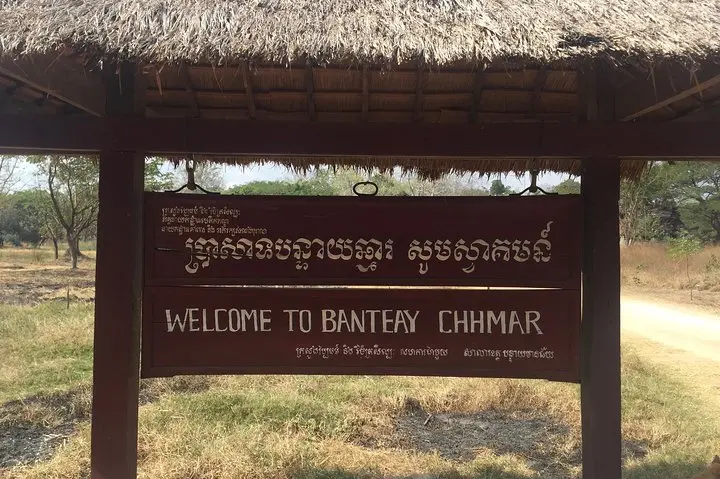
Arrive in Battambang and the countryside opens like a long breath: low rice paddies, coconut palms, and the faint clack of a bamboo cart on old rail. The first day threads you through Phnom Sampov’s carved cliffs and memorial caves, then up the stone steps to Banan Temple where five towers squat atop laterite—quiet, wind-scoured guardians above the plain.
Arrive in Battambang and the countryside opens like a long breath: low rice paddies, coconut palms, and the faint clack of a bamboo cart on old rail. The first day threads you through Phnom Sampov’s carved cliffs and memorial caves, then up the stone steps to Banan Temple where five towers squat atop laterite—quiet, wind-scoured guardians above the plain.
This route stitches colonial rail remnants, Angkor-period architecture, and Khmer Rouge history into a compact two-day arc. The bamboo train—an improvised platform on a colonial-era track powered by a small motor—gives a practical, kinetic taste of rural transport; nights bring the bat exodus from Phnom Sampov, a daily aerial river that pours out at dusk.
On day two the road opens west toward Banteay Chhmar, a late-12th-century complex built under Jayavarman VII. The site is vast and under-restored: bas-reliefs, long galleries, and isolated satellite shrines that reward slow exploration rather than polished presentation.
Plan for unpaved approaches, steep temple steps, and midday heat. Bring cash for local entrance fees, expect a private vehicle and English-speaking driver/guide, and allow time for photography stops along Road N5. Wear sturdy shoes for laterite steps, insect repellent for riverside waits, and a headlamp for cave paths. Timing matters: arrive at Phnom Sampov well before sunset to watch the bats, and leave room in your schedule—these sites are best experienced without rush.