THE ADVENTURE COLLECTIVE® · Independent discovery and booking for outdoor travel

Leap from 12,000 feet over the Bay of Islands and spend 40 exhilarating seconds in freefall, then drift beneath a canopy over 144 islands. This tandem skydive blends high-adrenaline thrills with sweeping coastal views and clear practical rules—perfect for first-time jumpers who plan ahead.
Leap from 12,000 feet over the Bay of Islands and spend 40 exhilarating seconds in freefall, then drift beneath a canopy over 144 islands. This tandem skydive blends high-adrenaline thrills with sweeping coastal views and clear practical rules—perfect for first-time jumpers who plan ahead.
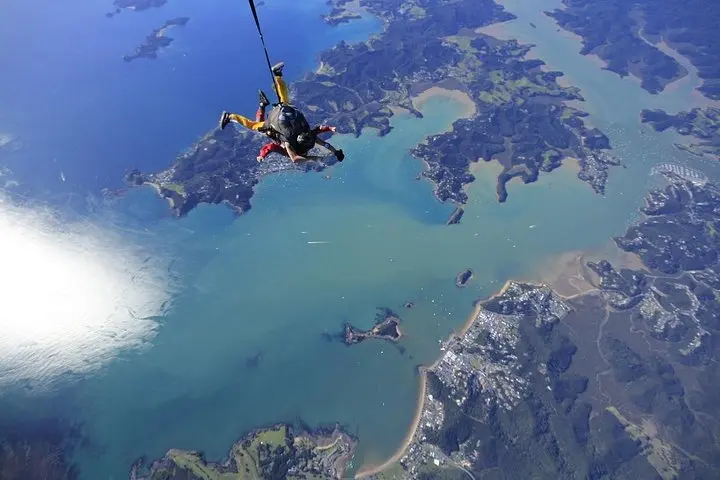
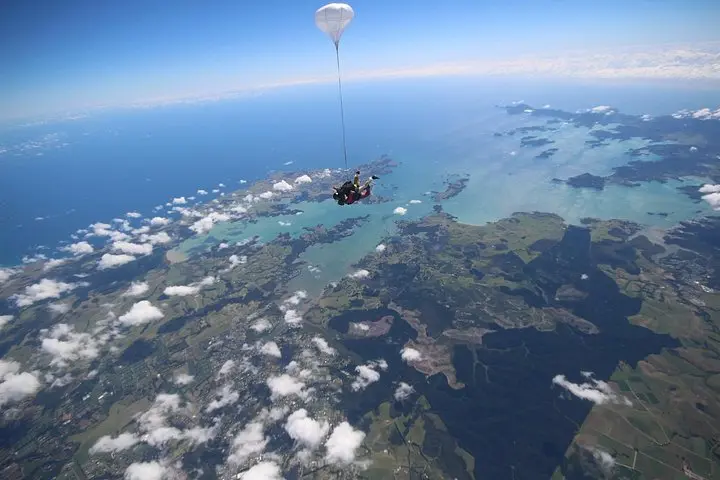
You step into the drop zone with the ocean already in your bones: a salt-warm wind, the hum of a pre-flight briefing and, beyond the hangar, a patchwork of blue and green where 144 islands break the Bay of Islands into sheltered channels. The plane climbs and the coast unfolds—Paihia’s little harbour, the curved spine of Russell, the thin knife of Cape Brett reaching into the Pacific—until the ground seems small enough to fit in a palm.
Verified experiences and guided adventures in the surrounding area.
Operated by Skydive Bay of Islands · Paihia, Northland
You step into the drop zone with the ocean already in your bones: a salt-warm wind, the hum of a pre-flight briefing and, beyond the hangar, a patchwork of blue and green where 144 islands break the Bay of Islands into sheltered channels. The plane climbs and the coast unfolds—Paihia’s little harbour, the curved spine of Russell, the thin knife of Cape Brett reaching into the Pacific—until the ground seems small enough to fit in a palm.
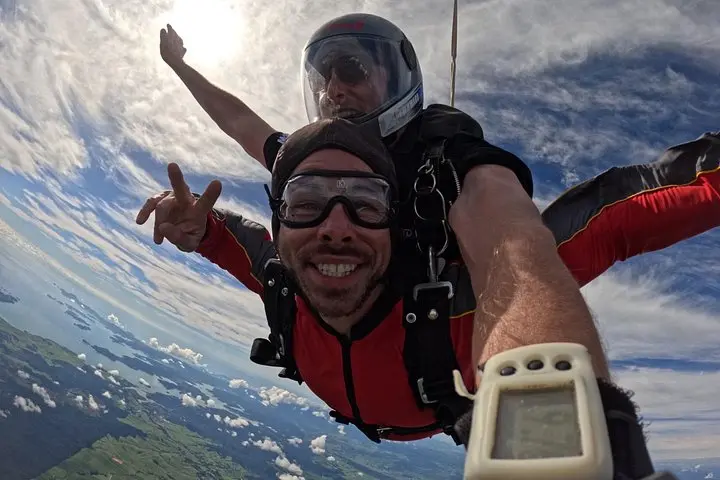
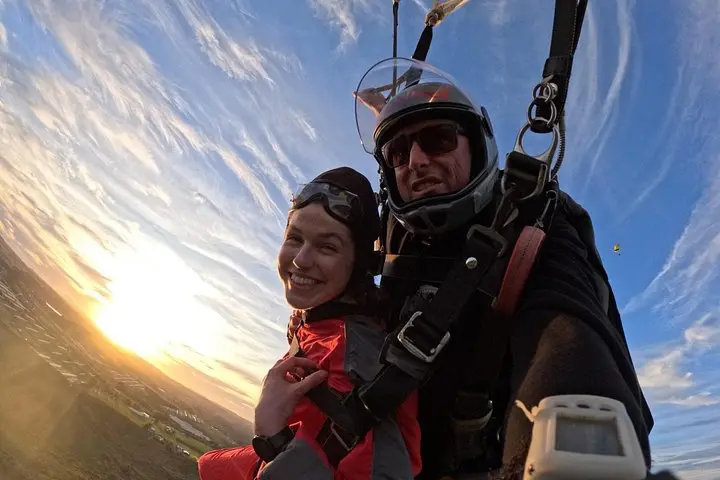
At 12,000 feet the world sharpens. The tandem instructor straps you in, talks you through the count and the logic of the harness, then the aircraft door opens and the Bay seems to dare you. Forty seconds of freefall is long enough to feel every heartbeat and quick enough to leave you laughing once the canopy fills. Under canopy the islands become place names: Urupukapuka’s white coves, Motuarohia’s crescent bays, the famous Hole in the Rock at Cape Brett—the coastline’s weathered limestone and volcanic outcrops telling a geology of uplift, basalt flows and drowned river valleys.
This is Maori country long before it was a tourist playground; the Waitangi area across the water is the site of the Treaty of Waitangi, a pivotal moment in New Zealand’s modern history. Local guides and operators work with iwi (tribes) and regional authorities to protect these waters—when you glide over a pod of dolphins you’re passing a living coastline with cultural as well as ecological significance.
Practicalities are simple but strict. There’s a firm 100kg weight limit and the minimum age is eight; everyone signs a waiver and receives safety training and harnessing. Allow 2–4 hours for the full experience—typically 90 minutes on a calm day but weather, air traffic and aircraft scheduling can extend that. Jumpers must call 0800 GO JUMP one hour beforehand to confirm conditions.
What to bring: closed-toe shoes, layered clothing for wind-chill at altitude, a photo ID and a printed voucher. Don’t arrive dressed for the beach—dress for a quick climb into a small aircraft and a chilly ride down under canopy. Spectators are welcome but space on shuttle vans is limited and priority goes to jumpers.
For photographers and thrill-seekers the payoff is undeniable: a literal change of perspective over islands that push out into the Tasman and Pacific. Whether you’re chasing the adrenaline of freefall or the impossibly clear water below, the Bay of Islands skydive is an efficient, dramatic way to read the landscape from a place few people ever see.
Minimum age is 8 years; customers under 18 require signed parental or guardian consent.
Yes—there is a strict 100kg (220lb) maximum. Contact the operator ahead of booking if you believe you are near the limit.
Plan 2–4 hours. The actual skydive process often takes around 90 minutes but weather and aircraft scheduling can extend that.
No—recent scuba dives can affect pressure safety; you cannot skydive within 24 hours of scuba diving.
Wear comfortable, layered clothing and closed-toe shoes; avoid loose items and bring sunscreen and sunglasses for after the jump.
Operators monitor conditions; you must call 0800 GO JUMP one hour before your slot to confirm. The cancellation policy allows full refunds with at least 24 hours’ notice.
Skydive Bay of Islands operates guided outdoor trips and adventures with an emphasis on safety, stewardship, and memorable experiences.
You step into the drop zone with the ocean already in your bones: a salt-warm wind, the hum of a pre-flight briefing and, beyond the hangar, a patchwork of blue and green where 144 islands break the Bay of Islands into sheltered channels. The plane climbs and the coast unfolds—Paihia’s little harbour, the curved spine of Russell, the thin knife of Cape Brett reaching into the Pacific—until the ground seems small enough to fit in a palm.
You step into the drop zone with the ocean already in your bones: a salt-warm wind, the hum of a pre-flight briefing and, beyond the hangar, a patchwork of blue and green where 144 islands break the Bay of Islands into sheltered channels. The plane climbs and the coast unfolds—Paihia’s little harbour, the curved spine of Russell, the thin knife of Cape Brett reaching into the Pacific—until the ground seems small enough to fit in a palm.
At 12,000 feet the world sharpens. The tandem instructor straps you in, talks you through the count and the logic of the harness, then the aircraft door opens and the Bay seems to dare you. Forty seconds of freefall is long enough to feel every heartbeat and quick enough to leave you laughing once the canopy fills. Under canopy the islands become place names: Urupukapuka’s white coves, Motuarohia’s crescent bays, the famous Hole in the Rock at Cape Brett—the coastline’s weathered limestone and volcanic outcrops telling a geology of uplift, basalt flows and drowned river valleys.
This is Maori country long before it was a tourist playground; the Waitangi area across the water is the site of the Treaty of Waitangi, a pivotal moment in New Zealand’s modern history. Local guides and operators work with iwi (tribes) and regional authorities to protect these waters—when you glide over a pod of dolphins you’re passing a living coastline with cultural as well as ecological significance.
Practicalities are simple but strict. There’s a firm 100kg weight limit and the minimum age is eight; everyone signs a waiver and receives safety training and harnessing. Allow 2–4 hours for the full experience—typically 90 minutes on a calm day but weather, air traffic and aircraft scheduling can extend that. Jumpers must call 0800 GO JUMP one hour beforehand to confirm conditions.
What to bring: closed-toe shoes, layered clothing for wind-chill at altitude, a photo ID and a printed voucher. Don’t arrive dressed for the beach—dress for a quick climb into a small aircraft and a chilly ride down under canopy. Spectators are welcome but space on shuttle vans is limited and priority goes to jumpers.
For photographers and thrill-seekers the payoff is undeniable: a literal change of perspective over islands that push out into the Tasman and Pacific. Whether you’re chasing the adrenaline of freefall or the impossibly clear water below, the Bay of Islands skydive is an efficient, dramatic way to read the landscape from a place few people ever see.