THE ADVENTURE COLLECTIVE® · Independent discovery and booking for outdoor travel

Leap from 18,000 feet above the Bay of Islands and watch 144 islands rearrange into a new map beneath you. This tandem skydive delivers a concentrated hit of adrenaline while offering rare aerial perspective of Northland’s coast, geology, and history.
Leap from 18,000 feet above the Bay of Islands and watch 144 islands rearrange into a new map beneath you. This tandem skydive delivers a concentrated hit of adrenaline while offering rare aerial perspective of Northland’s coast, geology, and history.
The plane lifts off from a small strip near Paihia and the Bay of Islands unfurls beneath you like a scatter of polished coins—white beaches, turquoise channels and the dark shoulders of forested isles. At 18,000 feet the air is thin and quiet; your tandem instructor clips a final harness, counts through the checklist, and for a moment the world seems to hold its breath.
Verified experiences and guided adventures in the surrounding area.
Operated by Skydive Bay of Islands · Paihia, Northland
The plane lifts off from a small strip near Paihia and the Bay of Islands unfurls beneath you like a scatter of polished coins—white beaches, turquoise channels and the dark shoulders of forested isles. At 18,000 feet the air is thin and quiet; your tandem instructor clips a final harness, counts through the checklist, and for a moment the world seems to hold its breath.
Then you fall. The coastal maze of 144 islands rushes up to meet you, the ocean daring you to look away. From that altitude the Bay of Islands reads differently: not only a popular boating playground but a geological record of river valleys drowned by rising seas, sandstone bluffs worn by wind and tide, and volcanic soils that feed the region’s dense kauri and pōhutukawa canopy.
This strip of Northland is also stitched into Aotearoa’s human story. The waterways were highways for Māori, and the area around Russell and Waitangi played a pivotal role in the signing of the Treaty of Waitangi in 1840—history visible from the sky if you know where to look. On a clear day the headland at Cape Brett and the long sweep toward Cape Reinga can be picked out on the horizon; on others, cloud and sea trade places and the islands float like ghosts.
What makes the jump distinct is less the altitude than the perspective: a living map of coast and culture, and an immediate sense of scale that’s impossible from a boat. It’s a short, high-intensity encounter with the elements—wind that nudges and ocean that shimmers like a challenge.
Practicalities: the full experience typically takes 1.5–3 hours, allowing for safety briefings and potential weather delays. All training and safety equipment are provided; wear comfortable clothes and closed-toe shoes. There’s a strict 100 kg weight limit—if you’re near that, call ahead. Bookings often include hotel pickup from Paihia and Kerikeri; you’ll be asked to phone 0800 GO JUMP one hour before your slot to confirm conditions. If you’ve scuba-dived in the last 24 hours you will not be cleared to jump.
Safety and timing are woven into the operation: winds, cloud base, and aviation needs determine when the drop zone opens. Bring a printed voucher or have your mobile ticket ready, arrive with photo ID, and allow that your schedule may stretch—this is adventure on weather’s timetable.
For travelers, pair the skydive with a shoreline day—kayak around the islands, visit Waitangi, or hike on Urupukapuka Island the next morning. From the sky you’ll take a snapshot-memory: a brief, honest confrontation with speed and perspective that leaves the Bay of Islands feeling both familiar and newly immense.
There is a strict 100 kg (220 lb) weight limit; if you are close to this limit contact the operator before booking.
Plan for 1.5–3 hours from arrival to finish—allow extra time for weather-related delays.
No. You must wait at least 24 hours after diving due to changes in pressure and decompression risk.
No, this is a tandem skydive with full instruction—no previous skydiving experience needed.
Jumps are weather-dependent; the operator may reschedule or refund if conditions prevent jumping—call one hour before to confirm.
Spectators are welcome but priority is given to jumpers if shuttle capacity is limited—spectators should have alternate transport plans.
Skydive Bay of Islands operates guided outdoor trips and adventures with an emphasis on safety, stewardship, and memorable experiences.
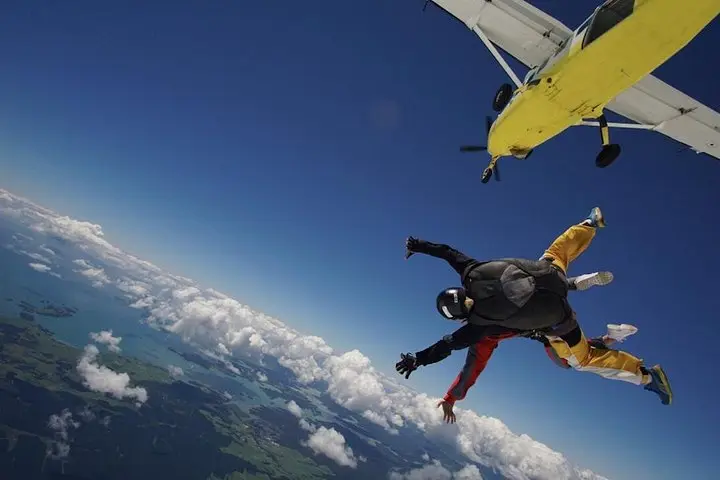
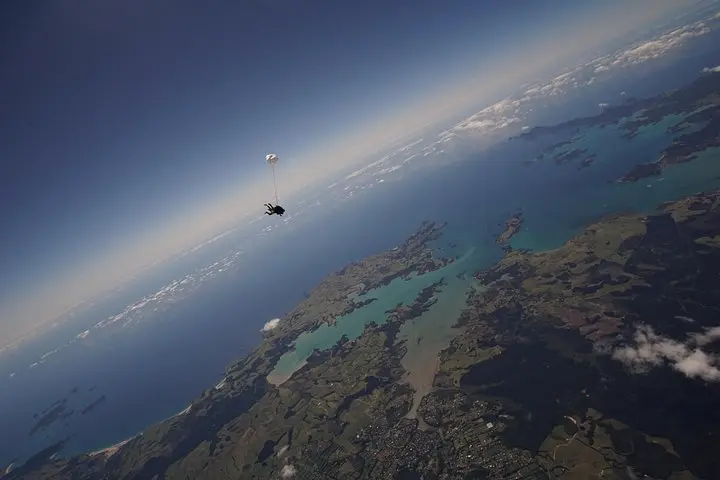
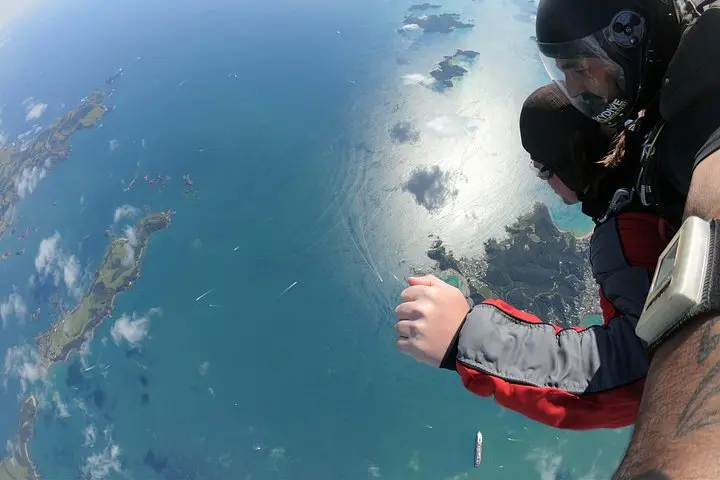
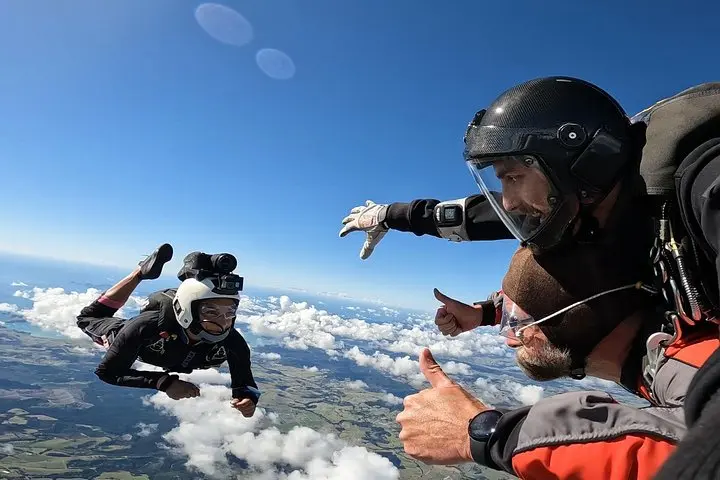
The plane lifts off from a small strip near Paihia and the Bay of Islands unfurls beneath you like a scatter of polished coins—white beaches, turquoise channels and the dark shoulders of forested isles. At 18,000 feet the air is thin and quiet; your tandem instructor clips a final harness, counts through the checklist, and for a moment the world seems to hold its breath.
The plane lifts off from a small strip near Paihia and the Bay of Islands unfurls beneath you like a scatter of polished coins—white beaches, turquoise channels and the dark shoulders of forested isles. At 18,000 feet the air is thin and quiet; your tandem instructor clips a final harness, counts through the checklist, and for a moment the world seems to hold its breath.
Then you fall. The coastal maze of 144 islands rushes up to meet you, the ocean daring you to look away. From that altitude the Bay of Islands reads differently: not only a popular boating playground but a geological record of river valleys drowned by rising seas, sandstone bluffs worn by wind and tide, and volcanic soils that feed the region’s dense kauri and pōhutukawa canopy.
This strip of Northland is also stitched into Aotearoa’s human story. The waterways were highways for Māori, and the area around Russell and Waitangi played a pivotal role in the signing of the Treaty of Waitangi in 1840—history visible from the sky if you know where to look. On a clear day the headland at Cape Brett and the long sweep toward Cape Reinga can be picked out on the horizon; on others, cloud and sea trade places and the islands float like ghosts.
What makes the jump distinct is less the altitude than the perspective: a living map of coast and culture, and an immediate sense of scale that’s impossible from a boat. It’s a short, high-intensity encounter with the elements—wind that nudges and ocean that shimmers like a challenge.
Practicalities: the full experience typically takes 1.5–3 hours, allowing for safety briefings and potential weather delays. All training and safety equipment are provided; wear comfortable clothes and closed-toe shoes. There’s a strict 100 kg weight limit—if you’re near that, call ahead. Bookings often include hotel pickup from Paihia and Kerikeri; you’ll be asked to phone 0800 GO JUMP one hour before your slot to confirm conditions. If you’ve scuba-dived in the last 24 hours you will not be cleared to jump.
Safety and timing are woven into the operation: winds, cloud base, and aviation needs determine when the drop zone opens. Bring a printed voucher or have your mobile ticket ready, arrive with photo ID, and allow that your schedule may stretch—this is adventure on weather’s timetable.
For travelers, pair the skydive with a shoreline day—kayak around the islands, visit Waitangi, or hike on Urupukapuka Island the next morning. From the sky you’ll take a snapshot-memory: a brief, honest confrontation with speed and perspective that leaves the Bay of Islands feeling both familiar and newly immense.