THE ADVENTURE COLLECTIVE® · Independent discovery and booking for outdoor travel

See the Bay of Islands from a perspective most travelers never do: free fall from 9,000 ft over 144 islands. This Paihia-based tandem skydive pairs efficient logistics with world-class coastal scenery—perfect for anyone short on time but hungry for a big view.
See the Bay of Islands from a perspective most travelers never do: free fall from 9,000 ft over 144 islands. This Paihia-based tandem skydive pairs efficient logistics with world-class coastal scenery—perfect for anyone short on time but hungry for a big view.
You feel the plane climb and a cold Pacific breeze slip under the collar of your jacket. Below, the Bay of Islands fans out—lagoons pinpricked by white sand, rocky headlands slicing seawater into channels, and the arch of Cape Brett pointing north like an inked compass. At 9,000 feet the world simplifies: the coastline grows small, the sea dares you to look away, and for a rattling handful of seconds the Bay of Islands is simply motion and light.
Verified experiences and guided adventures in the surrounding area.
Operated by Skydive Bay of Islands · Paihia, Northland
You feel the plane climb and a cold Pacific breeze slip under the collar of your jacket. Below, the Bay of Islands fans out—lagoons pinpricked by white sand, rocky headlands slicing seawater into channels, and the arch of Cape Brett pointing north like an inked compass. At 9,000 feet the world simplifies: the coastline grows small, the sea dares you to look away, and for a rattling handful of seconds the Bay of Islands is simply motion and light.
This skydive is as much a geography lesson as an adrenaline fix. The Bay of Islands was carved from ancient volcanic activity and later shaped by sea-level changes; Maori navigators named and mapped these bays long before European settlement. From above you can make out Russell’s tidy waterfront, the patchwork of Urupukapuka Island’s ridgelines, and the famous Hole in the Rock off Cape Brett—a coastal feature that has guided sailors and stories for generations.
Practically, the jump here is tuned to sightlines: 144 islands mean endless reference points for your tandem instructor, and on a clear day the horizon pulls all the way to Cape Reinga. The operation runs like a short expedition—hotel pickups from Paihia and Kerikeri, a safety briefing, harness fittings, and the flight up. Allow 2–4 hours total because weather and aviation commitments can change the timetable; the providers ask you to call one hour before your slot to confirm conditions.
There are rules: a strict 100 kg weight limit, age consent for minors, and a pause on jumps within 24 hours of scuba dives because of pressure risks. All training and safety equipment are supplied, and instructors manage the technical side so first-timers can focus on the fall and the view. Spectators are welcome but shuttle space favors jumpers when capacity is tight.
For travelers who want more than a single thrill, the Bay rewards repeat visits: take a dawn jump for low-angled light, or pair an afternoon skydive with a boat tour of the islands to explore coves you glimpsed from the plane. Locals can point you to quieter beaches on Motuarohia or the walking tracks that trace the larger islands’ ridges.
If you’re packing for this, think layers and secure shoes, bring printed vouchers as requested, and be ready to move when the moment comes. From the moment the aircraft door opens to the soft snap of the canopy, the Bay of Islands will feel like a place both ancient and immediate—its water tugging at your attention, its islands daring you to drop everything and look.
There is a strict 100 kg (220 lb) weight limit; contact the operator before booking if you think you may be near this limit.
Plan for 2–4 hours on site; the skydive itself takes about 1.5 hours including briefing, but weather and operational delays are possible.
Yes, spectators are allowed but shuttle space prioritizes jumpers when capacity is limited—arrange alternate transport if you’re unsure.
Minors under 18 require signed parental or guardian consent; all participants must be medically fit to skydive.
No—diving within 24 hours prior to a jump is not permitted due to decompression and pressure-change risks.
Yes—tandem jumps include a safety briefing and harness fitting; instructors handle the technical aspects during the jump.
Skydive Bay of Islands operates guided outdoor trips and adventures with an emphasis on safety, stewardship, and memorable experiences.
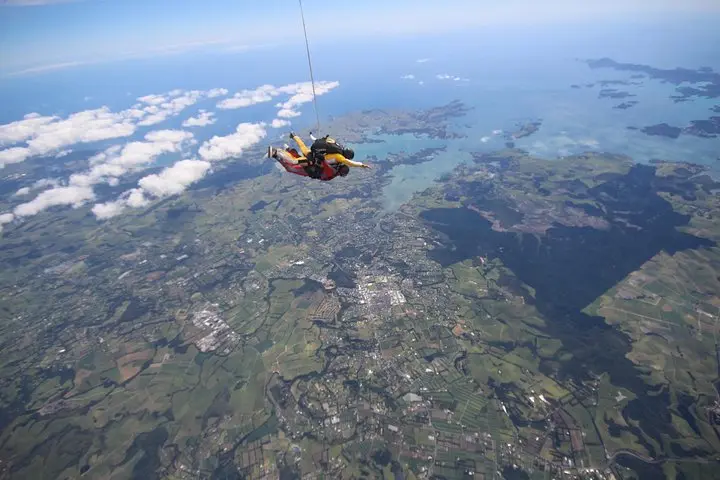
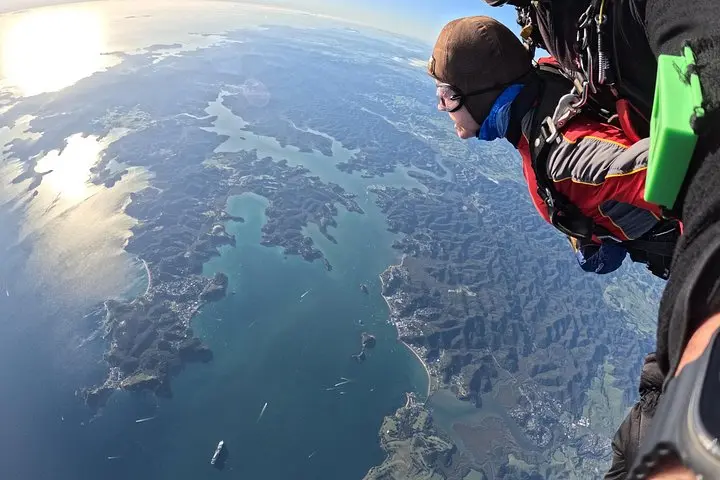
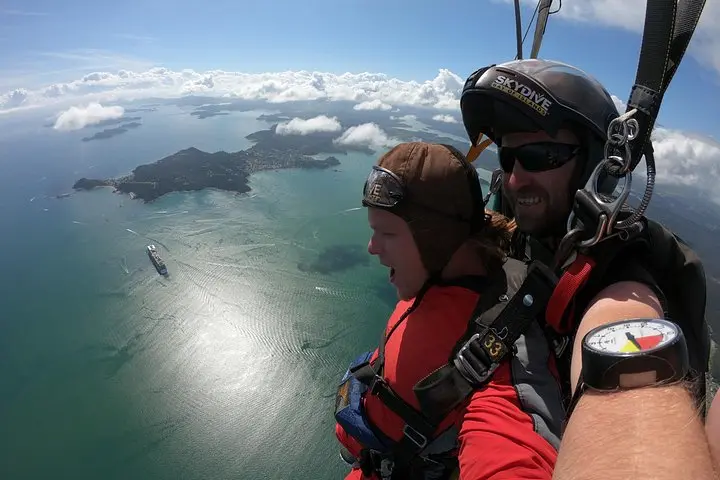
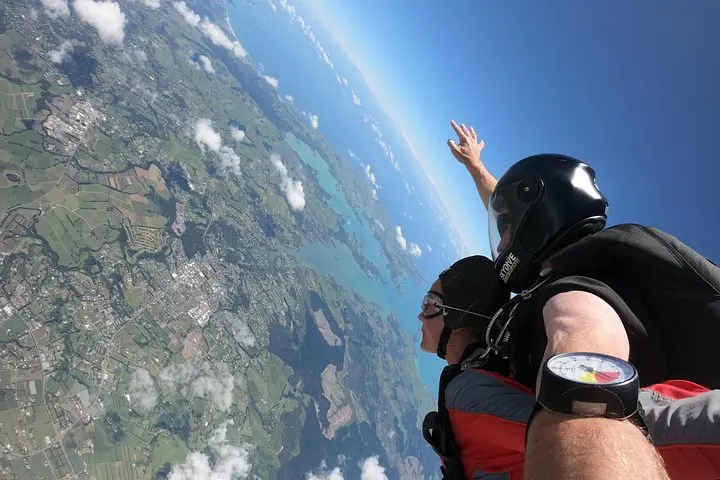
You feel the plane climb and a cold Pacific breeze slip under the collar of your jacket. Below, the Bay of Islands fans out—lagoons pinpricked by white sand, rocky headlands slicing seawater into channels, and the arch of Cape Brett pointing north like an inked compass. At 9,000 feet the world simplifies: the coastline grows small, the sea dares you to look away, and for a rattling handful of seconds the Bay of Islands is simply motion and light.
You feel the plane climb and a cold Pacific breeze slip under the collar of your jacket. Below, the Bay of Islands fans out—lagoons pinpricked by white sand, rocky headlands slicing seawater into channels, and the arch of Cape Brett pointing north like an inked compass. At 9,000 feet the world simplifies: the coastline grows small, the sea dares you to look away, and for a rattling handful of seconds the Bay of Islands is simply motion and light.
This skydive is as much a geography lesson as an adrenaline fix. The Bay of Islands was carved from ancient volcanic activity and later shaped by sea-level changes; Maori navigators named and mapped these bays long before European settlement. From above you can make out Russell’s tidy waterfront, the patchwork of Urupukapuka Island’s ridgelines, and the famous Hole in the Rock off Cape Brett—a coastal feature that has guided sailors and stories for generations.
Practically, the jump here is tuned to sightlines: 144 islands mean endless reference points for your tandem instructor, and on a clear day the horizon pulls all the way to Cape Reinga. The operation runs like a short expedition—hotel pickups from Paihia and Kerikeri, a safety briefing, harness fittings, and the flight up. Allow 2–4 hours total because weather and aviation commitments can change the timetable; the providers ask you to call one hour before your slot to confirm conditions.
There are rules: a strict 100 kg weight limit, age consent for minors, and a pause on jumps within 24 hours of scuba dives because of pressure risks. All training and safety equipment are supplied, and instructors manage the technical side so first-timers can focus on the fall and the view. Spectators are welcome but shuttle space favors jumpers when capacity is tight.
For travelers who want more than a single thrill, the Bay rewards repeat visits: take a dawn jump for low-angled light, or pair an afternoon skydive with a boat tour of the islands to explore coves you glimpsed from the plane. Locals can point you to quieter beaches on Motuarohia or the walking tracks that trace the larger islands’ ridges.
If you’re packing for this, think layers and secure shoes, bring printed vouchers as requested, and be ready to move when the moment comes. From the moment the aircraft door opens to the soft snap of the canopy, the Bay of Islands will feel like a place both ancient and immediate—its water tugging at your attention, its islands daring you to drop everything and look.