THE ADVENTURE COLLECTIVE® · Independent discovery and booking for outdoor travel

Walk from Beale Street to the Lorraine Motel with a private guide who ties Memphis’s music, commerce, and civil-rights legacy together. This half-day tour blends street-level stories with an hour inside the National Civil Rights Museum.
Walk from Beale Street to the Lorraine Motel with a private guide who ties Memphis’s music, commerce, and civil-rights legacy together. This half-day tour blends street-level stories with an hour inside the National Civil Rights Museum.
You step out onto the brick of Beale Street and the city exhales: the Mississippi River presses against the low downtown bluffs, freight whistles carry faintly, and a private guide sets the pace.
Verified experiences and guided adventures in the surrounding area.
Operated by Travel Curious · Memphis, Tennessee
You step out onto the brick of Beale Street and the city exhales: the Mississippi River presses against the low downtown bluffs, freight whistles carry faintly, and a private guide sets the pace.
The route threads through downtown Memphis — past the Peabody rooftop view, the Music Hall of Fame, and the radio stations and theaters that shaped modern blues. Geologically, you are walking the western edge of the Mississippi alluvial plain; the river’s slow push has made this corridor a natural trade and transport zone. Culturally, Beale is a place where Black commerce, music, and activism intersect; the tour culminates at the National Civil Rights Museum and the Lorraine Motel, a site central to 20th-century American history.
Expect a mix of streetscape history and museum interpretation: short blocks of guided context, then a self-guided hour inside the Civil Rights Museum to move through exhibits at your own pace. Language covers local figures — from Ida B. Wells and B.B. King to Dr. Martin Luther King Jr. — and practical city stories like wartime escapes and radio’s role in community organizing.
Practical guidance: this private, three-hour experience covers roughly 1.5–2 miles on paved sidewalks, with minimal elevation change. Wear supportive walking shoes, bring water, and carry a valid ID for museum entry. Morning or late-afternoon departures dodge the hottest hours and offer softer light for photos. The tour includes a daily trolley pass, museum admission, and a dedicated English-speaking guide — useful if you want to focus on listening, not logistics.
The tour runs three hours total and typically includes about 1.5–2 miles of walking on paved sidewalks, with stops for interpretation.
Yes — museum admission is included and the tour ends with an hour for a self-guided visit inside the museum.
The tour notes wheelchair accessibility; contact the operator ahead of time to confirm specific accommodation needs.
Yes — the guide discusses Beale Street’s musical heritage, radio history, and how culture and civil rights shaped the city’s institutions.
Travel Curious operates guided outdoor trips and adventures with an emphasis on safety, stewardship, and memorable experiences.


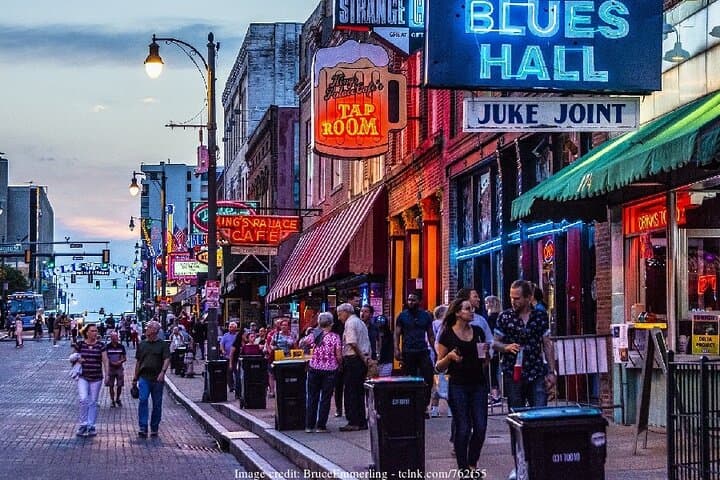

You step out onto the brick of Beale Street and the city exhales: the Mississippi River presses against the low downtown bluffs, freight whistles carry faintly, and a private guide sets the pace.
You step out onto the brick of Beale Street and the city exhales: the Mississippi River presses against the low downtown bluffs, freight whistles carry faintly, and a private guide sets the pace.
The route threads through downtown Memphis — past the Peabody rooftop view, the Music Hall of Fame, and the radio stations and theaters that shaped modern blues. Geologically, you are walking the western edge of the Mississippi alluvial plain; the river’s slow push has made this corridor a natural trade and transport zone. Culturally, Beale is a place where Black commerce, music, and activism intersect; the tour culminates at the National Civil Rights Museum and the Lorraine Motel, a site central to 20th-century American history.
Expect a mix of streetscape history and museum interpretation: short blocks of guided context, then a self-guided hour inside the Civil Rights Museum to move through exhibits at your own pace. Language covers local figures — from Ida B. Wells and B.B. King to Dr. Martin Luther King Jr. — and practical city stories like wartime escapes and radio’s role in community organizing.
Practical guidance: this private, three-hour experience covers roughly 1.5–2 miles on paved sidewalks, with minimal elevation change. Wear supportive walking shoes, bring water, and carry a valid ID for museum entry. Morning or late-afternoon departures dodge the hottest hours and offer softer light for photos. The tour includes a daily trolley pass, museum admission, and a dedicated English-speaking guide — useful if you want to focus on listening, not logistics.