THE ADVENTURE COLLECTIVE® · Independent discovery and booking for outdoor travel

A focused, instructor-led half-day course that turns indoor climbers and curious beginners into confident outdoor top-rope climbers. Learn belaying, knots, and movement on real Sierra granite in Bear Valley's accessible Box Canyon.
A focused, instructor-led half-day course that turns indoor climbers and curious beginners into confident outdoor top-rope climbers. Learn belaying, knots, and movement on real Sierra granite in Bear Valley's accessible Box Canyon.
The first steps out of the Bear Valley Lodge feel like a small departure from the ordinary — lodge timbers give way to a fresher, thinner air and the canyon ahead narrows into a bowl of granite and pine. Guides from SWS Mountain Guides move with the calm efficiency of people who have taught thousands to trust a rope; they sort harnesses, explain a day plan, and point up to routes that seem modest from below but demand focus and technique.
Verified experiences and guided adventures in the surrounding area.
Operated by Sws Mountain Guides · Bear Valley, California
The first steps out of the Bear Valley Lodge feel like a small departure from the ordinary — lodge timbers give way to a fresher, thinner air and the canyon ahead narrows into a bowl of granite and pine. Guides from SWS Mountain Guides move with the calm efficiency of people who have taught thousands to trust a rope; they sort harnesses, explain a day plan, and point up to routes that seem modest from below but demand focus and technique.
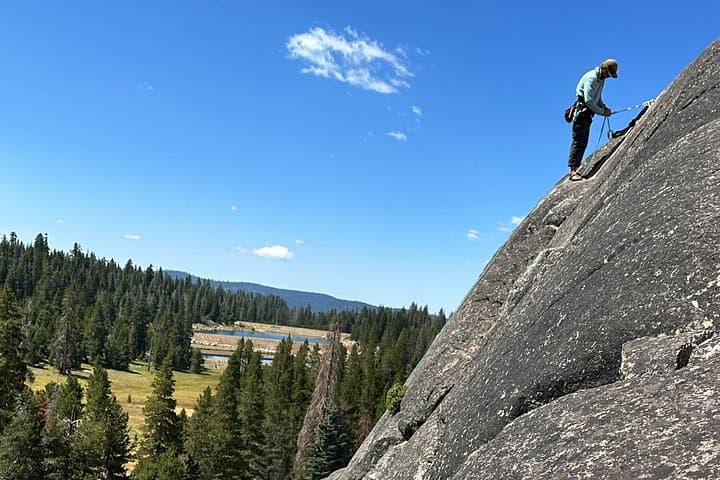
This is Box Canyon, a local crag carved by glacial scour and seasonal creek flow. The rock is Sierra granite: coarse, blocky faces that reward body positioning and footwork. The valley has long been a working landscape — 19th-century miners passed through these ridges and early 20th-century summer visitors turned simple lodges into community hubs. Today, climbers and skiers inherit that same network of access trails and service roads that make Bear Valley a practical basecamp for outdoor education.
Culturally, the town is low-key. The Bear Valley Lodge is more garage of maps than boutique hotel; guests trade elevator music for route chat and weather talk. Local guides emphasize respect for the land: a small wilderness use fee supports trail upkeep, and Leave No Trace behavior is a standing requirement.
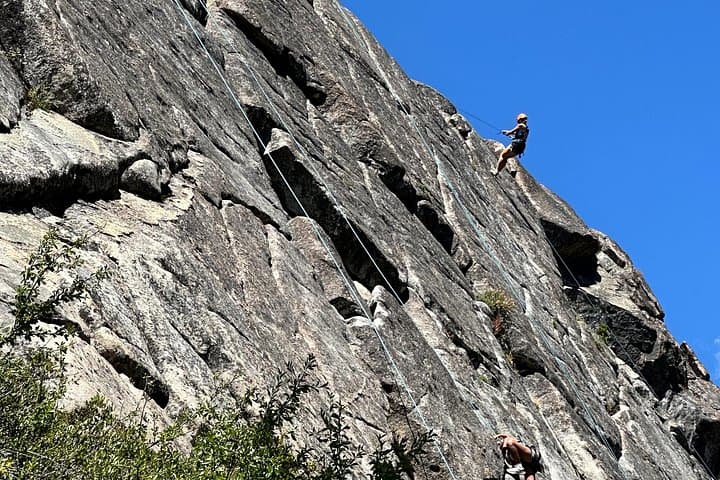
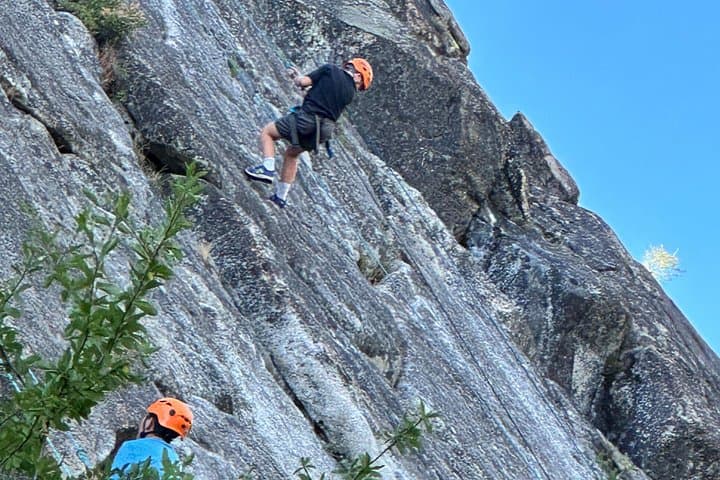
Practically, the intro course is designed for people with little or no outdoor climbing experience. Sessions run about four hours and include a short approach (typically 5–20 minutes on foot from the parking area), hands-on practice tying figure-eights and clove hitches, and supervised top-rope climbing on routes that range from 20 to 60 feet. Elevation in the valley sits around 7,200 feet, so expect slightly reduced aerobic capacity if you arrive from sea level.
Guides provide helmets, harnesses, ropes, and belay devices; climbers should bring a comfortable daypack with water, snacks, and sun protection. Footwear: grippy approach shoes or snug sneakers will suffice (climbing shoes can be borrowed or provided). Weather patterns shift fast — clear mornings can turn into afternoon thunderstorms in summer and icy approaches in shoulder seasons.
For first-timers, the best strategy is simple: listen closely during the safety briefing, climb conservatively, and use the guided repetition to build confidence. The course balances instruction and climbing time so participants leave with practical skills — belaying, basic knots, and route-reading — and the ability to return to these routes independently.
If you want to extend the day, ask your guide about nearby multi-pitch practice areas or a short hike to ridgeline viewpoints. Box Canyon rewards attention: every foothold teaches a small lesson about balance, and the valley keeps a quiet patience while you learn.
No — the course is built for beginners; guides teach knots, belaying, and movement on rock.
Yes — helmets, harnesses, ropes, and belay devices are included; you can borrow climbing shoes if you don't bring them.
Booking asks for age and weight to ensure safe harness fit; restrictions are based on guide policy and equipment limits — check with the operator for specifics.
Trips may be cancelled for thunderstorms or unsafe conditions; the operator reserves the right to cancel for safety and may not offer refunds under the all-sales-final policy.
Approaches are short (5–20 minutes) and routes are suited to beginners, but repeated climbs at 7,200 ft are moderately tiring.
Yes — guides can recommend local crags for further practice and point to partners, local gyms, or follow-up clinics to build skills.
Sws Mountain Guides operates guided outdoor trips and adventures with an emphasis on safety, stewardship, and memorable experiences.

The first steps out of the Bear Valley Lodge feel like a small departure from the ordinary — lodge timbers give way to a fresher, thinner air and the canyon ahead narrows into a bowl of granite and pine. Guides from SWS Mountain Guides move with the calm efficiency of people who have taught thousands to trust a rope; they sort harnesses, explain a day plan, and point up to routes that seem modest from below but demand focus and technique.
The first steps out of the Bear Valley Lodge feel like a small departure from the ordinary — lodge timbers give way to a fresher, thinner air and the canyon ahead narrows into a bowl of granite and pine. Guides from SWS Mountain Guides move with the calm efficiency of people who have taught thousands to trust a rope; they sort harnesses, explain a day plan, and point up to routes that seem modest from below but demand focus and technique.
This is Box Canyon, a local crag carved by glacial scour and seasonal creek flow. The rock is Sierra granite: coarse, blocky faces that reward body positioning and footwork. The valley has long been a working landscape — 19th-century miners passed through these ridges and early 20th-century summer visitors turned simple lodges into community hubs. Today, climbers and skiers inherit that same network of access trails and service roads that make Bear Valley a practical basecamp for outdoor education.
Culturally, the town is low-key. The Bear Valley Lodge is more garage of maps than boutique hotel; guests trade elevator music for route chat and weather talk. Local guides emphasize respect for the land: a small wilderness use fee supports trail upkeep, and Leave No Trace behavior is a standing requirement.
Practically, the intro course is designed for people with little or no outdoor climbing experience. Sessions run about four hours and include a short approach (typically 5–20 minutes on foot from the parking area), hands-on practice tying figure-eights and clove hitches, and supervised top-rope climbing on routes that range from 20 to 60 feet. Elevation in the valley sits around 7,200 feet, so expect slightly reduced aerobic capacity if you arrive from sea level.
Guides provide helmets, harnesses, ropes, and belay devices; climbers should bring a comfortable daypack with water, snacks, and sun protection. Footwear: grippy approach shoes or snug sneakers will suffice (climbing shoes can be borrowed or provided). Weather patterns shift fast — clear mornings can turn into afternoon thunderstorms in summer and icy approaches in shoulder seasons.
For first-timers, the best strategy is simple: listen closely during the safety briefing, climb conservatively, and use the guided repetition to build confidence. The course balances instruction and climbing time so participants leave with practical skills — belaying, basic knots, and route-reading — and the ability to return to these routes independently.
If you want to extend the day, ask your guide about nearby multi-pitch practice areas or a short hike to ridgeline viewpoints. Box Canyon rewards attention: every foothold teaches a small lesson about balance, and the valley keeps a quiet patience while you learn.