THE ADVENTURE COLLECTIVE® · Independent discovery and booking for outdoor travel

Explore Bedok with a local guide on a private three-hour walk that pairs temple visits and local commerce with a restorative park finish. Ideal for travelers wanting close-up cultural context and easy, urban walking.
Explore Bedok with a local guide on a private three-hour walk that pairs temple visits and local commerce with a restorative park finish. Ideal for travelers wanting close-up cultural context and easy, urban walking.
The morning air in eastern Singapore feels deliberate — humid, shot through with incense and the distant clatter of an MRT train. Walk between low-rise flats and hawker stalls, and suddenly the street opens to a temple gate where monks move through ritual calm; later the glass-fronted shops of Bedok Mall hum with weekday life; the day eases into green shade at Bedok Town Park.
Verified experiences and guided adventures in the surrounding area.
Operated by Opatrip.com Singapore · Bedok, Singapore
The morning air in eastern Singapore feels deliberate — humid, shot through with incense and the distant clatter of an MRT train. Walk between low-rise flats and hawker stalls, and suddenly the street opens to a temple gate where monks move through ritual calm; later the glass-fronted shops of Bedok Mall hum with weekday life; the day eases into green shade at Bedok Town Park.
Bedok sits on the city’s southeastern plain, an area remade by coastal reclamation and post‑war urban planning. Once a collection of kampongs and beaches, today's Bedok blends post-war HDB housing, immigrant-built temples, and pockets of green. Man Fatt Lam and Palelai Buddhist Temples reflect waves of Chinese and Southeast Asian devotional practice — architecture and ritual that mark the neighborhood’s social history.
A private three-hour walk threads cultural stops with leisure spaces: observe temple façades and devotees, window-shop at Bedok Mall, then decompress under mature trees in Bedok Town Park. Expect flat, paved routes with brief street crossings and shaded benches for breaks.
Practical guidance: start in the morning or late afternoon to avoid the heat, wear supportive shoes and light, breathable clothing, and carry water — Singapore’s equatorial climate is consistent year-round but prone to sudden showers. Respect temple etiquette (remove shoes, keep voices low) and be prepared for minor itinerary swaps depending on crowding or opening times. Public transport is abundant; the private guide handles navigation and local context, leaving you free to watch the neighborhood reveal itself — a city layer cake of commerce, faith, and green relief.
Yes — the walk is rated easy and mostly flat; guides can adjust pace and stops to accommodate different fitness levels.
This tour primarily involves exterior viewing and respectful observation; entry depends on temple schedules and local practices.
Bedok is accessible via Bedok MRT station and several bus routes; your booking confirmation will include precise meeting instructions from the operator.
Yes — the guide may modify stops based on crowding, opening hours, or local events to keep the experience smooth and meaningful.
Opatrip.com Singapore operates guided outdoor trips and adventures with an emphasis on safety, stewardship, and memorable experiences.


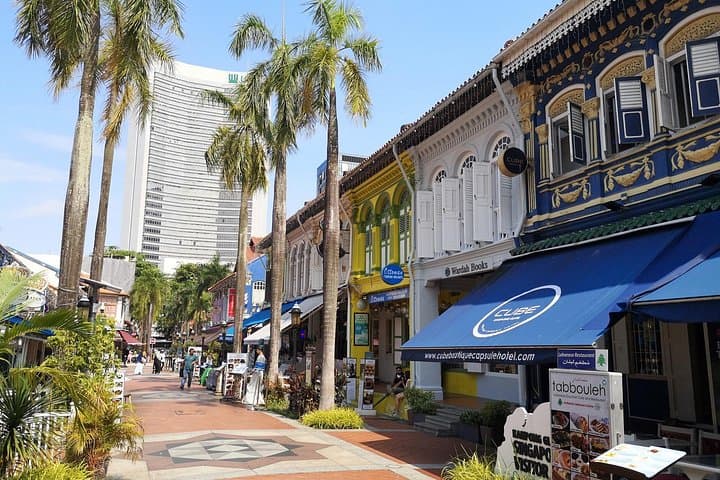
The morning air in eastern Singapore feels deliberate — humid, shot through with incense and the distant clatter of an MRT train. Walk between low-rise flats and hawker stalls, and suddenly the street opens to a temple gate where monks move through ritual calm; later the glass-fronted shops of Bedok Mall hum with weekday life; the day eases into green shade at Bedok Town Park.
The morning air in eastern Singapore feels deliberate — humid, shot through with incense and the distant clatter of an MRT train. Walk between low-rise flats and hawker stalls, and suddenly the street opens to a temple gate where monks move through ritual calm; later the glass-fronted shops of Bedok Mall hum with weekday life; the day eases into green shade at Bedok Town Park.
Bedok sits on the city’s southeastern plain, an area remade by coastal reclamation and post‑war urban planning. Once a collection of kampongs and beaches, today's Bedok blends post-war HDB housing, immigrant-built temples, and pockets of green. Man Fatt Lam and Palelai Buddhist Temples reflect waves of Chinese and Southeast Asian devotional practice — architecture and ritual that mark the neighborhood’s social history.
A private three-hour walk threads cultural stops with leisure spaces: observe temple façades and devotees, window-shop at Bedok Mall, then decompress under mature trees in Bedok Town Park. Expect flat, paved routes with brief street crossings and shaded benches for breaks.
Practical guidance: start in the morning or late afternoon to avoid the heat, wear supportive shoes and light, breathable clothing, and carry water — Singapore’s equatorial climate is consistent year-round but prone to sudden showers. Respect temple etiquette (remove shoes, keep voices low) and be prepared for minor itinerary swaps depending on crowding or opening times. Public transport is abundant; the private guide handles navigation and local context, leaving you free to watch the neighborhood reveal itself — a city layer cake of commerce, faith, and green relief.