THE ADVENTURE COLLECTIVE® · Independent discovery and booking for outdoor travel
Float into the sunlit mouth of Casa Cenote and take your first controlled breaths under water. This two-dive, private-instructor experience from Playa del Carmen is built for beginners who want the light-beam drama of a Yucatán cenote without the depth or current of cavern dives.
Float into the sunlit mouth of Casa Cenote and take your first controlled breaths under water. This two-dive, private-instructor experience from Playa del Carmen is built for beginners who want the light-beam drama of a Yucatán cenote without the depth or current of cavern dives.
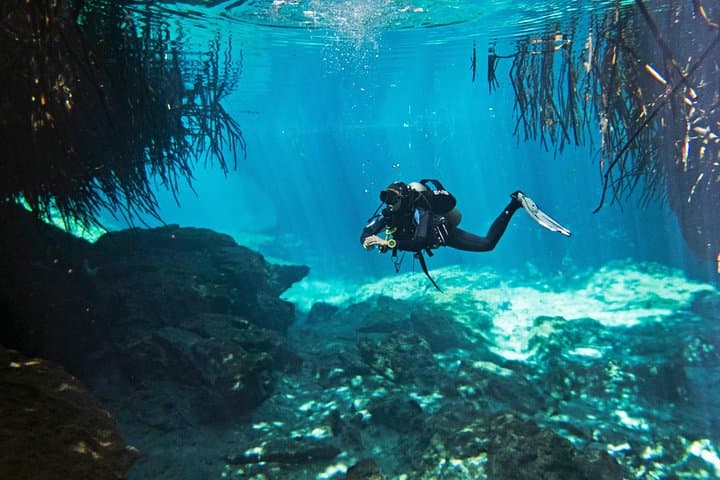
You step down a narrow wooden platform and the jungle hush rearranges itself around the water — a soft chorus of birds, the slap of mangrove roots, and a distant rumble of the highway. The cenote ahead looks more like a river cut out of limestone than a cave: shallow, sunlit, and impossibly clear. Light fans through an open canopy and paints the submerged roots in shifting ribbons that dare you to breathe underwater.
Verified experiences and guided adventures in the surrounding area.
Operated by Dive Guru · Tulum, Quintana Roo
You step down a narrow wooden platform and the jungle hush rearranges itself around the water — a soft chorus of birds, the slap of mangrove roots, and a distant rumble of the highway. The cenote ahead looks more like a river cut out of limestone than a cave: shallow, sunlit, and impossibly clear. Light fans through an open canopy and paints the submerged roots in shifting ribbons that dare you to breathe underwater.
Casa Cenote sits on the edge of the Caribbean coastal plain where the Yucatán’s porous limestone meets groundwater. These cenotes are collapsed caverns — holes in the earth where the aquifer is exposed — and they form an underground network that supplies fresh water across the peninsula. For the Maya, cenotes were vital and sacred; they were sources of life, ritual, and sometimes a doorway to the underworld. Today, Casa Cenote is popular for its accessibility: an open, shallow sink that behaves like a calm river and is ideal for first breaths with scuba gear.
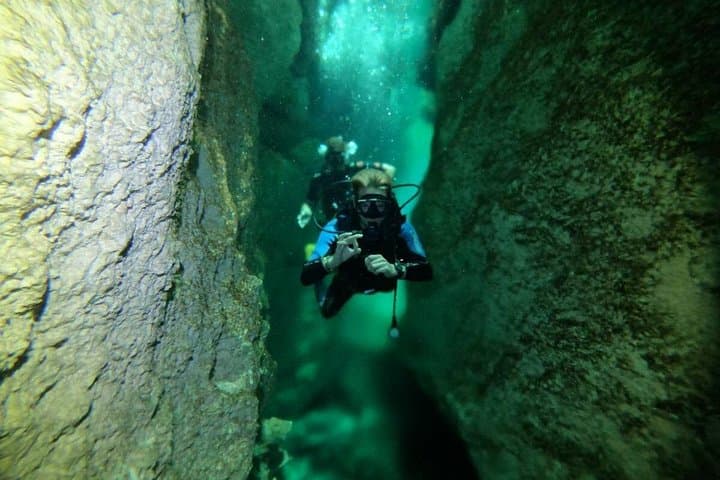
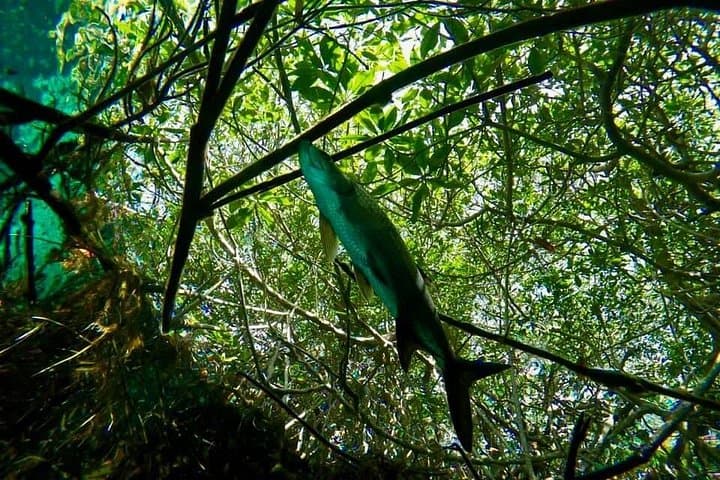
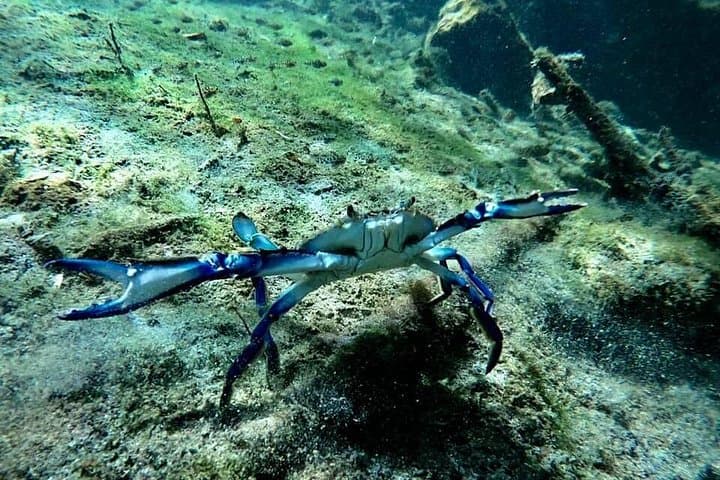
Geologically the Yucatán is a karst landscape; rather than streams on the surface, water travels through caverns and fractures. At Casa, the interaction of freshwater and mangrove roots creates unique habitats. Expect to float among curious freshwater tarpon and spot blue crabs skittering along submerged trunks. The play of sunlight on limestone and roots produces the ‘light-beam’ moments that make cenote diving a photographer’s dream.
Practical side: this is a two-dive introductory experience tailored for beginners. You’ll be picked up from hotels between downtown Playa del Carmen and parts of Tulum, driven to Casa Cenote, and matched with a private instructor who runs a safety briefing, basic skills in shallow water, then two short underwater excursions (about 40 minutes each) to a maximum of 6 m (18 ft). Equipment, a sandwich, fruit, and water are included. Note the operator recommends no flying for at least 18 hours after diving, and people with spinal, heart, or pregnancy-related issues should sit this one out.
Tips for planning: arrive hydrated and well-rested, eat something light before you dive, and wear a long-sleeve rash guard to protect skin and reduce sunscreen use. If you’re shooting photos, mornings give the clearest shafts of light; bring a small waterproof camera or rent one if offered. Above all, follow your instructor’s signals — the cenote is gentle, but the water and equipment demand respect.
Casa Cenote is an excellent first step into cavern systems and the wider Yucatán underwater world — quiet enough to learn, striking enough to remember.
No — this is an introductory try-dive with a private instructor who teaches basic skills in shallow water before each short excursion.
Each dive is shallow, up to about 6 meters (18 feet), making it suitable for first-time divers.
Transfer is included for hotels between downtown Playa del Carmen and the Super Aki area of Tulum; other pickup zones may incur an extra charge.
Children may join but booking requires age info; pregnant travelers and those with serious heart or spinal conditions should not dive. Avoid flying within 18 hours after diving.
Expect freshwater tarpon, small fish schools, and blue crabs among mangrove roots; wildlife sightings vary by season.
Bring swimsuit, long-sleeve rash guard, ID, any medications, and a small dry bag for phones and valuables.
Dive Guru operates guided outdoor trips and adventures with an emphasis on safety, stewardship, and memorable experiences.
You step down a narrow wooden platform and the jungle hush rearranges itself around the water — a soft chorus of birds, the slap of mangrove roots, and a distant rumble of the highway. The cenote ahead looks more like a river cut out of limestone than a cave: shallow, sunlit, and impossibly clear. Light fans through an open canopy and paints the submerged roots in shifting ribbons that dare you to breathe underwater.
You step down a narrow wooden platform and the jungle hush rearranges itself around the water — a soft chorus of birds, the slap of mangrove roots, and a distant rumble of the highway. The cenote ahead looks more like a river cut out of limestone than a cave: shallow, sunlit, and impossibly clear. Light fans through an open canopy and paints the submerged roots in shifting ribbons that dare you to breathe underwater.
Casa Cenote sits on the edge of the Caribbean coastal plain where the Yucatán’s porous limestone meets groundwater. These cenotes are collapsed caverns — holes in the earth where the aquifer is exposed — and they form an underground network that supplies fresh water across the peninsula. For the Maya, cenotes were vital and sacred; they were sources of life, ritual, and sometimes a doorway to the underworld. Today, Casa Cenote is popular for its accessibility: an open, shallow sink that behaves like a calm river and is ideal for first breaths with scuba gear.
Geologically the Yucatán is a karst landscape; rather than streams on the surface, water travels through caverns and fractures. At Casa, the interaction of freshwater and mangrove roots creates unique habitats. Expect to float among curious freshwater tarpon and spot blue crabs skittering along submerged trunks. The play of sunlight on limestone and roots produces the ‘light-beam’ moments that make cenote diving a photographer’s dream.
Practical side: this is a two-dive introductory experience tailored for beginners. You’ll be picked up from hotels between downtown Playa del Carmen and parts of Tulum, driven to Casa Cenote, and matched with a private instructor who runs a safety briefing, basic skills in shallow water, then two short underwater excursions (about 40 minutes each) to a maximum of 6 m (18 ft). Equipment, a sandwich, fruit, and water are included. Note the operator recommends no flying for at least 18 hours after diving, and people with spinal, heart, or pregnancy-related issues should sit this one out.
Tips for planning: arrive hydrated and well-rested, eat something light before you dive, and wear a long-sleeve rash guard to protect skin and reduce sunscreen use. If you’re shooting photos, mornings give the clearest shafts of light; bring a small waterproof camera or rent one if offered. Above all, follow your instructor’s signals — the cenote is gentle, but the water and equipment demand respect.
Casa Cenote is an excellent first step into cavern systems and the wider Yucatán underwater world — quiet enough to learn, striking enough to remember.
