THE ADVENTURE COLLECTIVE® · Independent discovery and booking for outdoor travel

A compact guided loop that combines the Neolithic ruins of Beidha with Little Petra’s rock-cut siqs. Expect 4–5 hours of easy to moderate hiking, archaeological stops, and desert vistas.
A compact guided loop that combines the Neolithic ruins of Beidha with Little Petra’s rock-cut siqs. Expect 4–5 hours of easy to moderate hiking, archaeological stops, and desert vistas.
You step out of the parked minivan and the wind carries a dry, mineral scent—sandstone and thyme. A narrow siq opens into a small amphitheater of carved facades and weathered red rock: Little Petra, or Siq al-Barid. The guide checks water bottles and points the route toward Beidha, a compact Neolithic village set on a low ridge where straight lines of ancient walls still read like a map of early settlement.
Verified experiences and guided adventures in the surrounding area.
Operated by Jordan Horizon Tours · Wadi Musa, Ma'an Governorate
You step out of the parked minivan and the wind carries a dry, mineral scent—sandstone and thyme. A narrow siq opens into a small amphitheater of carved facades and weathered red rock: Little Petra, or Siq al-Barid. The guide checks water bottles and points the route toward Beidha, a compact Neolithic village set on a low ridge where straight lines of ancient walls still read like a map of early settlement.
The trail threads archaeology and geology. Beidha dates to the Pre-Pottery Neolithic period and sits above softer sandstone that erodes into alcoves and narrow gorges; later Nabataean and Roman traces sit nearby, evidence of caravan routes that once linked Petra with the Mediterranean. Local culture remains Bedouin-influenced—hospitality and oral histories are part of the walk.
Expect dry, uneven footpaths, short steep pitches and stretches of loose scree; total time on the trail is about four hours including short stops. The route loops from Siq Umm al-‘Alda to Beidha and back, then a short drive along Namala Road to Shkarat Msaied for sweeping mountain views. Facilities are minimal—basic toilets and a small kiosk at the main Little Petra site—and your guide will carry permits and context.
Practical notes: hike in the morning to avoid heat, carry at least 1.5–2 liters of water, wear supportive shoes with traction, and bring sun protection. Stay on marked paths—archaeological features are fragile. This guided loop pairs cultural insight with straightforward hiking: history underfoot, landscapes that test your balance and attention in equal measure.
Meet at the Little Petra (Siq al-Barid) entry point or be picked up in Petra; the tour loops back to the same meeting point.
It’s rated moderate—mostly walking on uneven ground with short climbs; a basic level of fitness is recommended.
Basic toilets and a small kiosk exist at Little Petra; bring snacks and extra water for the trail.
Guides typically manage any required permits and access; confirm with your operator before arrival.
Jordan Horizon Tours operates guided outdoor trips and adventures with an emphasis on safety, stewardship, and memorable experiences.

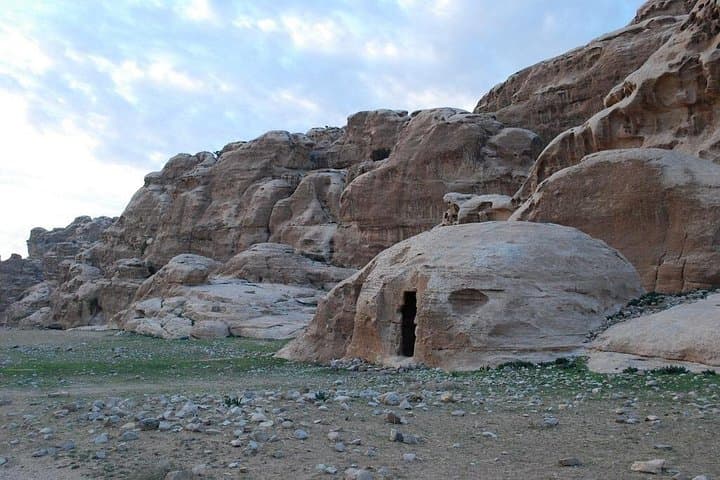


You step out of the parked minivan and the wind carries a dry, mineral scent—sandstone and thyme. A narrow siq opens into a small amphitheater of carved facades and weathered red rock: Little Petra, or Siq al-Barid. The guide checks water bottles and points the route toward Beidha, a compact Neolithic village set on a low ridge where straight lines of ancient walls still read like a map of early settlement.
You step out of the parked minivan and the wind carries a dry, mineral scent—sandstone and thyme. A narrow siq opens into a small amphitheater of carved facades and weathered red rock: Little Petra, or Siq al-Barid. The guide checks water bottles and points the route toward Beidha, a compact Neolithic village set on a low ridge where straight lines of ancient walls still read like a map of early settlement.
The trail threads archaeology and geology. Beidha dates to the Pre-Pottery Neolithic period and sits above softer sandstone that erodes into alcoves and narrow gorges; later Nabataean and Roman traces sit nearby, evidence of caravan routes that once linked Petra with the Mediterranean. Local culture remains Bedouin-influenced—hospitality and oral histories are part of the walk.
Expect dry, uneven footpaths, short steep pitches and stretches of loose scree; total time on the trail is about four hours including short stops. The route loops from Siq Umm al-‘Alda to Beidha and back, then a short drive along Namala Road to Shkarat Msaied for sweeping mountain views. Facilities are minimal—basic toilets and a small kiosk at the main Little Petra site—and your guide will carry permits and context.
Practical notes: hike in the morning to avoid heat, carry at least 1.5–2 liters of water, wear supportive shoes with traction, and bring sun protection. Stay on marked paths—archaeological features are fragile. This guided loop pairs cultural insight with straightforward hiking: history underfoot, landscapes that test your balance and attention in equal measure.