THE ADVENTURE COLLECTIVE® · Independent discovery and booking for outdoor travel

See Beijing’s modern architecture and old hutongs lit up on a private 3‑hour evening tour. Choose between contemporary illuminated landmarks or narrow alleyways and street food for a focused night experience.
See Beijing’s modern architecture and old hutongs lit up on a private 3‑hour evening tour. Choose between contemporary illuminated landmarks or narrow alleyways and street food for a focused night experience.
A late-evening car slips through Beijing as neon and floodlights wake the facades of a city that never looks the same twice. From the reflective dome of the National Grand Theater to the lattice of the Bird’s Nest, this private 3‑hour tour threads modern skylines with narrow hutong alleys, placing visitors between LED screens and centuries-old courtyard homes.
Verified experiences and guided adventures in the surrounding area.
Operated by Catherine Lu Tours · Beijing, Beijing
A late-evening car slips through Beijing as neon and floodlights wake the facades of a city that never looks the same twice. From the reflective dome of the National Grand Theater to the lattice of the Bird’s Nest, this private 3‑hour tour threads modern skylines with narrow hutong alleys, placing visitors between LED screens and centuries-old courtyard homes.
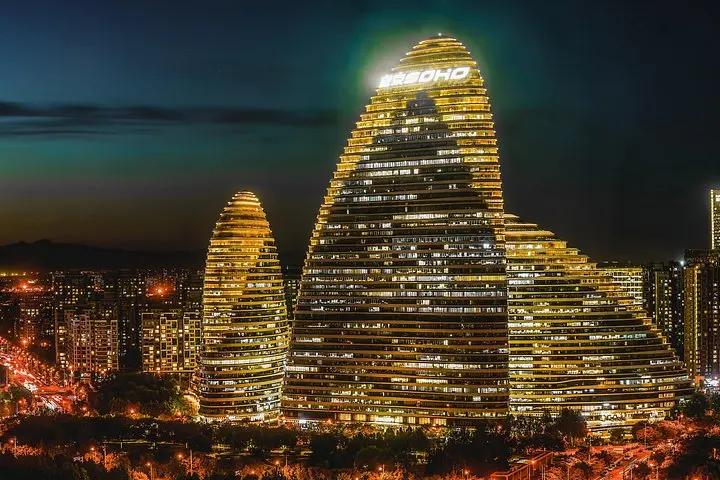
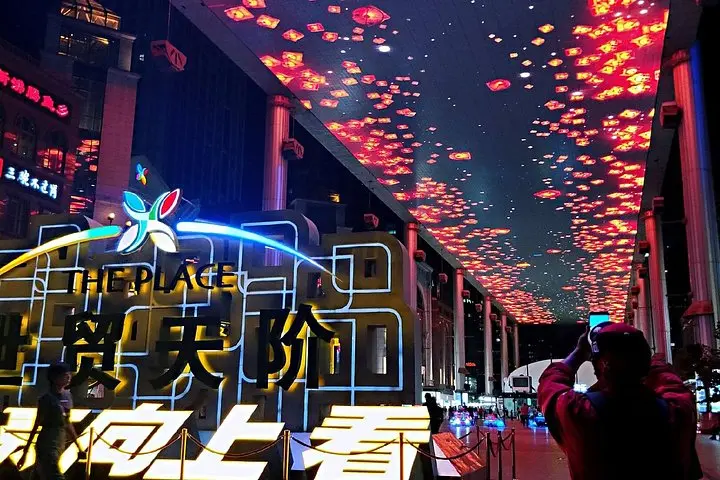
Historically, Beijing’s core grew around imperial axes that still order the city’s streets; tonight’s route contrasts post‑1978 development—Zaha Hadid’s Galaxy SOHO and modern commercial screens—with lanes that told China’s daily life for generations. Geologically the plain is flat, which makes contrasts in architecture and light feel abrupt; culturally, the tour is a primer in how rapid urban change meets neighborhood tradition.
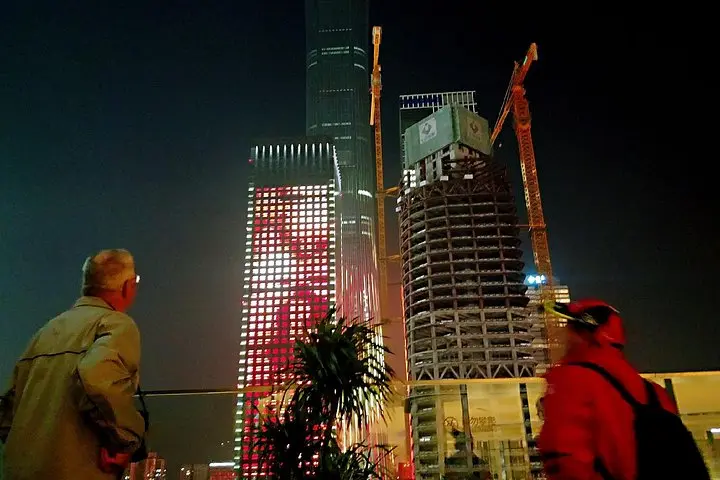
Practical guidance becomes part of the experience: wear comfortable walking shoes for short on‑foot stops, keep a charged camera for low‑light shots, and plan for 20–30 minute pauses at major viewpoints. Guides provide context—architectural facts about CCTV and the Olympic Stadium, or pointers to Wangfujing’s snack stalls and Houhai’s quieter lakeside alleys—so travelers leave with photos and an informed sense of place.
Expect moderate walking, traffic-dependent transfers, and opportunities to choose a route emphasis: “New Beijing” for illuminated modernism, or “Old Beijing” for hutong life and street food. The tour ends with a hotel drop‑off; it’s a compact night primer for first‑time visitors who want both skyline drama and the human scale of Beijing after sundown.
The private guide and driver provide hotel pickup and drop‑off within Beijing’s central districts; exact pickup time is confirmed at booking.
Yes — the tour offers a ‘New Beijing’ modern architecture route and an ‘Old Beijing’ hutong and street‑food option; indicate your preference when booking.
Yes. The tour is rated easy and wheelchair accessible, though some hutong stops may have steps; notify the operator of mobility needs at booking.
Transportation and an English‑speaking guide are included; admission to paid sites and food purchases are typically extra unless stated otherwise.
Catherine Lu Tours operates guided outdoor trips and adventures with an emphasis on safety, stewardship, and memorable experiences.
A late-evening car slips through Beijing as neon and floodlights wake the facades of a city that never looks the same twice. From the reflective dome of the National Grand Theater to the lattice of the Bird’s Nest, this private 3‑hour tour threads modern skylines with narrow hutong alleys, placing visitors between LED screens and centuries-old courtyard homes.
A late-evening car slips through Beijing as neon and floodlights wake the facades of a city that never looks the same twice. From the reflective dome of the National Grand Theater to the lattice of the Bird’s Nest, this private 3‑hour tour threads modern skylines with narrow hutong alleys, placing visitors between LED screens and centuries-old courtyard homes.
Historically, Beijing’s core grew around imperial axes that still order the city’s streets; tonight’s route contrasts post‑1978 development—Zaha Hadid’s Galaxy SOHO and modern commercial screens—with lanes that told China’s daily life for generations. Geologically the plain is flat, which makes contrasts in architecture and light feel abrupt; culturally, the tour is a primer in how rapid urban change meets neighborhood tradition.
Practical guidance becomes part of the experience: wear comfortable walking shoes for short on‑foot stops, keep a charged camera for low‑light shots, and plan for 20–30 minute pauses at major viewpoints. Guides provide context—architectural facts about CCTV and the Olympic Stadium, or pointers to Wangfujing’s snack stalls and Houhai’s quieter lakeside alleys—so travelers leave with photos and an informed sense of place.
Expect moderate walking, traffic-dependent transfers, and opportunities to choose a route emphasis: “New Beijing” for illuminated modernism, or “Old Beijing” for hutong life and street food. The tour ends with a hotel drop‑off; it’s a compact night primer for first‑time visitors who want both skyline drama and the human scale of Beijing after sundown.